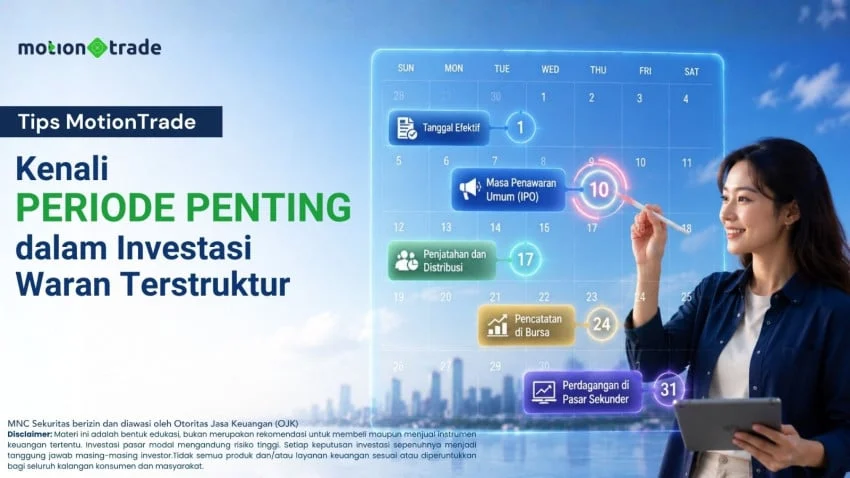
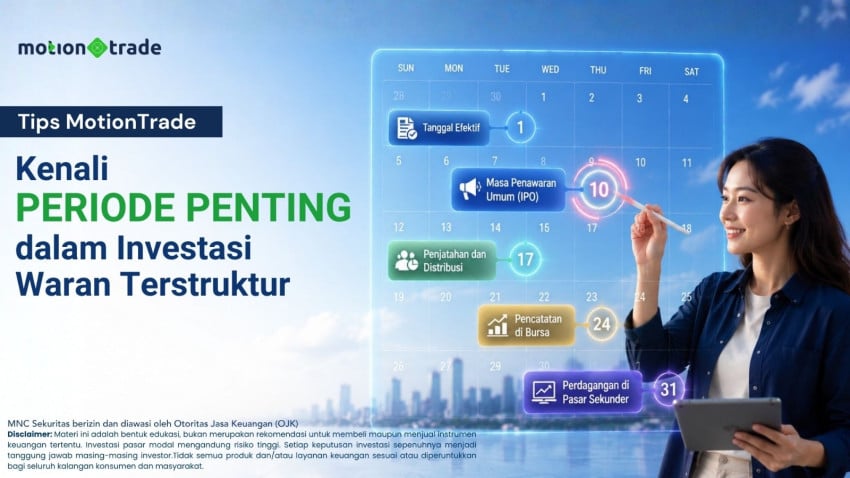
MotionTrade, a leading securities firm under the MNC Group, has underscored the critical importance of understanding specific time periods for investors engaging with structured warrants. This guidance is part of an ongoing effort to equip investors with the necessary knowledge to navigate the complexities of this investment instrument, ultimately aiming to optimize potential returns and mitigate associated risks. Structured warrants, while offering intriguing opportunities for profit, demand a meticulous approach, particularly concerning their temporal dynamics. An informed grasp of each stage, from initial offering to maturity, is paramount for strategic decision-making in the dynamic capital markets.
Understanding Structured Warrants in the Indonesian Market
Structured warrants are derivative financial instruments issued by third-party financial institutions, typically investment banks or securities firms, over an underlying asset, which is often a stock listed on the exchange. Unlike traditional warrants issued by the company itself, structured warrants are not dilutive to the underlying company’s shares. They provide investors with leveraged exposure to the price movements of the underlying asset without requiring direct ownership. In Indonesia, the Financial Services Authority (OJK) oversees the issuance and trading of these instruments, ensuring a regulated environment for investors. Since their introduction to the Indonesian market, structured warrants have steadily gained traction, offering a more sophisticated tool for both bullish and bearish market views, depending on whether they are call or put warrants. Their appeal lies in their accessibility, the potential for high returns due to leverage, and the ability to diversify investment portfolios beyond traditional stocks. However, this leverage also amplifies risks, making a thorough understanding of their mechanics and lifecycle absolutely essential.
The Indonesian stock market, represented by the Indonesia Stock Exchange (IDX), has seen a growing appetite for diversified investment products. Structured warrants cater to this demand by offering an alternative for investors seeking exposure to specific stocks or indices with defined risk parameters. The OJK’s regulatory framework, established to foster market integrity and investor protection, has been instrumental in the development and acceptance of structured warrants. This regulatory environment mandates transparency through prospectuses and ongoing disclosures, making MotionTrade’s emphasis on understanding timelines a direct reflection of industry best practices and regulatory expectations. The synergy between financial institutions like MNC Bank and MNC Sekuritas (MotionTrade’s parent company), as evidenced by their collaboration to boost financial literacy among Gen Z, further highlights a broader industry commitment to empowering investors across all demographics with the knowledge needed for sound financial decisions.
Key Periods in Structured Warrant Investment
MotionTrade has meticulously outlined several critical periods that investors must recognize when dealing with structured warrants. Each phase carries unique implications for valuation, trading strategy, and potential outcomes.
The Effective Date: Commencement of the Offering
The effective date marks a crucial regulatory milestone. This is the date on which the Financial Services Authority (OJK) officially declares the registration statement for the structured warrant offering effective. Practically, it signifies the official commencement of the public offering period for the structured warrant. Prior to this date, the issuer (e.g., MNC Sekuritas as MotionTrade’s parent company) would have submitted a detailed prospectus to the OJK, outlining all essential information about the structured warrant, including the underlying asset, strike price, maturity date, issue price, and risk factors.
For investors, the effective date is not merely an administrative detail; it is the official green light. It confirms that all regulatory requirements have been met, and the offering can proceed. The information contained within the prospectus becomes legally binding and publicly accessible from this date. Diligent investors will review this document thoroughly, as it provides the foundational details necessary to evaluate the investment’s suitability and risks. Understanding the effective date allows investors to anticipate the subsequent public offering period and prepare their investment decisions. Without an effective date, no public offering can legally commence, making it the bedrock of the structured warrant’s lifecycle.
The Public Offering Period (IPO): Primary Market Access
Following the effective date, the public offering period commences. During this phase, which typically lasts between one to five business days depending on the specific series and issuer’s discretion, investors have the opportunity to subscribe to the structured warrants directly from the issuer. This is akin to the initial public offering (IPO) process for stocks, where investors can purchase shares at a fixed price before they begin trading on the secondary market.
Subscribing during the public offering period offers several advantages. Investors can acquire the structured warrants at the initial issue price, potentially avoiding immediate price volatility that might occur once trading begins on the secondary market. It also ensures allocation, provided the subscription demand does not exceed the available supply. For the issuer, this period allows them to gauge initial market interest and distribute the warrants efficiently. Investors need to be aware of the exact start and end dates of this period, as missing the window means they will only be able to acquire the warrants once they are listed on the secondary market, potentially at a different price. Details on how to subscribe, minimum subscription amounts, and allocation policies are all detailed in the prospectus made available on the effective date.
The Listing Date: Entry to the Secondary Market
The listing date is when the structured warrants officially begin trading on the stock exchange (e.g., the Indonesia Stock Exchange, IDX). This is a pivotal moment, as it introduces liquidity and allows for continuous price discovery through market forces of supply and demand. After the public offering period concludes and allocations are finalized, the structured warrants are admitted for trading.
For investors who did not participate in the public offering, or for those who wish to buy or sell their holdings, the listing date marks the first opportunity to do so in the secondary market. Prices on the secondary market will fluctuate based on the underlying asset’s price movements, implied volatility, time to maturity, and interest rates. It is crucial for investors to monitor the listing date closely, as the initial trading performance can provide insights into market sentiment regarding the structured warrant. High trading volumes and significant price movements on the listing date often reflect strong market interest or unexpected developments concerning the underlying asset.
The Last Trading Day: End of Secondary Market Liquidity
The last trading day is another critical deadline. This date typically precedes the maturity date by a few business days. After the last trading day, the structured warrants can no longer be bought or sold on the secondary market. Investors who wish to close their positions before maturity must do so by this date.
The importance of the last trading day cannot be overstated for risk management. Holding a structured warrant until its maturity date carries the inherent risk that its value might significantly diminish or expire worthless if the underlying asset’s price does not move favorably. By selling before the last trading day, investors can crystallize their profits or losses and avoid the uncertainty associated with the final settlement process. Failing to sell by this date means the investor is committed to the settlement process on the maturity date, which might not always be in their favor, especially if the warrant is out-of-the-money. Issuers and exchanges provide clear announcements regarding the last trading day to ensure investors have ample notice.
The Maturity Date: Final Settlement and Expiration
The maturity date is the final day in the lifecycle of a structured warrant. On this date, the warrant expires, and its value is determined based on the price of the underlying asset relative to the strike price. For cash-settled structured warrants, investors will receive a cash payment if the warrant is "in-the-money." An "in-the-money" call warrant means the underlying asset’s price is above the strike price, while an "in-the-money" put warrant means the underlying asset’s price is below the strike price. If the warrant is "out-of-the-money" (meaning it has no intrinsic value), it will expire worthless, and the investor will lose their entire investment in the warrant.
The mechanics of automatic exercise are common for structured warrants in many markets, including Indonesia. This means investors do not need to take any action for in-the-money warrants to be settled. The issuer will automatically calculate the settlement value and disburse it to eligible investors. However, understanding this date is vital for investment planning and strategy. Investors should have a clear exit strategy well before the maturity date, considering whether to hold until maturity or sell on the secondary market before the last trading day. The maturity date also determines the time value of the warrant; as this date approaches, the time value of the warrant diminishes, affecting its price.
Valuation and Settlement Dates
While often coinciding with or closely following the maturity date, specific valuation and settlement dates may be defined. The valuation date is when the final reference price of the underlying asset is determined for settlement calculations. This might involve an average price over a specific period or a closing price on the maturity date. The settlement date is when the cash payment for in-the-money warrants is actually credited to the investors’ accounts. These dates ensure a transparent and orderly conclusion to the structured warrant’s life.
Chronology of a Typical Structured Warrant Lifecycle
To illustrate these critical periods, consider a simplified timeline:
- Announcement & Prospectus Publication: Issuer announces intent to issue, publishes draft prospectus for public review.
- Effective Date: OJK declares registration statement effective. Full prospectus becomes final.
- Public Offering Period (1-5 days): Investors subscribe to warrants at the initial issue price.
- Allotment & Refund: Subscriptions are processed, warrants are allotted, and any excess funds are refunded.
- Listing Date: Warrants commence trading on the IDX secondary market.
- Secondary Market Trading Period: Warrants are actively traded, prices fluctuate.
- Last Trading Day: Final day for investors to buy or sell warrants on the secondary market (e.g., 3-5 days before maturity).
- Valuation Date: Underlying asset’s reference price is determined for settlement.
- Maturity Date: Warrants expire. In-the-money warrants are automatically exercised.
- Settlement Date: Cash proceeds from in-the-money warrants are paid to investors.
Supporting Data and Market Implications
The growing popularity of structured products in Indonesia is a testament to the market’s increasing sophistication. Data from the IDX often shows consistent growth in the trading volume and value of derivatives, including structured warrants, reflecting investor interest in instruments that offer leverage and diversification. While specific trading figures for structured warrants might fluctuate, the overall trend points towards greater acceptance. For instance, the OJK has continuously worked to broaden the range of financial products available, with structured warrants playing a role in enhancing market depth and liquidity.
The initiative by MotionTrade aligns perfectly with broader industry efforts, such as the collaboration between MNC Bank and MNC Sekuritas to enhance financial literacy among Gen Z. This partnership, focusing on digital banking solutions and investment education, demonstrates a commitment to nurturing a new generation of informed investors. Educating investors about complex instruments like structured warrants is crucial for sustainable market growth and investor protection. Without adequate knowledge, the leveraged nature of structured warrants can lead to significant losses, especially for inexperienced investors.
Inferred Industry and Regulatory Responses
Industry experts widely commend initiatives like MotionTrade’s, emphasizing that investor education is a cornerstone of a healthy capital market. "Providing clear, actionable guidance on the lifecycle of complex instruments like structured warrants is invaluable," stated an analyst specializing in derivatives. "It empowers investors to make calculated decisions, moving beyond mere speculation." Regulators, like the OJK, consistently advocate for transparency and investor protection. While they establish the regulatory framework, the onus is also on market participants and issuers to ensure investors are well-informed. A spokesperson for a regulatory body might implicitly welcome such educational drives, stating, "Robust investor education complements our regulatory efforts by fostering a more knowledgeable and resilient investor base, which is vital for market stability and growth." Issuers themselves, through their distribution channels like MotionTrade, have a vested interest in educating investors. Well-informed investors are more likely to participate confidently, leading to a more liquid and efficient market for structured warrants.
Broader Impact and Strategic Implications
The implications of MotionTrade’s guidance extend beyond individual investor decisions. For the Indonesian capital market, it contributes to increased market sophistication and depth. As more investors become proficient in understanding and trading structured warrants, the liquidity of these instruments improves, attracting further participation from various investor segments. This, in turn, can lead to a more diversified and robust financial ecosystem.
For investors, the direct benefit is enhanced decision-making and risk management. By understanding the various periods, investors can:
- Time their entry and exit points: Optimizing purchases during the public offering or strategically selling on the secondary market.
- Manage risk effectively: Avoiding situations where warrants expire worthless due to a lack of awareness of maturity dates.
- Formulate clearer strategies: Integrating the warrant’s lifecycle into their overall investment plan.
Issuers benefit from a more informed investor base, which can lead to more stable demand and a better understanding of their products. This reduces potential complaints and fosters trust, crucial for long-term business sustainability. Ultimately, continuous investor education on instruments like structured warrants is a collective responsibility that strengthens the integrity and growth potential of the entire financial market. It transforms complex financial products from potential pitfalls into viable opportunities for wealth creation, provided they are approached with knowledge and due diligence.
In conclusion, MotionTrade’s emphasis on recognizing these crucial time periods in structured warrant investment is an indispensable guide for investors. By demystifying the lifecycle of these instruments, from the Effective Date to the Maturity Date, MotionTrade empowers investors to navigate the structured warrant market with greater confidence, precision, and a clearer understanding of both the opportunities and the inherent risks. This commitment to investor education is vital for fostering a mature and resilient capital market in Indonesia.