Jakarta (ANTARA) – Purchasing a pre-owned vehicle in Indonesia has become significantly more affordable regarding specific tax components, following widespread national policy adjustments that took effect under modern fiscal decentralization frameworks. Despite prevailing misconceptions that the entire ownership transfer process has become completely free of charge, current regulatory implementations dictate a more nuanced financial landscape. While the specific motor vehicle title transfer tax—locally known as Bea Balik Nama Kendaraan Bermotor (BBNKB)—is no longer levied on second-hand vehicles, new vehicle owners must still account for several mandatory administrative expenses, state non-tax revenues, and recurring regional taxes to legalize their paperwork completely.
This policy shift stems fundamentally from national legislative measures designed to streamline regional financial relations and ease the tax burden on citizens engaging in secondary automotive markets. However, the misinterpretation of these rules often leads prospective buyers to budget incorrectly when acquiring pre-owned sedans, SUVs, or multi-purpose vehicles (MPVs). Industry analysts and regional revenue agency officials have consistently emphasized that distinguishing between regional transfer taxes and federal administrative fees is vital for vehicle owners aiming to maintain legal compliance in 2026.
Legislative Background and the Elimination of BBNKB II
The exemption of the second-hand motor vehicle title transfer tax is rooted directly in Law Number 1 Year 2022 concerning Financial Relations Between the Central Government and Regional Governments (Undang-Undang Hubungan Keuangan antara Pemerintah Pusat dan Pemerintahan Daerah or UU HKPD). Under the framework of the UU HKPD, BBNKB is explicitly designated as a tax applicable solely to the initial transfer or first registration of a motor vehicle. Consequently, once a vehicle has been registered under an initial owner and enters the secondary market, subsequent changes in ownership no longer qualify as taxable objects under the BBNKB provisions.
Prior to the enactment and full rollout of this decentralization and taxation framework, buyers of used vehicles were required to pay a substantial BBNKB fee—frequently referred to as BBNKB II—which was calculated as a specific percentage of the vehicle’s assessed value or purchase price. This legacy system often inflated transaction costs, occasionally discouraging informal secondary market participants from officially updating their vehicle registrations.
By eliminating the BBNKB for used vehicles, the central and regional governments sought to encourage higher compliance rates for vehicle registration updates, improve data accuracy within national traffic police databases, and stimulate the secondary automotive economy. Regional revenue bodies, including the Jakarta Regional Revenue Agency (Bapenda DKI Jakarta) and the East Java Regional Revenue Agency (Bapenda Jawa Timur), have repeatedly reinforced this interpretation through public advisories, confirming that secondary transfers are fundamentally exempt from the primary vehicle title transfer levy.
Unpacking the Costs: What Remains Mandatory in 2026?
A recurring point of confusion among consumers is the assumption that a waiver of BBNKB translates to an entirely zero-cost ownership transfer process. Automotive experts and local One-Stop Administration Offices (Samsat) across the archipelago have clarified that administrative costs for document issuance are governed by entirely separate legal instruments.
When a citizen processes a used car ownership transfer in 2026, financial obligations are categorized into distinct components:
- Non-Tax State Revenue (Penerimaan Negara Bukan Pajak or PNBP): Governed by national regulations regarding police services, vehicle owners must pay specific PNBP fees for the production and issuance of core driving and registration documents. These include the Vehicle Registration Certificate (Surat Tanda Nomor Kendaraan or STNK), the Vehicle Ownership Book (Bukti Pemilik Kendaraan Bermotor or BPKB), and Vehicle Number Plates (Tanda Nomor Kendaraan Bermotor or TNKB).
- Motor Vehicle Tax (Pajak Kendaraan Bermotor or PKB): The PKB is a recurring annual regional tax that remains entirely separate from the BBNKB structure. If a pre-owned vehicle carries arrears or is nearing its annual tax payment deadline, the new owner is legally responsible for settling these outstanding balances before or during the transfer procedure.
- Progressive Taxes and Additional Regional Levies: Depending on the specific province and whether the buyer already owns multiple registered vehicles under the same household identity, progressive tax rates may apply to the annual PKB calculations.
Because these PNBP and PKB rates vary slightly depending on regional bylaws, engine displacement, vehicle classification, and the specific year of manufacture, vehicle owners are continuously advised to consult the official portal of their local Samsat office before initiating the paperwork.
Comprehensive Requirements for Used Car Ownership Transfer
To ensure a seamless transition of legal ownership, the Indonesian National Police’s Traffic Corps (Korlantas Polri), operating under the regulatory guidelines of Indonesian National Police Regulation Number 7 of 2021 concerning Vehicle Registration and Identification, mandates specific physical and administrative documentation.
Citizens undertaking the ownership transfer procedure must assemble a meticulous file containing both original documents and clear photocopies to prevent administrative delays during verification. The primary requirements typically include:
- The original BPKB and STNK of the vehicle being transferred.
- A valid National Identity Card (KTP) belonging to the new owner.
- The physical vehicle itself, brought directly to the designated Samsat location for mandatory physical inspection (cek fisik).
- A formal bill of sale or purchase receipt (kuitansi pembelian) stamped with appropriate duty stamps (meterai), detailing the transaction value and bearing the signatures of both the buyer and the seller.
- Proof of tax clearance or historical payment records confirming that no unexpected liabilities are attached to the vehicle.
In scenarios where the pre-owned vehicle originates from a different administrative region or province—such as a vehicle purchased in Central Java but registered for use in Jakarta—an additional bureaucratic step known as vehicle mutation (mutasi kendaraan) must be completed first. This entails formally pulling the vehicle’s dossier from its original Samsat registry before re-registering it under the jurisdiction of the new owner’s domicile.
Step-by-Step Procedure at the Samsat Office
Navigating the administrative workflow requires adherence to a structured sequence established by regional traffic authorities. Understanding this timeline helps applicants minimize waiting times and complete the validation process efficiently:
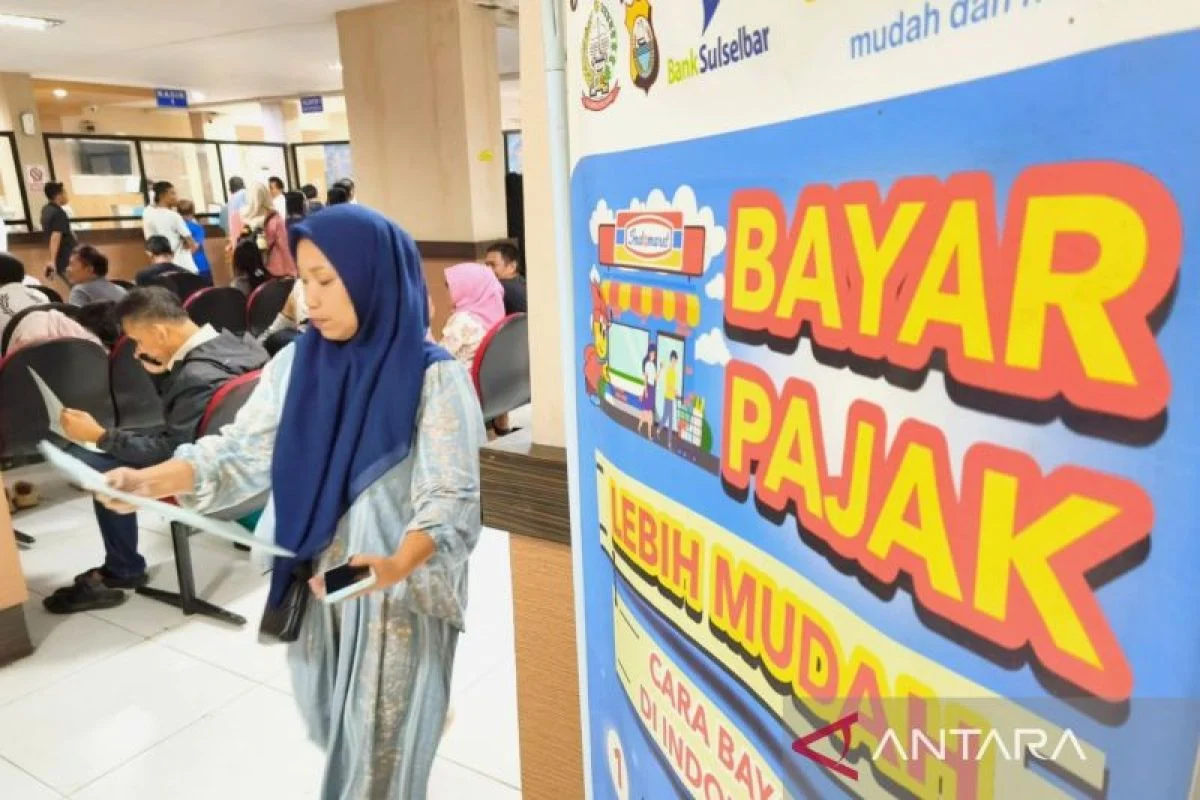
- Physical Inspection (Cek Fisik): The process invariably begins by bringing the vehicle to the physical inspection lanes at the local Samsat office. Authorized officers inspect the engine number and chassis number, matching them against the data provided in the accompanying documentation.
- Document Verification: Once the physical check is validated, the applicant submits the complete bundle of requirements—including the KTP, BPKB, STNK, bill of sale, and inspection forms—to the verification counter.
- Financial Assessment and Payment: Administrative officers calculate the applicable PNBP fees for the new BPKB, STNK, and TNKB, alongside any outstanding PKB or progressive taxes. The applicant proceeds to the designated bank or payment terminal to settle these dues.
- Data Entry and Document Printing: After payment confirmation, the vehicle’s database entry is updated to reflect the new owner’s identity. New physical documents and license plates are then printed, finalized, and issued to the applicant.
Strategic Importance of Timely Ownership Transfers
Law enforcement agencies and regional governments consistently urge the public to execute ownership transfers immediately following any secondary market transaction. Delaying this administrative duty introduces several legal, financial, and operational vulnerabilities for both parties involved.
For the buyer, holding a vehicle without updating the registration data complicates subsequent annual tax payments, makes roadside police verifications unnecessarily complicated, and hinders future resale value. Furthermore, in the event of an insurance claim or a legal dispute involving the vehicle, mismatched administrative identities can severely delay resolutions.
For the seller, failing to ensure that the buyer executes a formal transfer carries severe financial risks. Unregistered vehicles remain legally tied to the previous owner’s identity in regional tax databases. If the new owner incurs traffic violations captured by Electronic Traffic Law Enforcement (ETLE) cameras or accumulates unpaid annual vehicle taxes, the warning notices and financial penalties will automatically be directed to the original owner. Consequently, Korlantas Polri and regional tax authorities strongly advise sellers to immediately submit a formal STNK blocking notification (blokir STNK) upon relinquishing possession of a vehicle.
Regional Variations and Implementation Outlook
While the overarching legal foundation—the UU HKPD—applies nationwide, the practical execution of vehicle administration remains decentralized under local government jurisdictions and regional police departments.
Metropolitan areas such as Jakarta and major industrial hubs in East Java maintain highly digitized processing systems, allowing citizens to track administrative progress through integrated mobile applications and regional tax portals. However, minor procedural nuances can still differ between provinces, particularly regarding regional incentives, localized tax amnesty programs, or specific processing timelines for cross-province mutations.
Ultimately, the refinement of the vehicle transfer ecosystem in 2026 marks a balanced milestone in Indonesian public administration. By removing the heavy burden of secondary BBNKB taxes, the government has lowered the financial barrier to legal compliance. Simultaneously, the retention of essential PNBP and PKB structures ensures that vital state revenues and road infrastructure funding remain fully supported, fostering an orderly, transparent, and legally secure market for pre-owned vehicles across the country.