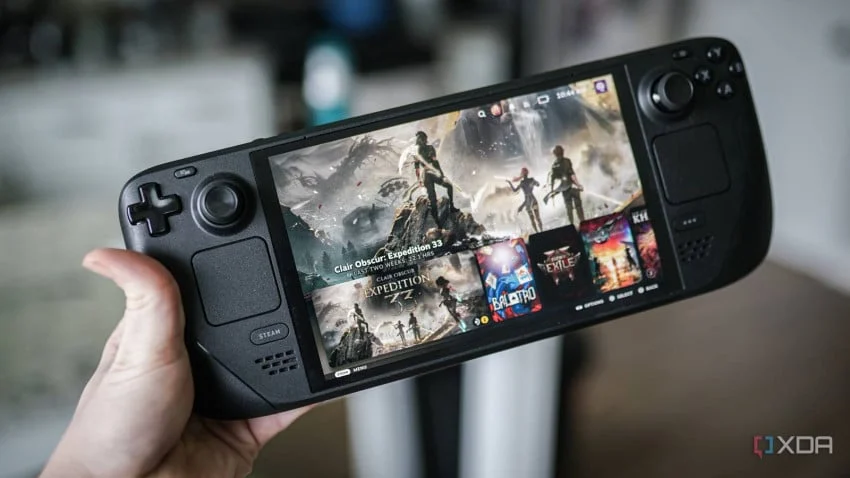
The development of the successor to Valve’s groundbreaking handheld gaming console, the Steam Deck 2, is proceeding according to the company’s internal roadmap, effectively silencing industry concerns regarding potential supply chain disruptions. Despite ongoing global instability regarding the availability and pricing of high-performance memory components, Valve’s engineering team has confirmed that the project remains unaffected by current market volatility. As the gaming hardware landscape shifts toward increasingly portable and powerful devices, Valve’s commitment to a 2028 target window for the next-generation iteration signals a strategic focus on long-term hardware sustainability and architectural refinement.
The Evolution of Handheld PC Gaming
Since the initial launch of the original Steam Deck in February 2022, Valve has effectively pioneered the "PC handheld" category, transforming it from a niche enthusiast market into a mainstream segment. The device’s success was predicated on the integration of a custom AMD Accelerated Processing Unit (APU) and a tailored version of Arch Linux, known as SteamOS. This software-hardware synergy allowed Valve to create a console-like experience for an expansive library of PC titles.
The anticipation surrounding the Steam Deck 2 is largely driven by the rapid pace of technological advancement in mobile computing. While the original device was hailed for its price-to-performance ratio, subsequent competitors—such as the ASUS ROG Ally, Lenovo Legion Go, and MSI Claw—have raised the stakes by offering higher-resolution displays, variable refresh rates, and more powerful mobile chipsets. Valve’s decision to maintain a deliberate development cycle rather than rushing a successor underscores a commitment to optimization over raw iterative speed.
Addressing Supply Chain Resilience
In recent months, the semiconductor industry has faced renewed scrutiny due to fluctuations in DRAM and NAND flash memory availability. Many manufacturers of consumer electronics have reported delays or increased production costs as global demand for artificial intelligence (AI) infrastructure competes with consumer hardware for manufacturing capacity.
However, Valve’s internal leadership, specifically software engineers Pierre-Loup Griffais and Jeff Leinbaugh, have publicly addressed these concerns. In recent discussions, they clarified that Valve has not encountered any supply chain bottlenecks that would necessitate a deviation from their established project timeline. This stability is likely attributed to Valve’s strategic procurement planning and its established relationship with AMD, which has been a cornerstone of the Steam Deck project since its inception. By leveraging a predictable supply chain, Valve can focus on the iterative refinement of the hardware rather than navigating the reactive logistics challenges that currently plague other manufacturers.
The Technological Foundation: The AMD Factor
While specific details regarding the silicon architecture of the Steam Deck 2 remain closely guarded, industry analysts almost universally expect Valve to continue its partnership with AMD. The current Steam Deck utilizes an APU codenamed "Aerith" (and later "Sephiroth" in the OLED revision), which integrates CPU and GPU components into a single, power-efficient package designed specifically for handheld thermal envelopes.
The rationale for sticking with custom AMD silicon is rooted in software compatibility and performance consistency. By using a standardized architecture, Valve ensures that the extensive library of games already verified for the Steam Deck will remain playable on the next generation. This approach avoids the fragmentation often associated with shifting between different hardware vendors, such as moving from x86 to ARM-based architectures.
Furthermore, as AMD continues to evolve its "Zen" and "RDNA" architectures, the potential for significant leaps in power efficiency and performance-per-watt is substantial. For a handheld device, where battery life is the primary limiting factor, the ability to utilize advanced lithography—potentially moving toward 3nm or 4nm processes by 2028—will be essential to delivering a meaningful upgrade over the current generation.
Chronology of the Steam Deck Ecosystem
To understand the trajectory of the Steam Deck 2, it is necessary to examine the timeline of the hardware ecosystem:
- July 2021: Valve officially announces the Steam Deck, promising a handheld device capable of running the entire Steam library.
- February 2022: The Steam Deck begins shipping to customers, receiving widespread acclaim for its accessibility and open-platform philosophy.
- October 2022: Valve releases the "Steam Deck Docking Station," expanding the device’s utility as a desktop-replacement console.
- November 2023: The Steam Deck OLED is launched, featuring an upgraded display, improved battery life, and a more efficient APU, proving that Valve prioritizes refinement and user experience over annual hardware refreshes.
- Present Day: Valve confirms that the design and initial development phases for the second-generation console are underway, with an estimated launch window of 2028.
This timeline demonstrates a methodical approach to hardware development. Unlike competitors that operate on a twelve-to-eighteen-month product cycle, Valve has opted for a multi-year strategy that prioritizes software stability and user feedback.
Economic and Market Implications
The decision to target 2028 for the launch of the Steam Deck 2 carries significant implications for the broader gaming market. By providing a clear long-term roadmap, Valve allows game developers to optimize their titles for a consistent hardware baseline for several more years. This prevents the "hardware fatigue" often experienced by console gamers who feel pressured to upgrade prematurely.
From an economic perspective, the handheld market is expected to continue its upward trajectory. Market intelligence reports suggest that the portable gaming segment could reach a multi-billion dollar valuation by the end of the decade. Valve’s influence is central to this growth, as the Steam Deck has forced traditional PC hardware manufacturers to invest more heavily in portable form factors.
Moreover, Valve’s commitment to Linux-based gaming—facilitated by Proton, the compatibility layer that allows Windows-based games to run on SteamOS—has had a profound impact on the operating system landscape. The development of the Steam Deck 2 will almost certainly result in further improvements to Proton, benefiting not just Steam Deck owners, but the entire Linux gaming community.
Future Challenges and Technical Expectations
Despite the optimism surrounding the development, the project is not without its hurdles. Beyond the procurement of memory and processors, Valve must contend with the ever-increasing demands of modern gaming. Titles released in 2028 will likely require significantly higher VRAM allocations and faster storage bandwidth than current games.
Industry experts suggest that the Steam Deck 2 will need to address the following technical requirements to remain competitive:
- Thermal Management: Improving heat dissipation without increasing the physical dimensions of the device remains a significant engineering challenge.
- Display Technology: While the current OLED model is highly regarded, the next generation will likely need to adopt higher refresh rates and potentially higher peak brightness to compete with emerging mobile technologies.
- Battery Density: Advances in solid-state battery technology or increased energy efficiency in silicon will be critical to extending the gaming sessions beyond the current 2-to-6-hour window.
- Input Versatility: Maintaining the industry-leading trackpads and ergonomics of the original Steam Deck while potentially integrating new biometric or haptic technologies will be a priority for the design team.
Conclusion: A Measured Approach to Innovation
Valve’s confirmation that the Steam Deck 2 remains on schedule, despite the complexities of the global component market, reflects the company’s unique position in the gaming industry. As a private company that derives the majority of its revenue from the Steam digital storefront, Valve is not beholden to the same quarterly growth pressures as publicly traded hardware manufacturers. This allows the company to prioritize the longevity of its hardware ecosystem over short-term profits.
As the industry looks toward 2028, the Steam Deck 2 is positioned to be more than just a hardware upgrade; it will represent the culmination of years of software development, community feedback, and strategic supply chain management. By focusing on a deliberate, high-quality development cycle, Valve ensures that when the next generation arrives, it will likely set a new benchmark for portable gaming, much like its predecessor did in 2022. For now, the message from Bellevue is clear: development is proceeding, the supply chain is stable, and the future of PC handheld gaming is firmly on track.