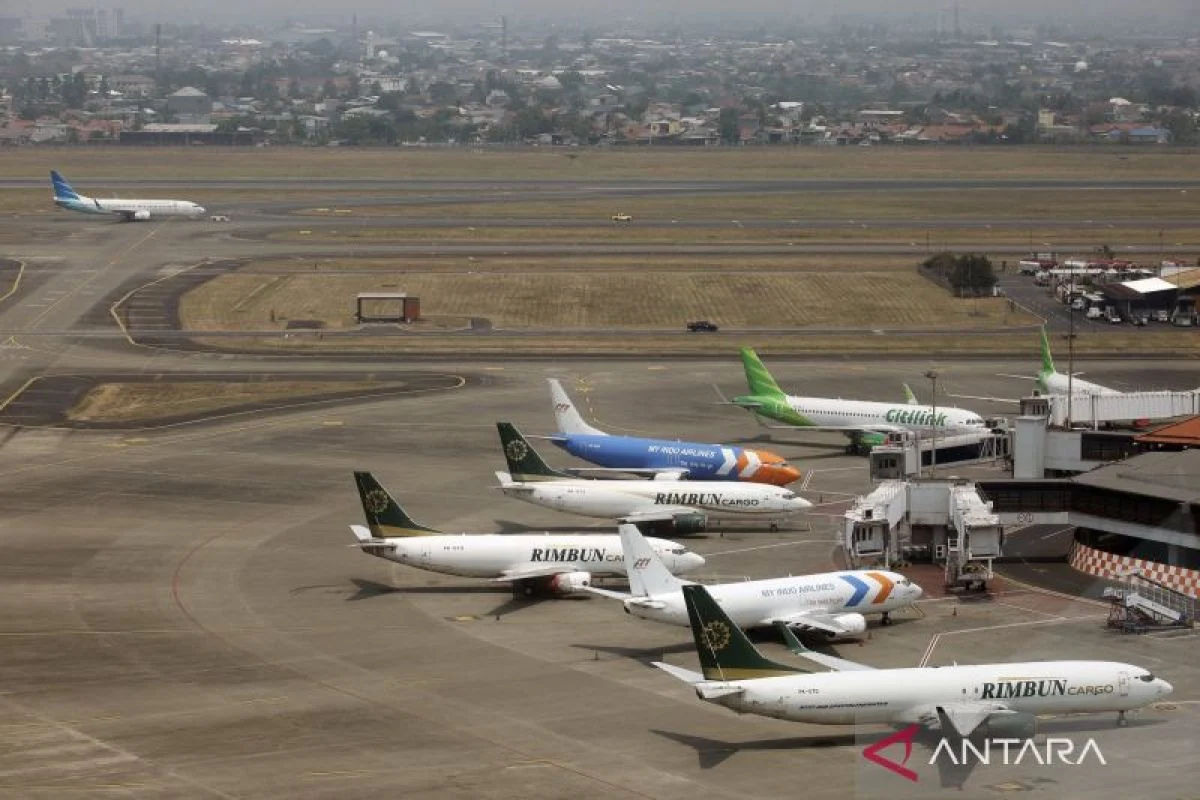
The recent eruption of Mount Anak Krakatau in early September 2026 has sent towering plumes of volcanic ash thousands of feet into the atmosphere, triggering widespread flight cancellations, temporary airport closures, and significant logistical disruptions across Java and Sumatra, including the capital city of Jakarta. While terrestrial communities have rushed to secure protective masks and manage particulate fallout, the aviation sector faces a more profound, invisible threat. The crisis highlights a stark reality of modern aviation safety: volcanic ash is not merely a visual deterrent that impairs pilot visibility, but a destructive geological hazard capable of causing total jet engine failure.
As ash clouds from the September 2026 eruption reached altitudes of approximately 50,000 feet on the Sumatran side, aviation authorities faced monumental challenges. More than 1,500 flights and an estimated 170,000 passengers were immediately impacted across multiple regional hubs, including Juanda International Airport, which saw dozens of cancellations. Understanding why these rigorous safety protocols are enforced requires examining the unique physical properties of volcanic ash and its catastrophic interaction with commercial aircraft.
Chronology of the September 2026 Eruption and Aviation Crisis
The escalation of volcanic activity at Mount Anak Krakatau began in late August 2026, culminating in a major explosive phase during the first week of September. Geological monitoring agencies recorded rapid subterranean shifts, leading to sudden, high-intensity ash expulsions.
On September 6, 2026, the eruption intensified significantly. Prevailing winds carried dense particulate plumes eastward and northward, blanketing parts of Sumatra, the Sunda Strait, and extending toward western Java, including Jakarta. Satellite tracking and pilot reports confirmed that the ash cloud had surged to an extraordinary height of 50,000 feet—well within and above the cruising altitudes of commercial jetliners.
In response to the shifting hazard perimeter, the Directorate General of Civil Aviation, in coordination with meteorological agencies and air navigation service providers, issued urgent Notices to Air Missions (NOTAMs). By September 7, at least eight major airports across the affected zones had temporarily suspended operations. Grounded fleets and stranded passengers became emblematic of the crisis, mirroring the precautionary measures enacted globally whenever explosive stratovolcanoes threaten vital airspace corridors.
The Nature of Volcanic Ash: More Than Just Dust
To understand why a dusting of volcanic debris can paralyze a multi-million-dollar aircraft, one must look closely at the composition of the material. Volcanic ash bears little resemblance to ordinary household dust or smoke. It is composed of pulverized rock, crystalline minerals, and microscopic glass shards.
These particles are extraordinarily hard and abrasive. Because they are jagged and lightweight, they can remain suspended in the atmosphere for days or weeks, traveling hundreds of miles from the eruption source. According to the United States Geological Survey (USGS), volcanic ash presents a severe hazard to aircraft even when the parent volcano is completely obscured or hundreds of miles away.
When an aircraft encounters an ash cloud, the consequences begin on the exterior surfaces. The abrasive nature of the glass and mineral shards acts like sandblasting material. Windshields are rapidly etched and frosted over, stripping away specialized anti-glare and heating coatings and severely compromising pilot forward visibility. Pitot-static tubes and external sensors can become clogged, feeding erroneous airspeed and altitude data to the flight deck.
Thermal Destruction: How Ash Melts Inside Jet Engines
While exterior damage is severe, the most catastrophic vulnerability lies within the aircraft’s propulsion system. Modern turbofan and turbojet engines operate at internal temperatures that far exceed the melting point of volcanic ash.
Inside the combustion chamber, temperatures can range from 1,000 to over 2,000 degrees Celsius. When an aircraft flies through a volcanic ash cloud, billions of microscopic ash particles are ingested into the engine intakes. As these mineral fragments enter the high-temperature zones of the turbine, they melt into a liquid state.
The molten glass and rock then travel further back into the cooler sections of the turbine, specifically onto the turbine stator blades and nozzle guide vanes. Upon contacting these cooler metal components, the material solidifies instantly, forming a rock-like glaze or clinker. This accumulation chokes the internal airflow, disrupts the aerodynamic balance of the compressor and turbine stages, and causes severe engine surging.
Furthermore, the continuous ingestion of abrasive ash erodes compressor blades, stripping away protective coatings and degrading engine performance. In severe cases, the restricted airflow and thermal distress cause the flame within the combustion chamber to blow out entirely—a phenomenon known as a flameout—resulting in a complete loss of engine thrust.
Historical Precedents: Lessons Learned from Past Disasters
The aviation industry’s strict zero-tolerance policy toward volcanic ash is written in the history of near-catastrophic encounters. Aviation safety protocols were fundamentally rewritten following a landmark incident in 1982, when a British Airways Boeing 747 flew directly into an unmapped ash cloud generated by the eruption of Mount Galunggung in Indonesia.
All four engines of the aircraft failed simultaneously as ingested ash melted and choked the turbines. The aircraft glided downward, losing more than 25,000 feet of altitude while the flight crew desperately attempted airstarts. Miraculously, the crew managed to restart three of the engines and safely land the severely damaged aircraft in Jakarta. Inspection revealed that the plane’s exterior had been entirely sandblasted, its windshields rendered opaque, and its engines heavily compromised.
Data compiled by the USGS underscores that this was not an isolated anomaly. Between the dawn of the jet age and 2009, researchers documented 129 direct encounters between commercial aircraft and volcanic ash clouds. Of those incidents, 79 resulted in varying degrees of structural or mechanical damage, and nine involved complete engine flameouts while airborne. These sobering statistics ensure that contemporary aviation regulators take immediate, preventative action whenever an active eruption threatens flight paths.
Why Altitude and Radar Offer Limited Protection
A common question among travelers is why aircraft cannot simply fly higher or lower to bypass ash clouds, or why onboard weather radar cannot easily detect them.
Unlike weather systems composed of water droplets and ice crystals, volcanic ash clouds are largely dry and consist of fine rock particles. Standard airborne weather radars, which rely on the reflection of moisture to detect storms, often fail to register dry ash clouds. To a pilot flying at night or in instrument meteorological conditions, an ash cloud can appear as nothing more than a routine patch of haze or darkness until the aircraft is already inside it.
Moreover, explosive eruptions do not confine their particulate output to a single atmospheric layer. As demonstrated by the Anak Krakatau event, powerful updrafts can propel ash to 50,000 feet and beyond. Because ash disperses across multiple stratospheric and tropospheric levels and drifts over vast geographic expanses depending on high-altitude wind patterns, vertical diversion is frequently ineffective. Flight planners must rely on specialized satellite imagery, Volcanic Ash Advisory Centers (VAACs), and collaborative dispersion models to reroute traffic entirely around contaminated airspace.
Operational Implications and Economic Fallout
The decision to close airports or cancel thousands of flights is never taken lightly by aviation authorities, airline executives, or government regulators. The economic fallout of shutting down regional hubs like those affected by the Anak Krakatau eruption is immense, affecting tourism, cargo logistics, business travel, and airline operational revenues.
However, the cost of inaction is infinitely higher. Beyond the immediate risk to human life, a single engine failure or hull loss resulting from ash ingestion can permanently tarnish an airline’s reputation, incur billions of dollars in liabilities, and disrupt national transportation infrastructure for months. Furthermore, even low-concentration ash exposure that does not result in immediate engine failure accelerates mechanical wear and tear, necessitating costly, premature engine overhauls and increased maintenance cycles.
Broader Environmental and Public Health Reactions
While the skies above Java and Sumatra remained strictly regulated, the ground-level ramifications of the Anak Krakatau eruption mirrored the atmospheric disruptions. As particulate matter slowly settled out of the air, residents in Jakarta and surrounding urban centers scrambled to acquire protective face masks to safeguard against respiratory irritation. Health authorities issued advisories warning that fine volcanic ash can exacerbate chronic conditions such as asthma, bronchitis, and cardiovascular disease.
Concurrently, motorists and logistics companies faced the tedious task of cleaning and inspecting vehicles exposed to the abrasive fallout. Transport safety experts advised drivers to thoroughly check seven critical vehicle components—including air filters, engine oil, wiper blades, braking systems, and exterior paintwork—to prevent long-term mechanical damage caused by residual grit.
Conclusion: Prioritizing Safety in the Shadow of Volcanic Activity
The 2026 eruption of Mount Anak Krakatau serves as a powerful reminder of nature’s formidable force and the vulnerabilities inherent in global travel networks. Volcanic ash is far more than a nuisance that obscures vision; it is a chemically complex, thermally reactive, and mechanically destructive substance that can incapacitate multi-engine jetliners in minutes.
Through sophisticated satellite tracking, coordinated international advisories, and swift operational shutdowns, modern aviation authorities continue to prioritize passenger safety over schedule continuity. As long as restless geological giants like Anak Krakatau remain active along the Pacific Ring of Fire, the ability to anticipate, track, and respect the invisible boundaries of volcanic ash will remain a cornerstone of global aviation resilience.