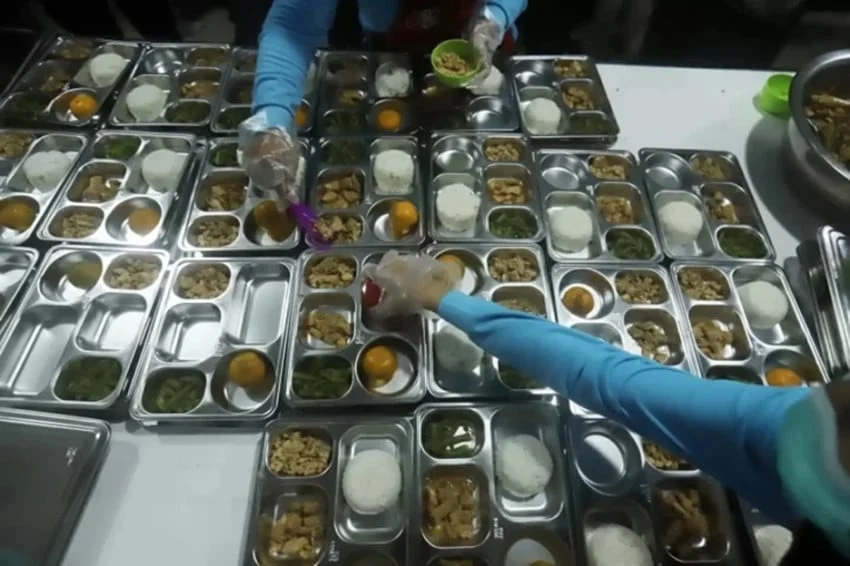
The Makan Bergizi Gratis (MBG) initiative, a cornerstone policy of the current administration aimed at improving child nutrition and combating stunting, is facing a critical juncture. As the program scales up across the Indonesian archipelago, a series of concerning reports regarding food safety—ranging from mass food poisoning incidents to the discovery of foreign contaminants such as centipedes—has prompted lawmakers to demand immediate intervention from law enforcement. Wakil Ketua Komisi III DPR RI, Ahmad Sahroni, has formally called upon the Indonesian National Police (Polri) to adopt a more proactive stance in monitoring the program, citing concerns that these incidents may transcend mere negligence and potentially involve acts of sabotage.
The call for heightened security and oversight comes as the Badan Gizi Nasional (BGN) grapples with the logistical challenges of deploying a nationwide school feeding program. With the program’s ambition to reach millions of students, the recurring reports of health hazards have sparked a national debate regarding the adequacy of quality control protocols, supply chain transparency, and the potential for malicious interference in a program of such high strategic importance.
Chronology of Escalating Concerns
The skepticism surrounding the safety of the MBG program began to materialize in the third quarter of 2026, as the program entered its operational phase in various provinces. Initial reports were dismissed as isolated incidents involving logistical mishaps. However, the frequency and severity of these events began to paint a more troubling picture.
In late August 2026, reports surfaced from several regional primary schools indicating that dozens of students had fallen ill after consuming the subsidized meals. Medical assessments at local clinics confirmed symptoms consistent with foodborne illness, including severe nausea, vomiting, and dehydration. By early September, these localized issues evolved into broader media coverage when parents and teachers reported the discovery of non-food items in meal packets. The most alarming of these reports involved the discovery of a centipede in a meal served in a rural school, an incident that went viral on social media and intensified public outcry.
By mid-September 2026, the cumulative impact of these reports reached the legislative floor. Ahmad Sahroni’s statement on September 17, 2026, served as a catalyst for a more rigorous parliamentary inquiry. He argued that the current oversight mechanisms are insufficient, suggesting that the police must play a more active role in investigating the supply chains to determine whether the failures are systemic, accidental, or, as some suspect, intentional acts of sabotage designed to undermine the government’s flagship social program.
The Scope and Strategic Intent of the MBG Program
The Makan Bergizi Gratis program is fundamentally designed to address the persistent challenge of childhood stunting in Indonesia. By providing a nutritionally balanced meal to school-aged children, the government aims to improve cognitive development and long-term educational outcomes. The program is part of a broader socio-economic policy framework intended to provide a social safety net that incentivizes school attendance while simultaneously stimulating local agricultural economies, as the food supplies are intended to be sourced from regional producers.
However, the transition from policy design to large-scale implementation has been fraught with difficulties. The Badan Gizi Nasional (BGN) recently announced a strategic pivot, opting to remove thousands of schools from the initial recipient list. This decision, according to the BGN, is intended to shift the focus of the program toward 3T regions—a classification for disadvantaged, frontier, and outermost areas of Indonesia. While this shift is framed as an effort to prioritize the most vulnerable populations, critics argue it also serves to consolidate the program’s footprint in areas where logistics can be more tightly controlled, thereby mitigating the risk of food safety incidents.
Official Responses and the Demand for Accountability
The Kepala BGN, Sudaryono, has acknowledged the gravity of the situation. In recent briefings, he emphasized that the agency is conducting internal audits of its kitchen partners and supply vendors. Crucially, he signaled a willingness to involve the National Police should internal investigations yield evidence of systemic sabotage. "If there is any indication of criminal intent or deliberate attempts to disrupt the program, we will not hesitate to hand the investigation over to the authorities," Sudaryono stated.
For Ahmad Sahroni, however, waiting for internal audits is insufficient. Representing the Commission III of the DPR, which oversees law, human rights, and security, Sahroni emphasized that the police possess the investigative tools necessary to conduct forensic analysis of the food supply chain. He argued that the "mematikan" (potentially fatal) nature of some of the poisoning cases necessitates a criminal investigation rather than a purely administrative one.
Sahroni’s request for the police to be "proactive" implies a shift from reactive investigation—where police wait for a formal complaint after a tragedy—to a preventive posture. This could involve intelligence-led monitoring of food distribution centers, background checks on vendors, and the deployment of personnel to oversee the hygiene standards at cooking facilities.
Analysis of Implications: Safety vs. Sustainability
The current crisis surrounding the MBG program presents significant implications for the administration’s credibility. If the government fails to address these safety concerns, the program risks losing the trust of parents, which is vital for its long-term viability. Furthermore, the allegations of sabotage add a political layer to the crisis. In a polarized social media environment, the perception that the program is being targeted by "enemies of the state" could be used to shield the government from legitimate criticism regarding poor logistical management and a lack of oversight.
Economically, the incident raises questions about the sustainability of the "local sourcing" model. While sourcing from local farmers is socially desirable, it also introduces complexity into the quality assurance process. Small-scale providers may lack the food safety certification and infrastructure to maintain strict hygiene standards at the scale required by the MBG program. The challenge for the BGN, therefore, is to balance the inclusion of local suppliers with the stringent requirements of mass-scale food preparation.
From a public health perspective, the risks are immediate. The contamination of school meals poses a direct threat to the student population, potentially negating the very nutritional benefits the program seeks to achieve. Experts in food security suggest that the government must move toward a more centralized, standardized safety certification process for every kitchen participating in the MBG program.
Future Outlook and Police Involvement
As the situation unfolds, the role of the police will likely become more prominent. Should the National Police initiate a formal investigation, the scope will likely include:
- Forensic Food Analysis: Determining the source of contamination, whether biological (bacteria) or foreign objects (physical contamination).
- Vendor Audits: Investigating the procurement process to ensure that vendors were selected based on capacity and health safety standards rather than political or nepotistic considerations.
- Supply Chain Security: Identifying potential vulnerabilities in the transit of food from kitchens to classrooms, which is where the risk of tampering is highest.
While the government continues to defend the program as a vital necessity for the nation’s future, the pressure from the DPR indicates that the legislative branch will demand greater transparency. The coming months will be critical. If the rate of food safety incidents does not decline, the government may be forced to pause the expansion of the program to overhaul its safety protocols entirely.
Ultimately, the successful delivery of the Makan Bergizi Gratis program hinges on public confidence. Whether these incidents are the result of growing pains in a massive logistical undertaking or something more sinister, the Indonesian National Police now finds itself at the center of a high-stakes effort to protect both the students and the integrity of a national policy that is intended to shape the future of the next generation. The mandate from Commission III is clear: the safety of the children must take precedence over political expediency, and the state must demonstrate that it has the capacity to safeguard the food it provides to its citizens.