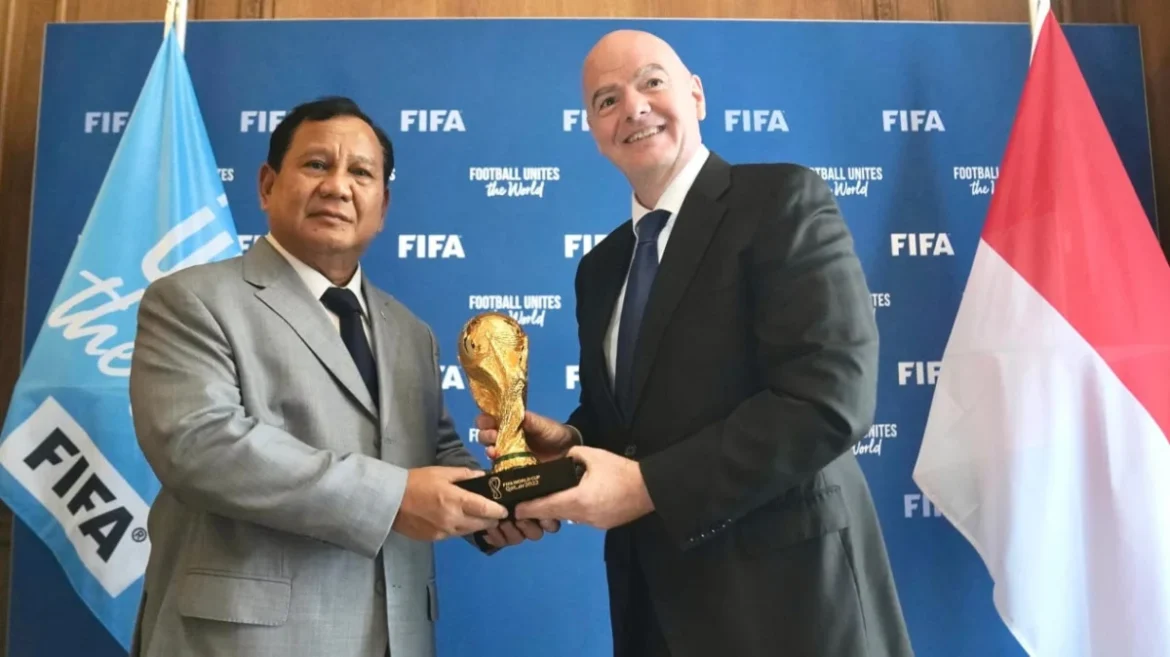
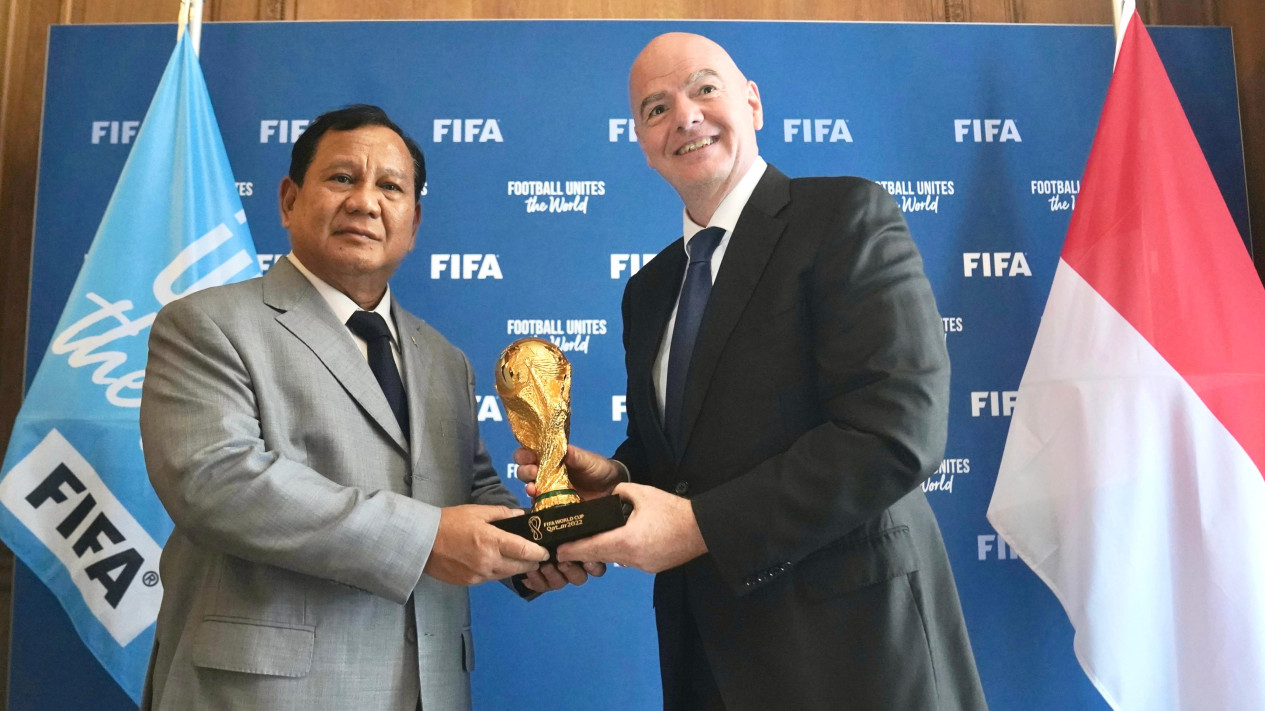
The global governing body of association football, FIFA, is maintaining its strong diplomatic and structural focus on Southeast Asia as preparations intensify for a landmark sporting visit. FIFA President Gianni Infantino is officially scheduled to arrive in Indonesia in early October 2026. This high-profile diplomatic and athletic mission serves a dual purpose: holding strategic discussions at the highest level of the Indonesian government with President Prabowo Subianto, and personally witnessing the climactic conclusion of the inaugural FIFA ASEAN Cup 2026.
The announcement, which underscores Indonesia’s growing prominence in international football administration and event hosting, was officially confirmed by Football Association of Indonesia (PSSI) Chairman Erick Thohir. According to the updated itinerary, Infantino’s visit will span two critical days, centering on Jakarta as the focal point of regional football diplomacy.
High-Level State Diplomacy: Meeting with President Prabowo Subianto
The cornerstone of Gianni Infantino’s working visit to Jakarta is an audience with Indonesian President Prabowo Subianto, scheduled for October 4, 2026. While the specific agenda items remain broad, discussions between the FIFA President and the Indonesian head of state are expected to revolve around the ongoing transformation of Indonesian football, government-backed infrastructure developments, and the long-term strategic partnership between the state and the international governing body.
Since the establishment of the permanent FIFA office in Jakarta—a collaborative milestone born out of post-tragedy infrastructure rehabilitation and youth development initiatives—relations between FIFA and the Indonesian government have reached unprecedented levels of coordination. President Prabowo’s administration has continued to prioritize sports diplomacy and grassroots infrastructure modernization, making the meeting with Infantino a vital checkpoint for evaluating the nation’s readiness to host major international fixtures.
Furthermore, the conversation is anticipated to touch upon the broader geopolitical landscape of ASEAN football. With Indonesia acting as the pioneer host for the region’s first major FIFA-sanctioned standalone tournament, the government’s continued backing is viewed by Zurich headquarters as essential for regional stability and developmental sustainability.
The Grand Finale: Climax of the FIFA ASEAN Cup 2026 at SUGBK
Following his state engagements, Infantino will transition his focus strictly to the pitch on October 5, 2026. The FIFA President is scheduled to attend the high-stakes final of the Division 1 FIFA ASEAN Cup 2026, which will take place at the iconic Stadion Utama Gelora Bung Karno (SUGBK) in Senayan, Jakarta.
The tournament, running from September 24 to October 5, 2026, marks a historic chapter in international football. It represents the very first major, comprehensive tournament organized directly by FIFA specifically tailored for the Southeast Asian region. By pooling the competitive strengths of ASEAN nations into a unified, high-visibility platform, FIFA aims to elevate the technical standards, commercial value, and global competitiveness of Southeast Asian football.
PSSI Chairman Erick Thohir highlighted the inclusive nature of the closing ceremony and the final match, noting that the event will serve as a gathering point for regional leadership. "On October 5, 2026, here in Jakarta, we are inviting several presidents of ASEAN federations and other Asian confederation counterparts to join us, alongside celebrating the tournament’s official closing and final showdown," Thohir stated.
The presence of regional federation heads emphasizes the diplomatic dimension of the tournament’s conclusion. It transforms the SUGBK into a temporary capital of Asian football diplomacy, where regional stakeholders can evaluate the success of the pilot tournament and discuss future iterations.
Foundation Laid by FIFA Secretary General Mattias Grafstrom
Infantino’s impending arrival builds directly upon the groundwork laid during the opening stages of the tournament. FIFA Secretary General Mattias Grafstrom arrived in Jakarta ahead of schedule to oversee the tournament’s inauguration and attended the grand opening ceremony held at SUGBK on September 25, 2026.
Grafstrom’s early presence allowed the executive leadership of international football to inspect facilities, review security protocols, and experience firsthand the legendary passion of Indonesian supporters. During his address in Jakarta, Grafstrom offered high praise for the logistical efficiency and operational excellence demonstrated by the PSSI under Thohir’s leadership.
"I am truly delighted to be here alongside my good friend, PSSI President Erick Thohir. I want to express my deepest gratitude for the extraordinary work that you and your entire team have undertaken to bring this tournament to life," Grafstrom remarked during a press briefing in the Indonesian capital.
The FIFA Secretary General also took specific note of the tight scheduling constraints under which the tournament was organized, commending the local organizing committee for executing a seamless operational rollout. Beyond administrative success, Grafstrom expressed profound admiration for the fervent football culture deeply embedded in Indonesian society.
Highlighting the massive turnout expected for marquee fixtures—such as the fierce regional rivalry matches that drew crowds exceeding 50,000 spectators to the stands of SUGBK—Grafstrom emphasized that the tournament serves as a testament to the nation’s unwavering devotion to the sport. "The timeline was undoubtedly tight, but I am exceptionally eager to witness these matches, which are projected to draw over 50,000 passionate fans. This kind of turnout undeniably showcases Indonesia’s profound and unmatched enthusiasm for football," he added.
Security and Logistical Preparations for Regional Blockbusters
The massive influx of regional visitors, traveling delegations, and passionate supporters has necessitated unprecedented security and logistical mobilization by local authorities. Prior to the tournament’s kickoff, security forces—including specialized units from the Mobile Brigade (Brimob) of the Metro Jaya Regional Police—conducted extensive sterilizations and security sweeps across the entire SUGBK complex.

The high-profile nature of matches, particularly encounters involving historic regional rivals such as the clashes between Indonesia and Malaysia, has drawn thousands of traveling supporters, including hundreds of members of supporter groups like the ‘Harimau Malaya’ contingent. In response, local law enforcement agencies deployed specialized security protocols, segregated seating arrangements, and dedicated escort details to ensure a safe, family-friendly environment for all international and domestic attendees.
These rigorous safety measures reflect the lessons learned from past administrative hurdles, signaling to the global football community that Indonesia has established a world-class standard for event safety, crowd management, and international hospitality.
Broader Economic, Sporting, and Strategic Implications
The hosting of the FIFA ASEAN Cup 2026 and the subsequent high-level visit by Gianni Infantino carry profound implications for Indonesian football and the country’s international standing.
From a sporting perspective, a tournament of this magnitude provides Southeast Asian national teams with invaluable exposure to elite-tier competition, structured refereeing standards, and high-intensity match environments. For Indonesian players, performing under the watchful eyes of FIFA’s highest executives inside a packed SUGBK offers a premier showcase for potential international scouting and career advancement.
Economically, the tournament acts as a major catalyst for Jakarta’s tourism, hospitality, and service sectors. The convergence of regional fans, international media, and global football executives generates substantial economic activity, reinforcing the government’s narrative that sports tourism is a viable and lucrative pillar of national development.
Diplomatically, the visit solidifies Indonesia’s reputation as a reliable and capable partner for international sports organizations. Having successfully navigated previous periods of administrative restructuring and stadium safety overhauls, Indonesia has transitioned from a subject of international scrutiny to a trusted model for regional football governance.
As the countdown to October 4 and 5 continues, all eyes remain fixed on Jakarta. The convergence of presidential-level statecraft, regional sports diplomacy, and the crowning of the first-ever champion of the FIFA ASEAN Cup 2026 marks a watershed moment—not only for Indonesian football, but for the future trajectory of the sport across the entire Southeast Asian landscape.