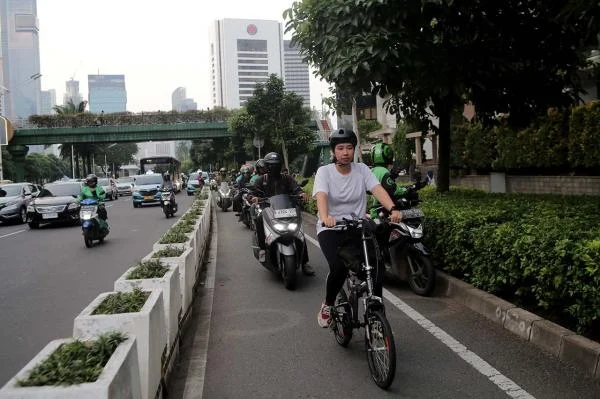
The Jakarta Provincial Government, through the Department of Transportation (Dishub), has officially announced a strategic evaluation of the city’s cycling infrastructure. This policy initiative aims to optimize the utilization of urban road space while upholding the principles of transport equity. Despite public discourse surrounding the efficiency of these lanes, the administration has reaffirmed its commitment to maintaining the existing cycling network, emphasizing its importance within the city’s hierarchy of transportation modes.
Head of the Jakarta Transportation Agency, Budi Awaluddin, confirmed that the government is currently conducting a thorough review of the physical characteristics of bicycle lanes, specifically focusing on their width and the safety features currently installed on the asphalt. This decision marks a significant milestone in the city’s ongoing effort to balance the needs of various road users in an increasingly congested metropolitan environment.
The Hierarchy of Urban Mobility
In a formal statement provided to the press on Sunday, September 27, 2026, Budi Awaluddin underscored that the preservation of bicycle lanes is non-negotiable. He argued that the policy aligns with global urban planning standards, which prioritize sustainable and non-motorized transport.
"The bicycle lane will be maintained. In the hierarchy of transportation, global cities prioritize pedestrians first, followed by cyclists. These facilities must be prioritized to ensure a fair distribution of road space," Budi stated. This perspective reflects the broader vision of the Jakarta administration to transition from a vehicle-centric urban design to one that promotes human-scaled mobility.
The focus on "fairness" in road space usage is central to the current administration’s narrative. As Jakarta continues to struggle with high traffic density, the integration of cycling infrastructure into the existing grid has been a point of contention. While critics often argue that dedicated lanes reduce capacity for motorized vehicles, supporters emphasize that these lanes are essential for carbon emission reduction and the promotion of public health.
Comprehensive Review of Safety Infrastructure
The upcoming evaluation extends beyond mere lane dimensions. A significant portion of the review is dedicated to the safety markers, specifically the "stick cones" (flexible bollards) that currently separate the bicycle lanes from motorized traffic. These physical barriers, while designed to protect cyclists from encroaching vehicles, have become a subject of scrutiny due to their durability, maintenance costs, and potential for causing accidents.
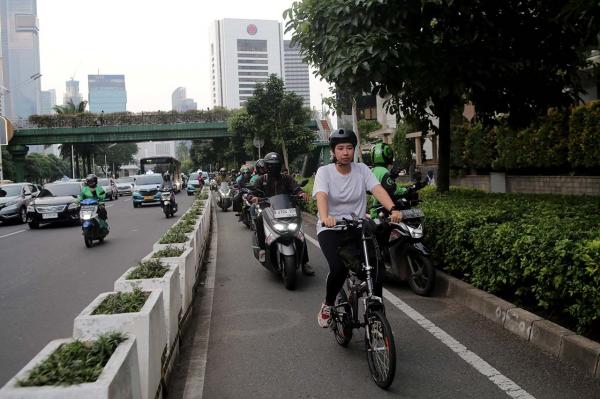
"The stick cones need to be reviewed because, in some cases, they can be quite dangerous," Budi explained. This acknowledgement highlights a shift toward more permanent or safer physical separation methods that do not pose a risk to motorists or cyclists if struck. The agency is expected to explore alternative barrier designs that are more visible, durable, and less hazardous to road users.
Chronology and Context: The Evolution of Jakarta’s Bicycle Lanes
To understand the current policy shift, it is necessary to examine the trajectory of Jakarta’s bicycle infrastructure. The city’s investment in cycling facilities accelerated significantly between 2019 and 2023, driven by the need to provide safe commuting alternatives during and after the global pandemic.
- 2019-2020: The inception of major dedicated bicycle lanes across central business districts. The program was met with initial skepticism but gained traction as commuters sought alternative ways to navigate the city.
- 2021-2022: Rapid expansion of the network, accompanied by the installation of flexible bollards to create a sense of security for riders.
- 2023: Increased pressure from various stakeholders, including public transport associations and urban planners, to harmonize the lanes with public transit hubs (TransJakarta stations).
- 2024-2025: A period of maintenance and intermittent review, as the city began to assess the effectiveness and usage rates of various stretches of the lanes.
- 2026 (Present): A formal commitment to permanent integration, marked by a systematic evaluation of design standards to ensure long-term viability.
Socio-Economic Implications and Urban Planning
The evaluation of the bicycle lanes carries significant implications for Jakarta’s urban development. Data suggests that while the initial uptake of cycling was driven by necessity, there remains a dedicated segment of the population that utilizes these lanes for daily commuting to work and education.
Urban planning experts argue that the success of a bicycle lane network is not merely measured by the number of cyclists at any given hour, but by the connectivity it provides between residential zones and public transport nodes. By maintaining the lanes, the Jakarta government is signaling its intention to support multi-modal transit, where citizens can cycle to an MRT or TransJakarta station, store their bikes, and continue their journey via mass transit.
Furthermore, the "fairness" aspect mentioned by the Transportation Agency relates to the economic efficiency of road usage. Bicycles occupy significantly less space than private passenger cars while moving the same number of people, potentially reducing the overall burden on the city’s arterial roads.
Challenges and Stakeholder Perspectives
The debate surrounding Jakarta’s bicycle lanes involves a diverse array of stakeholders:
- Commuters: Many daily cyclists have expressed relief at the government’s decision to maintain the lanes, citing them as a lifeline in a city with heavy traffic.
- Motorists: The driving community has consistently raised concerns about the narrowing of roads. The government’s decision to evaluate lane widths is a direct attempt to address these concerns without removing the lanes entirely.
- Urban Planners: Professionals in this field generally support the existence of the lanes but emphasize the need for better design, such as raised curbs or physical barriers that are more permanent than the current stick cones.
- Public Transport Operators: For systems like TransJakarta, the lanes provide a clearer path for feeder services, provided that the bicycle lanes do not obstruct bus stops or loading zones.
Moving Toward Sustainable Infrastructure
The upcoming review by the Dishub is expected to result in a refined set of technical guidelines. These may include the standardization of lane widths in high-traffic corridors versus residential streets, the implementation of more robust, low-profile barriers, and improved signage to alert drivers and cyclists to merging points.

By framing the issue as one of "global city standards," the Jakarta administration is attempting to depoliticize the existence of the lanes. By treating them as a standard component of urban infrastructure—much like sidewalks or traffic lights—the government hopes to create a more predictable and harmonious environment for all road users.
The move also signals an opportunity for technological integration. As the city evaluates the lanes, there is potential for the installation of sensors to track usage, which could provide data-driven insights into where the lanes are most effective and where they might need adjustment to better serve the population.
Future Outlook
As Jakarta moves into the latter half of 2026, the success of this evaluation will depend on the transparency and scientific rigor applied to the process. If the government can successfully balance the needs of cyclists with the reality of Jakarta’s traffic congestion, it could set a benchmark for other Southeast Asian cities currently facing similar challenges.
The focus on road safety—specifically regarding the hazards posed by existing barrier materials—demonstrates a willingness to learn from past implementation errors. This iterative approach to urban policy is crucial for a city that is constantly evolving.
In conclusion, while the debate over the city’s bicycle lanes is far from over, the current stance of the Jakarta Provincial Government is clear: the lanes are a permanent fixture. The focus has now shifted from whether to keep them, to how to make them safer, more efficient, and more integrated into the daily lives of Jakarta’s millions of residents. The upcoming months will be critical as the Department of Transportation rolls out these technical revisions, signaling a new, more refined phase in the development of Jakarta’s mobility landscape.