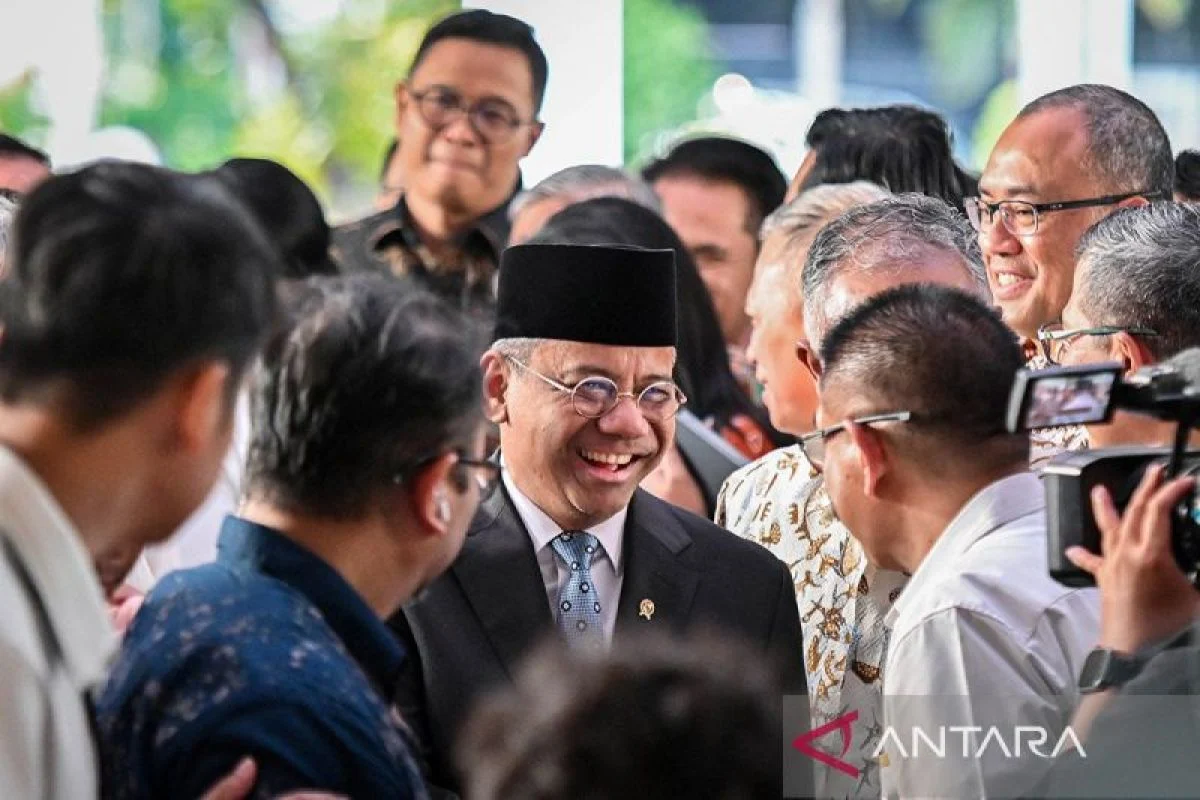
The political and economic landscape of Indonesia experienced a significant shift on Monday, September 14, 2026, as President Prabowo Subianto executed the sixth cabinet reshuffle of his administration. The focal point of this sweeping government restructuring was the Ministry of Finance, where veteran fiscal policymaker Suahasil Nazara was sworn in as the new Minister of Finance. Suahasil takes over the critical economic portfolio from Purbaya Yudhi Sadewa, marking the second time the Prabowo administration has changed leadership at the helm of the country’s treasury since taking office in October 2024.
The official inauguration ceremony took place at the State Palace in Jakarta, administered directly by President Prabowo Subianto in the presence of senior state officials, cabinet members, and invited dignitaries. The transition signals a renewed focus on fiscal prudence, budgetary discipline, and economic stability as the administration navigates complex domestic and global financial pressures.
Suahasil Nazara is far from a newcomer to the inner workings of Indonesia’s economic governance. Prior to his elevation to the top cabinet post, he served as the Deputy Minister of Finance, working closely alongside both his predecessor Purbaya Yudhi Sadewa and former Finance Minister Sri Mulyani Indrawati. His deep institutional knowledge and extensive background in fiscal policy are widely regarded as key assets for the administration. Notably, Suahasil previously served as the Head of the Fiscal Policy Agency (BKF) within the Ministry of Finance, where he played a pivotal role in designing and evaluating national economic policies, tax reforms, and state revenue strategies.
His appointment makes him the third Minister of Finance under President Prabowo Subianto’s administration. The treasury portfolio initially remained under the stewardship of globally respected economist Sri Mulyani Indrawati before Purbaya Yudhi Sadewa assumed the role in a prior cabinet adjustment. Suahasil’s promotion is widely interpreted by market analysts and observers as a calculated move by the administration to install a steady, highly experienced technocrat capable of reassuring domestic and international investors.
The Evolution of the Prabowo-Gibran Cabinet: A Chronology of Restructuring
Since President Prabowo Subianto and Vice President Gibran Rakabuming Raka assumed office in October 2024 under the banner of the Red and White Cabinet (Kabinet Merah Putih), the administration has maintained a dynamic approach to governance. Rather than maintaining a static lineup, the president has frequently evaluated ministerial performance, resulting in a series of targeted structural adjustments.
The September 14, 2026 shake-up is officially recorded as the sixth cabinet reshuffle of the Prabowo-Gibran administration. This continuous monitoring of ministerial efficacy has been a hallmark of the current government. Just weeks prior, President Prabowo publicly praised the Red and White Cabinet for maintaining a rigorous work ethic, noting that various ministries had operated with extraordinary dedication, often working without traditional holidays to meet national development targets.
However, despite general commendations regarding executive productivity, persistent global economic headwinds, fluctuating commodity prices, and stringent revenue collection targets have created immense pressure on key economic posts. The Ministry of Finance, in particular, remains under constant scrutiny as it balances ambitious state-funded social programs with the constitutional mandate to maintain fiscal discipline.
Core Priorities: Protecting the APBN and Ensuring Fiscal Credibility
Immediately following his swearing-in ceremony at the State Palace, newly minted Finance Minister Suahasil Nazara outlined his primary administrative goals. Addressing journalists and economic stakeholders, Suahasil emphasized that his immediate priority is safeguarding the health, integrity, and credibility of the state budget (APBN).
"Our primary objective moving forward is to maintain the soundness and absolute credibility of the APBN," Suahasil stated. He further underscored the government’s commitment to strict fiscal parameters, assuring the public that the national budget deficit will remain securely within the legally mandated threshold.
The state budget has faced increasing demands as the Prabowo administration rolls out flagship national programs, including nationwide nutritional support initiatives, infrastructure expansion, and targeted social safety nets. Balancing these massive expenditure requirements with sustainable revenue generation is one of the defining challenges Suahasil inherits. Financial markets and international rating agencies closely monitor Indonesia’s adherence to its fiscal deficit ceiling—traditionally capped at 3 percent of Gross Domestic Product (GDP) under Indonesian law. By placing an experienced technocrat like Suahasil at the helm, the administration aims to signal that fiscal responsibility remains non-negotiable.
Broader Economic Implications and Market Reactions
The replacement of Purbaya Yudhi Sadewa with Suahasil Nazara has sparked widespread discussion among economists, market analysts, and business leaders. While sudden changes at the Ministry of Finance typically generate short-term market volatility, the choice of an internal candidate with deep institutional roots has largely mitigated severe market anxiety.
Suahasil’s familiarity with international financial institutions, multilateral development banks, and domestic tax structures provides a strong foundation for continuity. Analysts point out that because Suahasil has spent years shaping fiscal policies from within the ministry, the learning curve is virtually nonexistent. This seamless transition is expected to prevent any disruption in the execution of ongoing tax reforms, digitalization of treasury systems, and budget disbursement schedules for the remainder of the fiscal year.
Furthermore, the reshuffle occurs against a backdrop of resilient macroeconomic indicators. Recent reports from academic circles and business associations have highlighted positive trends in foreign direct investment (FDI) and steady economic growth. The ongoing performance of key economic ministers—such as Coordinating Minister for Economic Affairs and Minister of Investment Rosan Roeslani—has helped maintain investor confidence even as individual portfolios undergo structural fine-tuning.
Looking Ahead: The Road Map for the Red and White Cabinet
As the Red and White Cabinet enters its post-reshuffle phase, the administration faces a packed legislative and economic agenda. The first eighteen months of the Prabowo-Gibran presidency have been characterized by bold policy announcements, structural evaluations, and intensive project execution.
With Suahasil Nazara now directing the financial engine of the country, the administration is expected to double down on revenue optimization, tax compliance, and strategic spending efficiency. The success of these policies will determine whether Indonesia can achieve its long-term growth aspirations while insulating its economy from external global shocks.
The sixth cabinet reshuffle ultimately demonstrates President Prabowo’s willingness to make pragmatic personnel changes in pursuit of administrative excellence. As Suahasil steps into his new office at the Juanda building in Jakarta, all eyes will be on how the Ministry of Finance navigates the delicate balance between funding national development and preserving the fiscal health that has long been the cornerstone of Indonesia’s macroeconomic stability.