The international academic profile of Indonesia’s National Agency for Drug and Food Control (BPOM) Head, Prof. dr. Taruna Ikrar, M.Biomed., Ph.D., has reached a new milestone following his official appointment as a Visiting Professor at Tsinghua University in Beijing, China. This prestigious academic engagement places the Indonesian regulatory leader at the helm of one of the world’s most elite higher education institutions, currently ranked as the number one university in Asia for the eighth consecutive year according to the Times Higher Education (THE) Asia University Rankings 2026, alongside its commanding position at number 12 globally in the THE World University Rankings 2026.
This strategic appointment underscores not only Professor Taruna Ikrar’s distinguished personal trajectory as a world-renowned neuroscientist and pharmacologist but also signifies a broader push by Indonesian state institutions to integrate global scientific advancements into national regulatory frameworks. By bridging world-class academic research with public health governance, the collaboration is anticipated to propel Indonesia’s regulatory capacities forward, particularly in navigating the complex intersections of emerging medical technologies, artificial intelligence (AI), and precision medicine.
Strategic Academic Engagement at a Global Epicenter
Tsinghua University is universally recognized as a powerhouse for scientific innovation, technological development, and policy research. Securing a Visiting Professorship at such an institution requires exceptional scholarly contributions, a criterion that Professor Taruna Ikrar fulfills through his extensive global research portfolio in biomedicine, neuroscience, and pharmacology.
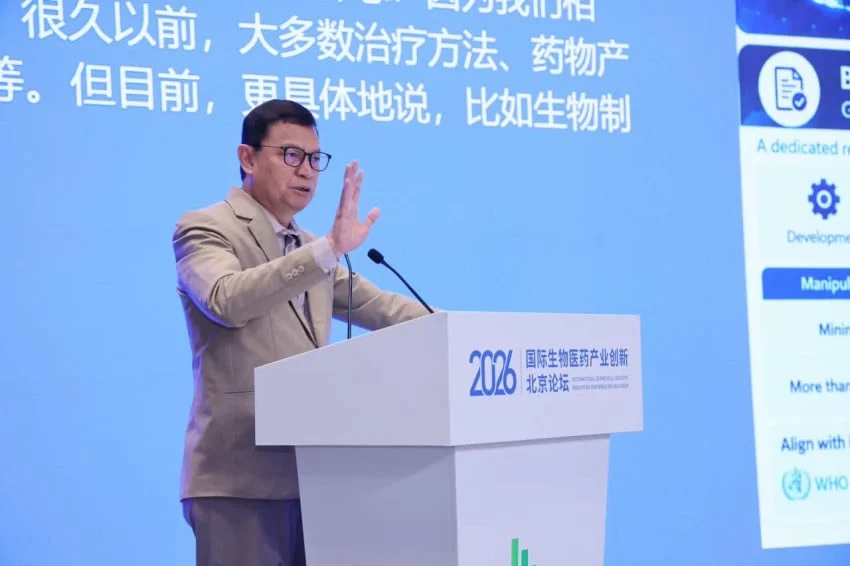
During his tenure and ongoing academic lectures at Tsinghua University, Professor Taruna Ikrar has focused on critical paradigms reshaping modern healthcare. His presentations and collaborative discussions center on the revolutionary convergence of artificial intelligence with precision medicine, advanced diagnostics, innovative drug discovery, cell and gene-based therapies, and the ethical utilization of massive health datasets.
In the contemporary landscape of global health, the development of new therapeutics is no longer confined to traditional laboratory experimentation. Instead, it increasingly relies on computational biology, machine learning models capable of predicting molecular interactions, and big data analytics that tailor treatments to individual genetic profiles. By positioning himself at the center of this academic discourse in Beijing, the BPOM Head is directly exposing Indonesian regulatory paradigms to cutting-edge global methodologies, ensuring that the agency he leads remains proactive rather than reactive in the face of rapid technological disruption.
Broader Implications for Indonesian Public Health and Drug Regulation
The appointment carries profound strategic implications for BPOM and the broader Indonesian health sector. As pharmaceutical sciences evolve through innovations such as mRNA technology, advanced biologics, and AI-driven clinical trials, regulatory bodies worldwide face the immense challenge of ensuring public safety without stifling innovation.
Traditionally, regulatory agencies operate downstream, evaluating products only after they have been developed by pharmaceutical companies or academic institutions. However, under the visionary leadership of modern regulators like Professor Taruna Ikrar, there is a paradigm shift toward anticipatory regulation. By engaging directly with top-tier global research hubs like Tsinghua University, BPOM gains early insights into the trajectory of upcoming medical technologies. This foresight allows Indonesia to develop robust, science-based regulatory frameworks that can safely accommodate advanced therapies, medical devices utilizing AI algorithms, and personalized medicine products.
Furthermore, this academic bridge facilitates knowledge transfer and capacity building for Indonesian researchers, regulators, and scientists. Strengthening bilateral academic and scientific ties between Indonesia and China in the fields of biotechnology and pharmaceutical sciences opens avenues for joint research initiatives, shared laboratory protocols, and harmonization of safety standards. This collaboration is particularly vital as Indonesia strives to achieve greater national self-reliance in the pharmaceutical and medical device sectors, reducing its historical dependence on imported raw materials and finished health products.
Contextualizing the Leadership of Professor Taruna Ikrar
The elevation of Professor Taruna Ikrar to a visiting professorship at Tsinghua University aligns with a consistent pattern of international recognition throughout his career. Before taking the helm at BPOM, he built an extensive international reputation as a medical doctor, neuroscientist, and pharmacologist, holding prominent academic and research positions in major global institutions, particularly in the United States, including the University of California, Irvine.
His deep understanding of brain science, combined with rigorous pharmacological training, places him in a unique position to address complex public health issues. Since assuming leadership of BPOM, Professor Taruna Ikrar has consistently advocated for science-based policies, transparency, and public empowerment—exemplified by initiatives such as consumer education campaigns promoting smart consumption of medical and food products.
His ability to seamlessly transition from high-level regulatory enforcement to cutting-edge global academic discourse demonstrates a rare synergy between state administration and scientific scholarship. This dual capability enhances Indonesia’s diplomatic standing in international health forums, where regulatory trust and scientific credibility are paramount.
Chronology of International and Institutional Developments
The integration of Professor Taruna Ikrar’s global academic pursuits with his official duties at BPOM reflects a deliberate institutional strategy to elevate Indonesia’s profile in international health governance.
- Pre-Appointment Phase: Long before his leadership at BPOM, Professor Taruna Ikrar established himself as a prominent figure in global neuroscience, contributing pivotal research on human brain mapping, neuropharmacology, and cellular therapies, earning international accolades and fellowships.
- Assumption of BPOM Leadership: Upon taking charge of the Indonesian food and drug regulatory body, he emphasized the modernization of regulatory processes, leveraging digitalization, and accelerating the evaluation of innovative medicines to meet national health demands.
- Tsinghua University Invitation and Appointment (2026): Recognizing his dual expertise in rigorous scientific research and public health governance, Tsinghua University—reaffirming its status as the top-ranked institution in Asia for eight consecutive years—extended the invitation for a Visiting Professorship.
- Implementation of Academic Lectures and Collaborative Frameworks: Throughout his engagements in Beijing, Professor Taruna Ikrar delivered lectures highlighting the transformative impact of artificial intelligence and precision medicine on future healthcare, laying the groundwork for institutional partnerships between Indonesian scientific bodies and premier Chinese research centers.
Future Outlook: Fostering Innovation While Safeguarding Public Safety
As the global healthcare landscape navigates the uncharted territories of artificial intelligence, genomic medicine, and advanced pharmacological innovations, the role of regulatory agencies has never been more critical. The engagement of BPOM’s leadership with world-class academic institutions like Tsinghua University signals a proactive approach to these modern challenges.
By maintaining a foot in both worlds—the rigorous, forward-looking academic research environment of a top global university and the pragmatic, safety-focused arena of national regulation—Professor Taruna Ikrar is helping to future-proof Indonesia’s health architecture. The insights gained from these global collaborations are expected to trickle down into national regulatory guidelines, fostering an ecosystem where local biotechnology innovations can thrive safely, efficiently, and competitively on the international stage. Ultimately, this international recognition elevates not only an individual scholar but also positions Indonesia as a serious, forward-thinking participant in the global conversation on the future of medicine, science, and regulation.