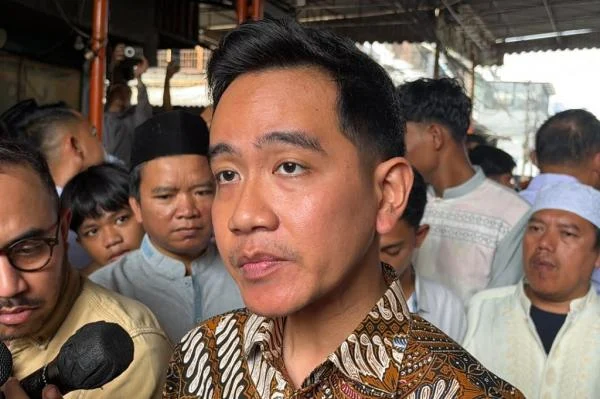
The ongoing discourse regarding the legal status of the educational credentials held by Indonesian Vice President Gibran Rakabuming Raka has entered a new phase following a recent ruling by the Supreme Court (Mahkamah Agung/MA). The decision, which concerns the validity of a letter of equivalence (surat keterangan/suket) for the Vice President’s high school diploma, has ignited a polarized debate between legal experts and political supporters. Amidst the swirling narratives, the Chairman of the GI-JOE (Gibran Joeara) volunteer group, Benny Parapat, has publicly urged the public and political actors to distinguish between administrative matters and the fundamental duties of state leadership.
The Core of the Administrative Dispute
Speaking from Solo, Central Java, on Sunday, November 1, 2026, Benny Parapat addressed the mounting pressure regarding the Supreme Court’s verdict. He characterized the issue of the diploma equivalence letter as a strictly administrative matter that should not impede the functionality of the government. According to Parapat, the legitimacy of a high-ranking state official’s performance should be measured by their execution of duties rather than being mired in technical bureaucratic hurdles that have been retroactively challenged.
"This is not something we should be debating in the public sphere," Parapat stated. "The issue of the ‘suket’ is an administrative state matter. Mas Gibran’s focus is on his duties to the state. These two things are separate and cannot be conflated. Only those with specific political agendas seek to blur these lines to serve their own short-term interests."
Chronology of the Legal Challenge
The controversy surrounding the educational credentials of Gibran Rakabuming Raka is not a recent development. It dates back to the registration period for the 2024 Presidential Election. Throughout the campaign, Gibran’s eligibility was subjected to multiple layers of scrutiny by the General Elections Commission (KPU).
- Pre-Election Verification (2023): During the registration phase, the KPU verified all documentation submitted by candidates, including Gibran Rakabuming Raka. At that time, the documents were deemed sufficient to meet the constitutional requirements for vice-presidential candidacy.
- Constitutional Court Rulings: The Constitutional Court (MK) previously addressed various challenges regarding the eligibility of the Prabowo-Gibran ticket. These rulings established the constitutional validity of the pair’s participation in the 2024 elections.
- Supreme Court Intervention (Late 2026): The recent Supreme Court decision regarding the letter of equivalence has introduced a new variable. Legal analysts have been divided on whether this decision impacts the current status of the Vice President, with many attorneys emphasizing the principle of non-retroactivity—the legal doctrine that a new ruling cannot invalidate past actions that were deemed legal at the time they were performed.
Perspectives on Fairness and Political Timing
Biko Sutanto, the Treasurer of GI-JOE, echoed Parapat’s sentiments, framing the current political noise as an attempt to undermine the stability of the executive branch. Sutanto expressed concern regarding the timing of the legal challenges, noting that such disputes were fully vetted during the electoral process.
"It is inherently unfair," Sutanto remarked. "Mas Gibran has already successfully navigated every stage of the vetting process—from his time as Mayor of Surakarta to his ascension to the Vice Presidency. These issues should have been settled long ago. Raising them now, in the middle of a governing term, suggests a motivated political campaign rather than a genuine concern for administrative procedure."
The concern raised by GI-JOE highlights a broader apprehension within the administration’s support base: the fear that technical legal challenges are being utilized as a proxy for political delegitimization. This tactic, supporters argue, risks creating unnecessary instability in the national administration.
The Doctrine of Non-Retroactivity in Indonesian Law
From a strictly legal standpoint, the discourse surrounding the Supreme Court’s decision necessitates an understanding of the principle of non-retroactivity in Indonesian administrative and constitutional law. Numerous legal experts have clarified that even if a document is later deemed invalid or improper, that finding does not automatically strip an official of their title or office, provided that the appointment was made in good faith and followed the established legal framework at the time.
Attorneys representing the government have maintained that the Supreme Court’s decision to cancel the letter of equivalence cannot be applied retroactively to the 2024 election cycle. Under this interpretation, Gibran Rakabuming Raka remains the legitimate Vice President of the Republic of Indonesia. The argument is that once the electoral result was certified and the inauguration occurred, the candidate’s eligibility became a matter of established fact that is shielded from subsequent technical administrative reviews.

Broader Implications for Indonesian Governance
The intensity of this debate underscores the challenges of managing administrative records in a digital and highly polarized political environment. In Indonesia, the process of verifying educational documents for public office is a multi-step procedure involving the Ministry of Education and the KPU.
The current situation highlights several systemic implications:
- Administrative Standardization: There is a growing call for the digitalization and centralization of educational record-keeping to prevent disputes over the validity of certificates.
- Political Stability: The use of legal challenges as a means to disrupt the executive branch raises questions about the maturity of democratic discourse. When administrative disputes are escalated into constitutional crises, it can erode public trust in both the judiciary and the executive.
- The Role of the Judiciary: As the Supreme Court and the Constitutional Court continue to play pivotal roles in political outcomes, the public remains vigilant about the independence and consistency of these institutions. Critics of the current government, such as political commentator Denny Indrayana, have argued that the rulings from the MA and the MK must be interpreted as a unified signal regarding the necessity of accountability, though such interpretations remain contested by the government’s legal team.
Analyzing the "Suket" Debate
The "suket" (surat keterangan) in question served as a bridge between the Indonesian education system and the international curriculum pursued by the Vice President. While the document was accepted by the KPU during the candidacy registration, the subsequent invalidation by the Supreme Court has provided ammunition for critics to argue that the initial vetting process was flawed.
However, political analysts point out that the legal system is designed with "final and binding" mechanisms. Once the election process is concluded, the focus shifts from the candidate’s credentials to their legislative and executive performance. By continuing to focus on the educational background of a seated official, the opposition risks being perceived as prioritizing bureaucratic technicalities over the substantive issues facing the nation, such as economic development, infrastructure, and social welfare programs.
Conclusion
The statement from the GI-JOE volunteer group serves as a reminder of the administration’s resolve to continue its governance agenda despite the legal headwinds. Benny Parapat and Biko Sutanto represent a segment of the public that views the recent judicial developments as a distraction from the broader mandate of the current administration.
As the legal community continues to debate the finer points of the Supreme Court’s ruling, the political reality remains unchanged: the Vice Presidency is an established position, and the focus of the executive branch continues to be on the implementation of its national policy goals. Whether the administrative dispute over the diploma will eventually fade into obscurity or continue to be a point of political friction remains to be seen, but the stance from the administration’s allies is clear—the governance of the country must take precedence over administrative disputes that were settled during the democratic process of the 2024 elections.
In the coming weeks, it is expected that further legal clarifications will be sought, likely leading to a definitive end to the debate. Until then, the administration appears prepared to treat the matter as a settled issue, focusing instead on the practical governance of the state and the delivery of its core promises to the Indonesian people.