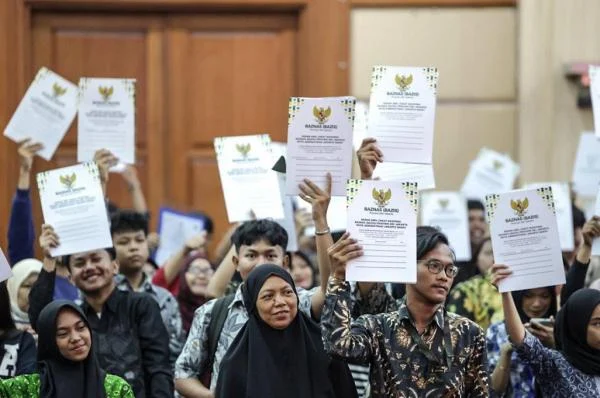
The Government of Jakarta continues its commitment to addressing educational barriers for its citizens, marking a significant milestone in its "Tebus Ijazah" (Redeem Diploma) program. On Thursday, October 29, 2026, the administration of West Jakarta officially facilitated the release of 442 diplomas for residents who had previously been unable to retrieve their documents due to outstanding administrative fees and tuition arrears at their respective schools.
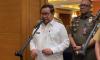
The symbolic handover ceremony, held at the MH Thamrin Room in the West Jakarta Mayor’s Office, was presided over by Deputy Mayor of West Jakarta, Ali Murtadho. This event represents the second phase of a broader initiative designed to alleviate the financial burden on underprivileged families, ensuring that the lack of funds does not become a permanent barrier to employment or further education for the city’s youth and adult learners.
Chronology and Program Evolution
The "Tebus Ijazah" initiative is a strategic intervention by the Jakarta Provincial Government to resolve long-standing issues where graduates are unable to secure their original diplomas because of unpaid school contributions, often referred to as "SPP" or other administrative levies. Many of these graduates find themselves in a precarious position where they cannot apply for jobs or university admissions without these essential documents.
The program was launched to address the backlog of thousands of residents held hostage by these administrative debts. In the first phase of the rollout, the West Jakarta administration successfully assisted 320 residents. With the addition of the 442 beneficiaries in the second phase, the total number of individuals supported under this initiative in the region has reached 762.
According to official figures provided by the West Jakarta administration, the cumulative financial assistance disbursed across these two phases amounts to approximately Rp1.1 billion. This capital injection acts as a settlement fund paid directly to schools, clearing the debts of the students and allowing for the immediate release of their credentials.
Diverse Beneficiary Profiles and Educational Reach
One of the defining features of this program is its inclusivity across the spectrum of formal and non-formal education. The beneficiaries are not limited to students of a specific age or academic level. The data indicates that those who received their diplomas on Thursday ranged from graduates of elementary schools (SD) and junior high schools (SMP) to senior high schools (SMA) and vocational high schools (SMK).
Furthermore, the program extends its reach to individuals participating in non-formal education pathways, specifically those enrolled in Community Learning Activity Centers (PKBM) and Learning Activity Studios (SKB). By including these participants, the Jakarta government acknowledges the importance of vocational and alternative education in the broader economic landscape of the capital. This reflects a policy shift toward ensuring that all forms of certification—whether vocational or academic—are accessible, regardless of the financial status of the student’s family.
Official Response and Administrative Rationale
During the ceremony, Deputy Mayor Ali Murtadho emphasized that the government’s role is to act as a bridge between the educational institutions and the students. "This program is not merely a financial transaction; it is a restoration of opportunity," Murtadho stated. He noted that the administrative hurdles preventing students from obtaining their diplomas often stem from long-term economic instability within households, which has been exacerbated by various external economic factors in recent years.
The Jakarta provincial government has established a verification process to ensure that the assistance reaches those who genuinely qualify. Schools are required to provide transparent documentation of the outstanding arrears, and families must demonstrate financial hardship through established social safety net databases. This dual-verification approach ensures that public funds are utilized efficiently and that the program maintains its integrity.

Socio-Economic Implications and Labor Market Impact
The inability to possess an original diploma is a significant contributor to structural unemployment in Jakarta. In the current Indonesian labor market, a high school diploma is typically the minimum requirement for formal sector employment. For those entering the job market, the lack of an original certificate often forces individuals into the informal economy, where wages are lower and social protections are non-existent.
By facilitating the release of these 762 diplomas, the Jakarta government is effectively increasing the "employability" of these citizens. Experts suggest that such programs have a multiplier effect; when a young adult gains access to the formal job market, their household income increases, which in turn reduces the poverty rate and decreases reliance on future government subsidies.
Moreover, the program serves as a critical pressure release valve for the education sector. Schools, particularly private institutions, often rely on tuition fees to maintain operations. When students fall behind on payments, the school’s liquidity is affected, leading to a stalemate where the school holds the diploma as collateral. The government’s intervention breaks this cycle, providing schools with the necessary revenue while ensuring the students regain their credentials.
Challenges and Future Outlook
While the "Tebus Ijazah" program has been met with praise, analysts point to the need for a more sustainable long-term solution. Relying on periodic government bailouts addresses the symptoms of the problem rather than the underlying cause—the rising cost of education and the lack of accessible financing for low-income families.
Looking ahead, the Jakarta Provincial Government is under pressure to integrate this program into a more permanent educational financial framework. Some policy experts have suggested that the government should explore interest-free student loan models or expand the "Kartu Jakarta Pintar" (KJP) or Jakarta Smart Card system to cover unforeseen administrative costs, preventing arrears from accumulating in the first place.
The success of the West Jakarta pilot sets a precedent for other administrative regions within the capital. As the city continues to navigate the complexities of urban poverty, the demand for such interventions is expected to remain high. The provincial government’s willingness to allocate substantial portions of its budget toward clearing these debts suggests that human capital development remains a top priority for the administration of Governor Pramono Anung.
Contextualizing the Broader Policy Environment
It is important to view this initiative within the context of the current administration’s broader efforts to improve public services. Earlier this week, the government also signaled its focus on other critical urban infrastructure issues, such as the management of cemetery land (TPU) and the oversight of public order during student-led demonstrations. These concurrent developments indicate a multi-faceted approach to governance, where social support programs (like the diploma redemption) are balanced against the management of essential public infrastructure.
The administration’s ability to handle these diverse challenges simultaneously—ranging from addressing the needs of marginalized students to planning for the city’s future burial land capacity—highlights the administrative scale of Jakarta. The "Tebus Ijazah" program, in particular, stands out as a high-impact, low-friction policy that produces immediate, measurable results for its citizens.
Conclusion
The release of 442 diplomas in West Jakarta is more than just an administrative success; it is a vital step toward social mobility for hundreds of families. By clearing the financial path for these graduates, the government has removed a significant obstacle to their future success. As the program moves toward potential expansion in other parts of the city, the focus will likely shift from emergency intervention to a more preventative system of educational financing. For now, however, the 762 recipients of the "Tebus Ijazah" program in West Jakarta can move forward with their original credentials in hand, ready to engage more fully with the opportunities the modern economy provides. The government’s continued monitoring of this initiative will be crucial in ensuring that no student is left behind in the pursuit of their academic and professional goals.