
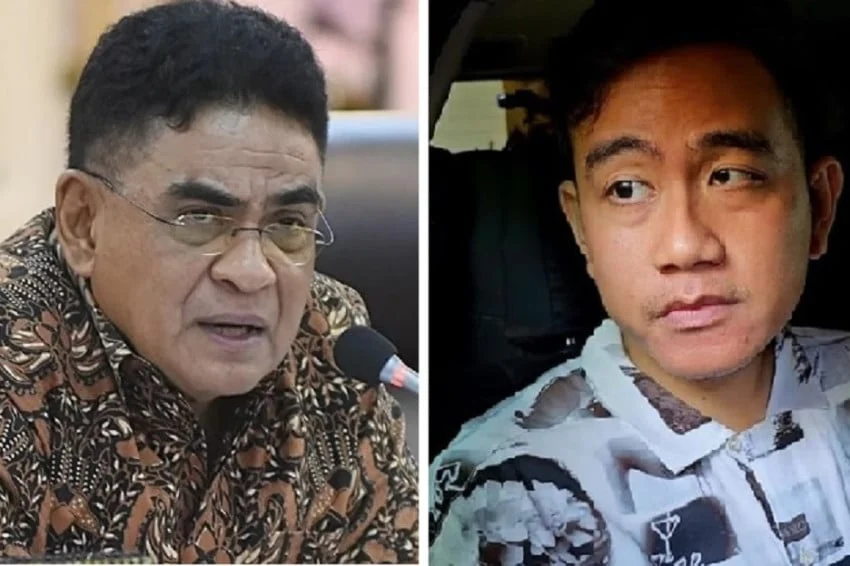
JAKARTA — The political landscape in Indonesia experienced a significant tremor following a definitive legal ruling from the Supreme Court (Mahkamah Agung or MA), which declared the high school diploma equivalency certificate belonging to Vice President Gibran Rakabuming Raka to be legally invalid. The decision immediately triggered fierce reactions across the nation’s political spectrum, with the Indonesian Democratic Party of Struggle (PDI-P) renewing its earlier calls for the nation’s second-highest-ranking executive to voluntarily step down from office to preserve political stability and public trust.
The controversy surrounding the educational credentials of Vice President Gibran Rakabuming Raka has been a persistent undercurrent in Indonesian politics, stretching back through multiple electoral cycles, administrative reviews, and judicial challenges. However, the recent Supreme Court ruling marks the first time a high-ranking judicial body has officially struck down the equivalency letter—locally known as a surat keterangan penyetaraan (suket)—that had previously allowed Gibran to meet the formal educational prerequisites required for high public office under election laws.
PDI-P Demands Resignation to End National Distraction
Reacting swiftly to the Supreme Court’s verdict, Andreas Hugo Pareira, a prominent Chairman of the Central Executive Board (DPP) of PDI-P, publicly urged Vice President Gibran Rakabuming Raka to resign from his position immediately. Speaking to journalists on Saturday, October 31, 2026, Pareira emphasized that stepping down would be the most honorable and statesmanlike course of action to prevent the ongoing controversy from paralyzing the government’s agenda.
"Ever since the Constitutional Court proceedings, I have stated that it would be far better for GRR [Gibran Rakabuming Raka] to step down," Pareira remarked during a telephone interview. "By doing so, this persistent controversy can be decisively brought to a close, allowing the nation and its leaders to redirect their full attention toward addressing pressing matters of public interest and the welfare of the people."
Pareira, who also serves as the Deputy Chairman of Commission XIII of the House of Representatives (DPR)—a parliamentary body overseeing legal, human rights, and internal governance affairs—noted that he had anticipated this legal vulnerability since the evidentiary phases of earlier constitutional challenges. According to him, the judicial scrutiny consistently pointed toward structural discrepancies in how the educational credentials were initially authenticated and recognized under domestic administrative frameworks.
Chronology of the Diplomas and Legal Challenges
The dispute over Gibran Rakabuming Raka’s educational background dates back to his candidacy in the 2024 presidential election, where he ran alongside then-presidential candidate and current President Prabowo Subianto. Critics, political opponents, and civil society organizations repeatedly questioned the authenticity and procedural validity of his secondary education certificates, which were largely obtained through international or alternative schooling pathways before he pursued higher education at universities in Singapore and Australia.
During the registration and vetting process conducted by the General Elections Commission (KPU) and subsequently reviewed by the Election Supervisory Agency (Bawaslu), Gibran’s camp submitted a certificate of equivalency issued by the Ministry of Education, Culture, Research, and Technology. This certificate verified that his overseas secondary education was equivalent to an Indonesian senior high school (SMA) diploma.
Despite multiple initial legal challenges being dismissed by election oversight bodies and the Constitutional Court (MK) during the heat of the 2024 campaign season, determined plaintiffs continued to pursue administrative and civil lawsuits in lower courts. These persistent efforts eventually climbed through the judicial hierarchy until reaching the Supreme Court, which holds final jurisdiction over administrative decrees and ministerial regulations. The high court ultimately ruled that the issuance of the equivalency letter failed to comply with stringent administrative benchmarks and statutory compliance rules, thereby rendering the document legally void.
Reactions from Legal Scholars and Political Analysts
The Supreme Court’s decision has drawn varied reactions from constitutional law experts, political analysts, and key government figures. Among them is prominent legal scholar and former Coordinating Minister for Political, Legal, and Security Affairs, Mahfud MD, who noted that the implications of the ruling extend far beyond technical administrative law, venturing deep into the realm of political maneuvering and institutional accountability.
"This is fundamentally a matter of political choice now," Mahfud MD stated in response to inquiries regarding the ruling. "The legal foundation has been spoken on by the Supreme Court, but how the political elite chooses to respond to that reality is entirely dependent on the paths political actors decide to take."
Analysts suggest that while the Supreme Court’s ruling invalidates the administrative equivalency certificate, the practical mechanism for removing a sitting vice president under Indonesian constitutional law is notoriously complex. Impeachment or forced removal requires a multi-staged process involving the House of Representatives (DPR), the Constitutional Court (MK), and the People’s Consultative Assembly (MPR) under strict criteria such as treason, corruption, bribery, other severe criminal offenses, or moral turpitude. An administrative defect in a pre-election educational certificate does not automatically trigger an instant constitutional vacancy, making the political pressure from parties like PDI-P a crucial element of the unfolding crisis.
Broader Implications for Governance and Institutional Stability
As the debate intensifies, political observers are closely monitoring how the ruling coalition will manage the fallout. The partnership between President Prabowo Subianto and Vice President Gibran Rakabuming Raka formed the bedrock of the current administration’s legislative majority in the DPR. Any disruption to the vice presidency could alter the delicate balance of power within the ruling alliance.
Furthermore, business leaders and economic analysts have expressed concern that prolonged political instability could dampen investor confidence. Indonesia has been striving to maintain steady economic growth amid global uncertainties, and a high-profile constitutional controversy at the executive level risks shifting the government’s focus away from critical fiscal policies, infrastructure development, and social welfare programs.
Civil society organizations have also weighed in, calling for absolute transparency from both the Ministry of Education and the judiciary in publishing the full text of the Supreme Court’s decision. Transparency advocates argue that public confidence in institutional integrity depends entirely on how openly the state handles administrative oversights involving high-ranking public officials.
With PDI-P formally escalating its demand for resignation and legal experts debating the constitutional remedies available, the coming days are expected to witness intense political lobbying, legislative maneuvering, and public discourse. Whether the administration will weather this legal storm through institutional defense or if the mounting pressure will result in a voluntary departure remains one of the most critical questions facing Indonesian democracy in 2026.
