The Corruption Eradication Commission has intensified its ongoing investigation into alleged corrupt practices within the Bogor Regency administration, summoning key regional figures for questioning. In a strategic move to fast-track the gathering of evidence, anti-graft investigators traveled directly to West Java to interrogate Bogor Regent Rudy Susmanto alongside several other high-ranking witnesses. The inquiry focuses on multiple facets of alleged financial malfeasance, prominently featuring the illicit deduction of tax collection fees, regional retribution funds, and suspicious procurement processes that have drained local government coffers.
This latest development marks a significant escalation in a high-profile probe that has steadily widened to encompass several key stakeholders within the municipal governance structure. As the investigation unfolds, transparency advocates and local residents alike are closely monitoring the actions of the anti-corruption agency to ensure accountability at all levels of regional leadership. The systematic nature of the alleged offenses highlights vulnerabilities in regional financial management, prompting broader conversations regarding administrative oversight and the enforcement of statutory compliance across municipal bodies in Indonesia.
Chronology and Background of the Investigation
The roots of the current investigation trace back to preliminary intelligence reports received by the Corruption Eradication Commission regarding systemic financial irregularities within the Bogor Regency revenue office. Investigators discovered discrepancies in how collection incentives—commonly known as upah pungut—were distributed and accounted for. Under standard regulatory frameworks, these incentives are designated for personnel actively involved in boosting regional tax revenues. However, credible indicators suggested that a substantial portion of these funds was systematically skimmed or redirected through unauthorized channels.
As preliminary case-building progressed, the scope of the inquiry expanded beyond mere fee deductions to encompass questionable procurement contracts awarded during recent fiscal years. Recognizing the complexity of the network involved, anti-corruption officials initiated a series of targeted summonses. In the weeks leading up to the interrogation of the Regent, investigators called upon several influential local figures, including prominent regional politicians such as Jaro Ade and the municipal Regional Secretary. These preparatory sessions laid the groundwork for the comprehensive questioning of the sitting Regent, designed to establish the chain of command and ultimate responsibility for the disputed financial practices.
On Thursday, October 29, 2026, the investigation reached a critical juncture. Rather than requiring the regional head to report to the agency’s primary headquarters at the Red and White Building in Jakarta, investigators opted for an on-site interrogation approach. According to official statements from the anti-graft commission, this localized strategy was implemented primarily to accommodate the extensive list of witnesses slated for questioning on the same day. By conducting the examinations locally, investigators aimed to optimize efficiency and ensure that all scheduled testimonies could be gathered without logistical bottlenecks.
Details of the Interrogation and Official Statements
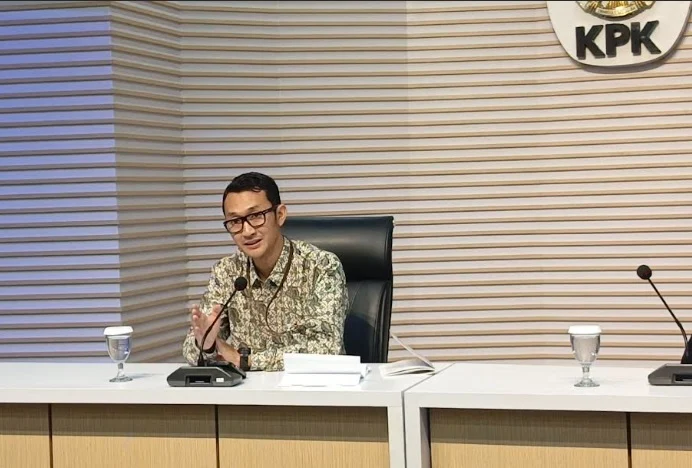
The confirmation of the investigative proceedings was formally delivered by the spokesperson for the anti-graft commission, Budi Prasetyo, during a press briefing on Thursday, October 29, 2026. Addressing reporters regarding the rumors circulating in regional media, the representative explicitly validated the investigative actions involving the Bogor Regent.
"Today, there is indeed an examination of the individual in question," Budi stated, confirming the presence of Regent Rudy Susmanto before investigators. When pressed by journalists regarding the physical location of the proceedings, the spokesperson clarified that the session bypassed the capital city’s main investigative hub.
"The examination was carried out in Bogor because there are several other witnesses who were also scheduled for questioning today," Budi explained. He further elaborated that executing the interviews directly within the region was a calculated measure to streamline the gathering of testimonies. Given the large volume of municipal officials, administrative staff, and third-party contractors involved in the tax collection and procurement schemes, dispatching investigators to the field allowed for a more cohesive and uninterrupted investigative workflow.
Although specific details concerning the exact duration of the questioning and the precise line of inquiry directed at the Regent remain tightly guarded to preserve the integrity of the ongoing probe, sources close to the commission indicate that the interrogation spanned multiple hours. Investigators reportedly focused heavily on administrative sign-offs, budgetary allocations, and the specific mechanisms that permitted the diversion of collection fees and retributions.
Broader Scope: Targets and Expanding Probes
The interrogation of the Bogor Regent does not occur in a vacuum; rather, it is part of a broad web of inquiries targeting the administrative apparatus of the regency. In the days preceding this development, the commission issued formal summonses to several high-profile municipal figures. Among those previously called to provide testimony were regional legislative figures and top-tier civil servants, including the Regional Secretary.
The inclusion of these individuals suggests that investigators are looking closely at both the executive execution of policies and the legislative oversight mechanisms that failed to prevent the alleged abuses. The system of tax collection fees and regional retributions inherently involves multi-layered authorization, requiring collaboration between finance departments, operational collectors, and executive leadership. By systematically interviewing individuals across these various tiers, the agency is attempting to reconstruct the exact flow of funds and identify all beneficiaries of the illicit deductions.
Furthermore, the addition of procurement irregularities to the dossier indicates that the investigation extends beyond routine revenue management. Public procurement processes in regional governments are frequently vulnerable to manipulation, ranging from markup practices to tailored tender requirements that favor specific vendors. Investigators are currently cross-referencing financial audit reports from regional bodies with the statements provided by witnesses to determine whether procurement funds were similarly subjected to systematic skimming.
Implications for Regional Governance and Public Trust
The active investigation of a sitting regional head by the national anti-corruption body carries profound implications for governance within Bogor Regency and serves as a stark reminder to local administrations nationwide. Administrative continuity is often disrupted when top executives become the subject of criminal inquiries, forcing regional governments to navigate a delicate balance between maintaining public services and cooperating fully with law enforcement mandates.
From an administrative standpoint, the allegations concerning the misappropriation of collection incentives strike at the heart of bureaucratic motivation. Upah pungut is structurally designed to incentivize tax collectors and local revenue agencies to optimize regional income generation. When these funds are subjected to unauthorized deductions, it not only constitutes a financial crime but also severely demoralizes frontline civil servants who rely on legitimate incentives for their operational efforts.
Moreover, the psychological impact on public trust cannot be understated. Bogor Regency, as one of the most populous and economically dynamic regions surrounding the capital, requires robust, transparent leadership to manage its vast infrastructure and developmental challenges. Scandals involving the misuse of public retributions and procurement budgets directly undermine the social contract between the citizenry and local authorities. Civil society organizations and local watchdogs have already begun mobilizing calls for absolute transparency, demanding that the anti-corruption agency pursue the case rigorously regardless of political affiliations or administrative positions.
Future Outlook and Legal Next Steps
As the investigation moves past the initial rounds of witness interrogations and the questioning of the Regent, the Corruption Eradication Commission is expected to analyze the gathered testimonies against physical and digital evidence seized during earlier phases of the probe. The accumulation of bank statements, internal memos, procurement contracts, and digital communications will form the backbone of any subsequent formal charges.
Legal experts note that under Indonesian anti-corruption statutes, individuals found culpable of orchestrating or benefiting from the illegal deduction of regional fees and state funds face severe penalties, including lengthy imprisonment and substantial financial restitution orders. Depending on the final findings regarding the procurement aspects of the case, additional charges related to abuse of power and state financial losses may be formulated against implicated parties.
The commission has reiterated its commitment to pursuing the case objectively and comprehensively. While no formal announcement regarding suspect status designations has been finalized for all interrogated individuals, the systematic nature of the current summonses strongly signals that the investigation is approaching a decisive phase. The public and media outlets await further official updates from the agency as the legal net tightens around those allegedly involved in compromising the financial integrity of the Bogor Regency government.