The ongoing geopolitical volatility in the Middle East has reached a critical inflection point as the United States military grapples with the devastating financial and operational consequences of sustained Iranian missile and drone strikes. A comprehensive analysis, bolstered by data from The Wall Street Journal (WSJ) and recent satellite imagery, reveals that the cumulative damage to American military infrastructure across the region has climbed to an estimated USD 15 billion, or approximately IDR 271 trillion. This staggering figure reflects the intensity of a conflict that has fundamentally altered the strategic landscape for Washington and its regional allies.
The financial burden is not merely a budgetary concern for the Pentagon; it represents a significant erosion of the American "force projection" capabilities that have defined Middle Eastern security for decades. With total conflict-related costs already ballooning to nearly USD 50 billion (exceeding IDR 906 trillion), the U.S. Department of Defense is now facing a strategic crossroads: whether to commit to massive reconstruction efforts or to pivot toward a more minimalist, potentially withdrawal-oriented, security posture in countries like Kuwait and Saudi Arabia.
Chronology of the Escalation
The current cycle of violence originated on February 28, 2026, following a series of unprovoked strikes by U.S. and Israeli forces, which served as the primary catalyst for the subsequent Iranian retaliation. Tehran’s response was swift and technologically sophisticated, utilizing a combination of precision-guided missiles and long-range unmanned aerial vehicles (UAVs) to target high-value American installations.
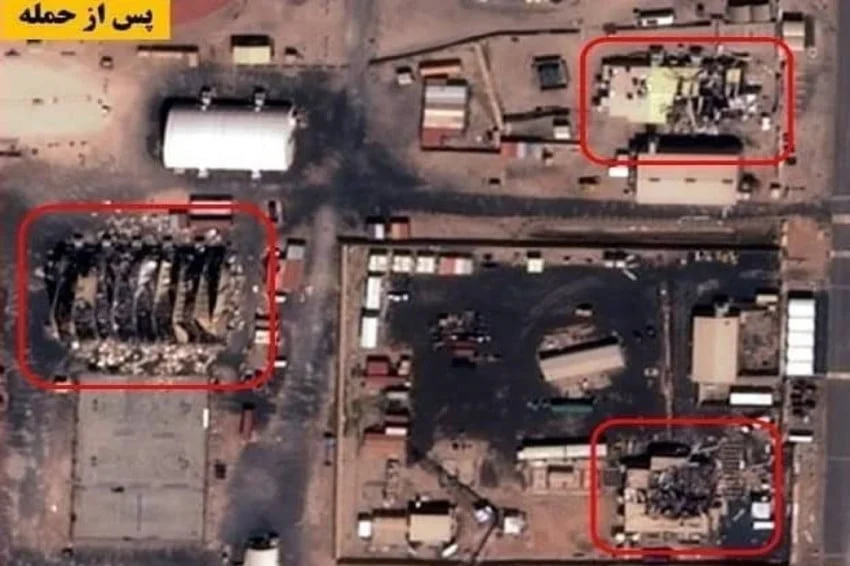
In the initial two weeks of the conflict alone, 119 buildings across 13 distinct military installations sustained significant damage. This rapid degradation of facilities forced an immediate reassessment of defensive protocols. By the end of October 2026, the scale of destruction had expanded to 274 individual structures across 24 military installations. Among the hardest-hit facilities was the headquarters of the U.S. Navy’s Fifth Fleet in Bahrain, a site long considered the cornerstone of American naval operations in the Persian Gulf. Additionally, Camp Buehring, also known as Udaylah Air Base in Kuwait, suffered catastrophic damage, rendering parts of the facility temporarily non-operational.
An Analysis of Financial and Structural Damage
The disparity in reported damage estimates—ranging from an initial Pentagon internal estimate of USD 5 billion (IDR 90.6 trillion) to the more comprehensive analyst projection of USD 15 billion—highlights the complexity of auditing military losses during active warfare. The higher figure accounts not only for the physical reconstruction of hardened hangars, command centers, and housing units but also for the loss of sensitive electronic warfare equipment and advanced radar arrays.
Satellite imagery analysis provides a harrowing visual of this impact. High-resolution photographs reveal craters within base perimeters, demolished aircraft shelters, and charred logistics hubs. The strategic nature of these targets suggests that Iranian forces were not merely conducting symbolic strikes but were aiming to neutralize the logistics chain that supports U.S. air superiority in the region.
The financial strain is exacerbated by the fact that many of these installations operate on a shared-cost basis. Washington’s regional allies, including Kuwait and Saudi Arabia, have historically contributed to the maintenance of these bases. However, the sheer scale of the required repairs may lead to diplomatic friction, as the U.S. evaluates whether the political cost of maintaining these permanent footprints outweighs the tactical necessity.
Strategic Implications and the Question of Withdrawal
The Pentagon is reportedly considering a "strategic consolidation" policy. Rather than authorizing the full restoration of every damaged facility, military planners are evaluating a transition toward "expeditionary basing"—a model that relies on mobile, temporary assets rather than fixed, vulnerable infrastructure.
This potential pivot is causing significant anxiety among regional partners who rely on the U.S. "security umbrella" for deterrence against Iranian influence. If the U.S. decides to vacate or significantly scale back its presence at key sites like Camp Buehring, it would create a vacuum that Tehran could potentially exploit. Conversely, maintaining the status quo in the face of such high financial costs is becoming increasingly difficult to justify to the American public and the U.S. Congress.
The economic reality is further complicated by the fact that Iran continues to circumvent international sanctions. Recent reports indicate that despite rigorous blockades, Tehran has managed to import components for its missile program valued at roughly IDR 41.7 trillion. This resilience in the face of economic pressure demonstrates that the conflict is unlikely to be resolved through financial warfare alone, necessitating a more complex diplomatic and military recalibration.
Official Responses and Regional Outlook
While the Pentagon has remained tight-lipped regarding the specifics of its reconstruction budget, anonymous officials have confirmed that the "rebuild vs. relocate" debate is now central to regional planning. The prevailing consensus within the defense establishment is that the era of "permanent, static basing" may be coming to a close in the Middle East.
Regional governments, meanwhile, are closely watching Washington’s next steps. For Kuwait and Saudi Arabia, the potential withdrawal of U.S. forces poses an existential security question. These nations have invested billions in hosting American troops, and the loss of this presence would force them to rapidly accelerate their own domestic defense capabilities or seek alternative security partnerships—a prospect that could lead to a broader realignment of regional alliances.
The Broader Impact on Global Security
The ramifications of this conflict extend far beyond the borders of the Middle East. Global energy markets have already shown sensitivity to the insecurity in the Persian Gulf. With the U.S. military preoccupied with repairing its own infrastructure, the protection of maritime shipping lanes and oil transit points—such as the Strait of Hormuz—has become more precarious.
Furthermore, the technological success of Iran’s drone and missile swarm tactics has provided a blueprint for other state and non-state actors. Military analysts worldwide are now studying the 2026 conflict to understand how traditional defense systems, like the Patriot missile batteries and other anti-air platforms, failed to prevent the high volume of damage recorded. The lesson learned is that mass and agility, rather than just quality of equipment, may define future engagements.
As the conflict enters its next phase, the United States faces a dual challenge: restoring its damaged military assets while simultaneously maintaining a credible deterrent. The USD 15 billion price tag is not just a line item in a budget; it is a signal that the cost of maintaining regional hegemony is rising at an unsustainable rate.
The decision on whether to rebuild these facilities or to "cut losses" and depart from specific high-risk zones will likely be one of the most significant foreign policy choices of the decade. As the world watches, the intersection of military strategy, fiscal responsibility, and geopolitical necessity continues to evolve in a region that remains the most volatile and strategically vital on the planet. The upcoming months will determine whether the U.S. re-commits to its regional footprint or initiates a fundamental, and perhaps irreversible, retreat from its current posture in the Middle East.