The upstream oil and gas industry operates in an environment where operational efficiency, strict financial oversight, and meticulous resource management are paramount to sustaining business viability and environmental stewardship. In the vast and complex theater of offshore exploration and production, logistics represent both a critical lifeline and a significant cost center. Recognizing the pressing need to modernize traditional logistics and fuel management systems, PT Pertamina Hulu Energi Offshore Southeast Sumatra (PHE OSES), a subsidiary of state-owned energy giant PT Pertamina (Persero), has successfully implemented a groundbreaking digital transformation initiative known as the Marine Vessel Energy Logistics System, widely referred to as MARVEL.
Throughout the first nine months of the operational year 2026, specifically spanning from January through September, PHE OSES achieved a remarkable milestone by cutting its marine vessel fuel consumption by an impressive 429,549 liters. In financial terms, this substantial conservation effort translates directly to approximately IDR 9.03 billion in cost savings. This monumental achievement not only underscores the company’s ongoing commitment to fiscal prudence and operational excellence but also highlights the tangible benefits of integrating advanced digital frameworks into traditional heavy industries. The cornerstone of this success—the MARVEL innovation—evolved as a sophisticated upgrade from a predecessor application known as SAMUDERA 1.0. By shifting from legacy manual tracking methods to a comprehensive, web- and mobile-integrated digital ecosystem, PHE OSES has redefined how fuel logistics and bunker management are executed across its offshore operational zones.
The Genesis and Evolution of MARVEL: From SAMUDERA 1.0 to SAMUDERA 2.0
To fully appreciate the magnitude of the MARVEL innovation, one must examine the operational hurdles that originally necessitated its development. Managing marine fuel—commonly referred to in the maritime and oil sectors as bunkering—is an inherently complex and high-stakes endeavor. In offshore environments, support vessels, barges, and drilling rigs rely heavily on a continuous and reliable supply of fuel to maintain dynamic positioning, transport personnel, conduct safety drills, and haul heavy equipment.
During the operational calendar year of 2025, PHE OSES documented a staggering volume of logistical activity. Records indicate that the company handled 1,611 distinct bunker activities over the course of that year alone. The aggregate demand for marine fuel to support these operations reached an enormous 143.2 million liters. However, managing such immense volumes through conventional monitoring techniques exposed vulnerabilities in measurement accuracy and inventory reconciliation. Specifically, the company observed a cumulative discrepancy between initial flowmeter readings and physical tank sounding measurements amounting to 333,946 liters. Furthermore, out of the total operations recorded, roughly 90 individual cases—representing approximately 5.6 percent of the total bunker events—breached the established institutional tolerance threshold of a 0.5 percent discrepancy limit.
These operational discrepancies, though seemingly minor on a percentage basis, accumulated into significant volumetric and financial variances over time. Recognizing that legacy administrative processes and fragmented communication channels were inadequate for managing the sheer scale of modern offshore logistics, the internal engineering and logistics teams at PHE OSES initiated a comprehensive overhaul. This collaborative problem-solving effort led to the birth of SAMUDERA 1.0, which later matured into the fully integrated ecosystem known as MARVEL, or SAMUDERA 2.0.
Comprehensive Architecture of the MARVEL System
The technological superiority of MARVEL lies in its holistic approach to the bunkering lifecycle. Rather than acting as a simple digital ledger, the system is structured around seven interconnected core modules designed to oversee every phase of marine fuel management from inception to final financial settlement.
The first module focuses on proactive fuel demand planning, allowing logistics coordinators to forecast consumption patterns based on historical data, weather forecasts, and active offshore rig schedules. The second module streamlines the requisition process, replacing cumbersome paper-based approval chains with automated digital workflows that accelerate procurement timelines. The third module governs the actual execution phase of bunkering operations, ensuring that all safety protocols and transfer parameters are strictly observed by both vessel crews and shore-based supervisors.
Following the physical transfer of fuel, the fourth module engages in rigorous data validation. This is arguably the most critical technical feature of MARVEL, as it introduces cross-validation protocols that compare real-time flowmeter metrics against physical tank sounding measurements and official bunker delivery notes. By identifying anomalies immediately, the system prevents discrepancies from slipping through unnoted. The fifth module provides real-time stock monitoring, offering operational supervisors a centralized dashboard that displays inventory levels across various storage facilities and active vessels. The sixth module handles general administrative tasks, while the seventh and final module automates the billing and invoicing processes, thereby accelerating vendor payments and tightening financial controls.
In addition to these core functional modules, MARVEL incorporates automated scheduling notifications and alerts. These features ensure that relevant personnel are instantly updated regarding upcoming bunker operations, distribution schedules, and potential compliance deviations. By centralizing these functions into a single, user-friendly interface accessible via web browsers and mobile devices, PHE OSES has eliminated information silos between field operators, logistics teams, and financial administrators.
Recognition and Industry Accolades
The ingenuity, technical robustness, and measurable financial impact of the MARVEL system did not go unnoticed within the broader corporate ecosystem of Indonesia’s energy sector. In mid-November 2026, the innovation was formally submitted to the prestigious Forum Inovasi Produksi (FIP) Hulu Migas 2026. Organized annually by Pertamina Regional Jawa Subholding Upstream, the forum serves as a competitive and collaborative platform designed to showcase pioneering operational advancements, engineering breakthroughs, and digital transformations across upstream oil and gas operations.
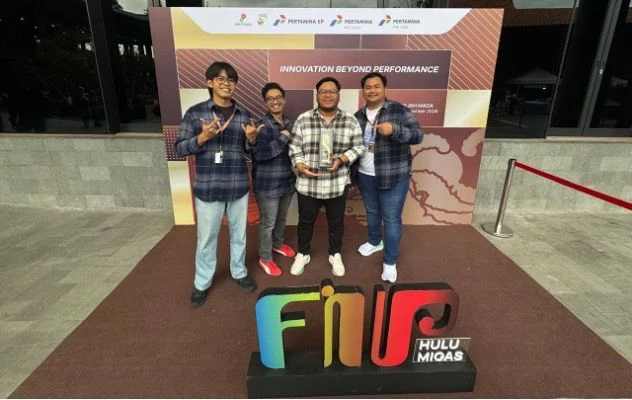
Competing against numerous other high-caliber innovations submitted by various subsidiaries and operational units within the upstream sector, the PC Prove MARVEL team presented a compelling case detailing the system’s development, operational rollout, and quantifiable financial returns. Following rigorous evaluation by a panel of industry experts who assessed criteria such as originality, complexity, implementation efficiency, and scalability, MARVEL was awarded the coveted Gold distinction.
The formal recognition culminated in a celebratory moment captured on late November 2026, when members of the PC Prove MARVEL team proudly posed for commemorative photographs following their official award presentation. This accolade not only validates the rigorous months of software development and operational testing undertaken by the team but also cements PHE OSES’s reputation as a progressive leader in digital oilfield technologies.
Voices from Leadership: Commitment to Replication and Expansion
Speaking on behalf of the winning innovation team, Dicky Dandy Permana, Chairman of the PC Prove MARVEL team, shared insights into the collaborative ethos that drove the project to fruition. In an official press statement released on Friday, November 27, 2026, Permana emphasized that the system’s success was fundamentally rooted in teamwork and cross-functional synergy.
"The development of this system is the direct result of intensive collaboration among multidisciplinary team members dedicated to integrating the entire bunker management process so that it operates with maximum efficiency, absolute accuracy, and total transparency," stated Dicky Dandy Permana. He further elaborated on the team’s forward-looking vision, noting, "We sincerely hope that this innovation can be continuously developed, refined, and eventually replicated across other operational areas within the broader company network, ensuring that the substantial benefits we have realized here can be experienced on a much wider scale."
Permana’s remarks highlight a critical strategic objective within modern energy corporations: the scalability of home-grown innovations. In an industrial landscape characterized by diverse geographical challenges—ranging from deepwater drilling sites to mature shallow-water fields—successful digital tools developed in one operating zone often possess the adaptability required to transform workflows elsewhere. By designing MARVEL with modularity and scalability in mind, the PHE OSES team has laid the groundwork for potential enterprise-wide deployment across other regional subsidiaries under the Pertamina upstream umbrella.
Broader Context: Navigating Operational Excellence in Upstream Oil and Gas
The timing of MARVEL’s success coincides with a broader industry-wide push toward operational resilience, digital maturity, and stringent cost optimization within Indonesia’s upstream oil and gas sector. Regulatory bodies, including Indonesia’s Special Task Force for Upstream Oil and Gas Business Activities (SKK Migas), have consistently urged operators to leverage advanced technologies—such as the Internet of Things (IoT), artificial intelligence, and automated enterprise resource planning systems—to enhance lifting efficiency and reduce operational expenditures.
In parallel with the MARVEL achievement, the regional upstream sector has witnessed several other milestones aimed at revitalizing mature assets and maximizing domestic hydrocarbon production. For instance, recent operational triumphs within the broader Pertamina Hulu Energi network—such as the successful reactivation of long-dormant infrastructure yielding hundreds of barrels of oil per day—demonstrate a dual commitment to reviving legacy assets and deploying cutting-edge digital logistics.
Within this overarching framework, fuel logistics optimization is far more than an administrative convenience; it is a vital component of environmental and economic sustainability. Marine support vessels consume substantial quantities of marine gas oil daily. By curbing unnecessary consumption by nearly 430,000 liters over a nine-month period, PHE OSES has not only achieved direct financial savings equivalent to IDR 9.03 billion but has also proportionately reduced the carbon footprint associated with its marine transport operations. In an era where environmental, social, and governance (ESG) metrics heavily influence corporate valuations and stakeholder trust, minimizing logistical inefficiencies directly contributes to corporate decarbonization goals.
Future Outlook and Strategic Implications
Looking ahead, the successful deployment and institutionalization of MARVEL at PHE OSES set a new benchmark for digital supply chain management in the regional maritime and energy sectors. As global energy markets remain volatile, characterized by fluctuating fuel prices and tightening operational margins, the ability to accurately track, validate, and optimize resource consumption provides a distinct competitive advantage.
The lessons learned from the implementation of SAMUDERA 2.0 offer a blueprint for other industrial operators seeking to transition away from legacy paper-based workflows. By empowering field personnel with mobile-accessible data, establishing rigorous automated cross-validation checks between physical measurements and financial documentation, and fostering a corporate culture that rewards grassroots engineering innovations, companies can unlock hidden value within their existing asset bases.
Ultimately, the journey of the PC Prove MARVEL team—from identifying systemic discrepancies in 2025 bunker data to securing a Gold award at the FIP Hulu Migas 2026 and delivering billions of rupiah in savings—illustrates the profound impact of targeted digital intervention. As PHE OSES continues to refine its operational processes, the MARVEL system stands as a testament to the power of homegrown technological innovation in driving the future of sustainable, efficient, and transparent offshore energy operations.