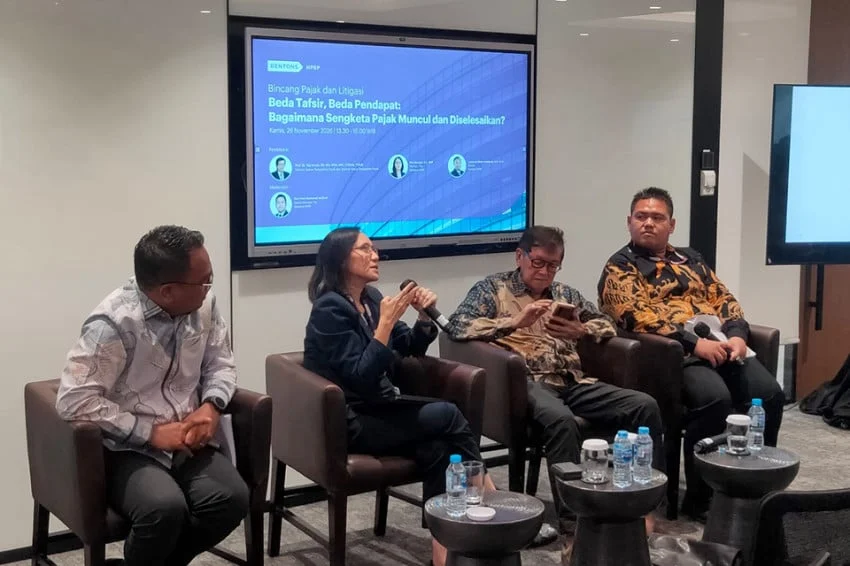
JAKARTA — The complex landscape of Indonesian tax regulations has once again taken center stage as business leaders, legal experts, and former judiciary officials convened in the capital to address one of the most persistent hurdles facing the nation’s commercial sector: the divergence in legal interpretation between taxpayers and the Directorate General of Taxes (DJP). To tackle this critical issue head-on, prominent law firm Dentons HPRP organized an exclusive seminar titled "Beda Tafsir, Beda Pendapat: Bagaimana Sengketa Pajak Muncul dan Diselesaikan?" (Different Interpretations, Different Opinions: How Tax Disputes Arise and Are Resolved?) in Jakarta.
The event brought together industry stakeholders to dissect the mechanics of tax disputes, analyze the root causes of regulatory friction, and explore structured pathways for resolution. With thousands of tax disputes continuing to clog the administrative and judicial systems annually, the seminar served as a timely platform for legal practitioners and corporate taxpayers to align their strategies in navigating Indonesia’s evolving fiscal framework.
Main Facts and Event Overview
The seminar, held on Thursday, November 26, 2026, served as an educational and strategic forum designed to demystify the complexities surrounding tax litigation in Indonesia. At its core, the discussion focused on how minor discrepancies in reading statutory texts can cascade into substantial financial and operational liabilities for businesses.
Al Hakim Hanafiah, Founding Partner of Dentons HPRP, opened the proceedings by highlighting that regulatory friction is an inevitable byproduct of a rapidly developing tax system. However, he stressed that when interpretation gaps widen without proactive legal mitigation, they transform into full-scale administrative and judicial disputes.
"In the daily practice of tax provisions in Indonesia, differing interpretations between taxpayers and the Directorate General of Taxes remain one of the primary catalysts for tax disputes," Al Hakim stated during his opening remarks. He emphasized that corporations fundamentally seek to avoid protracted legal battles with tax authorities, underscoring the indispensable role of legal consultants in bridging the gap between regulatory compliance and commercial realities. "This is precisely where the role of legal consultants is needed to provide taxpayers with comprehensive insights into the evolving developments of Indonesia’s tax system," he added.
Background Context: The Anatomy of Tax Disagreements
To understand why tax disputes remain prevalent in Indonesia, industry observers must examine the structural nature of the country’s tax laws. The Indonesian tax system relies heavily on the Self-Assessment System, which grants taxpayers the authority to calculate, pay, and report their own tax liabilities. While this system promotes efficiency, it places a heavy burden of legal interpretation on corporate entities.
When the DJP conducts subsequent audits, tax authorities may apply a different lens to the same financial transactions. These discrepancies typically manifest in three distinct ways:
- Ambiguous Statutory Language: Provisions within tax laws and implementing regulations that permit more than one legal interpretation.
- Substantive Fact-Finding Discrepancies: Diverging views on the economic substance, valuation, and documentation of complex commercial transactions.
- Dynamic Regulatory Evolution: Frequent updates, circular letters, and technical guidelines issued by the Ministry of Finance that may retroactively or concurrently conflict with existing corporate accounting practices.
Tjip Ismail, a former Judge and Chairman of the Indonesian Tax Court, who featured as a keynote speaker at the event, elaborated on the psychological and financial toll these discrepancies inflict on businesses. "This condition creates substantial uncertainty for taxpayers, particularly when tax treatments that have been implemented based on a specific understanding and interpretation turn out to be assessed differently by the DJP," Tjip explained.
This inherent unpredictability complicates corporate budgeting, foreign direct investment decisions, and long-term strategic planning, making dispute resolution mechanisms a vital area of corporate governance.
Chronology and Escalation of Tax Disputes in Indonesia
The lifecycle of a tax dispute in Indonesia follows a structured, albeit often lengthy, procedural timeline. Understanding this chronology is essential for taxpayers seeking to mitigate risks before disputes reach litigation stages.
Phase 1: The Self-Assessment and Audit Period
The process begins when a taxpayer submits their Annual Corporate Income Tax Return (SPT). Months or years later, the DJP may issue a notification for a tax audit (Pemeriksaan Pajak). During this phase, auditors examine financial statements, invoices, and contracts. It is frequently at this juncture that differing interpretations emerge regarding deductible expenses, transfer pricing documentation, or Value-Added Tax (VAT) credits.
Phase 2: Assessment and Administrative Objections
If the DJP concludes that underpayments exist, it issues a Tax Underpayment Assessment Letter (Surat Ketetapan Pajak Kurang Bayar or SKPKB). Taxpayers who disagree with the findings can file an Objection (Keberatan) to the Regional Office of the DJP. This administrative phase requires the submission of counter-arguments backed by legal and accounting evidence.
Phase 3: Appeal to the Tax Court (Litigation)
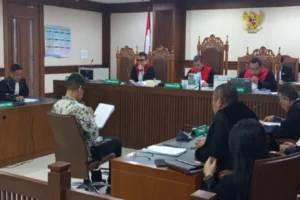
Should the objection be rejected or only partially granted, taxpayers escalate the matter to the Tax Court (Pengadilan Pajak) by filing an Appeal (Banding). This is where the dispute enters the formal litigation arena, characterized by hearings, evidentiary examinations, and expert testimonies. Given the high volume of cases, proceedings at the Tax Court can take several months or even years to reach a verdict.
Phase 4: Judicial Review at the Supreme Court
The final legal recourse available to both taxpayers and the DJP is a Judicial Review (Peninjauan Kembali or PK) at the Supreme Court (Mahkamah Agung), restricted strictly to exceptional circumstances such as newly discovered evidence or manifest judicial errors.
Supporting Data and Industry Implications
Recent trends in Indonesia’s fiscal administration indicate that thousands of tax disputes continue to emerge annually, reflecting systemic friction between revenue collection targets and taxpayer compliance rights. While the DJP operates under a mandate to optimize state revenue to finance national development, corporate taxpayers are legally obligated to protect shareholder value by optimizing their tax efficiencies within the bounds of the law.
When these two objectives collide without effective mediation, the administrative burden on the state and the financial drain on businesses escalate exponentially. Prolonged litigation ties up corporate capital that could otherwise be reinvested into the economy, while simultaneously overwhelming the judicial capacity of the Tax Court.
Furthermore, foreign investors closely monitor the predictability of a nation’s tax dispute resolution mechanisms before committing capital. A transparent, consistent, and fair tax ecosystem is widely recognized as a cornerstone of a competitive investment climate. Seminars such as the one hosted by Dentons HPRP play a pivotal role in educating market participants on how to proactively structure transactions, maintain robust audit trails, and engage constructively with tax authorities before formal disputes materialize.
Official Responses and Expert Recommendations
Legal and financial experts at the seminar offered several actionable recommendations for businesses aiming to minimize their exposure to tax disputes:
- Enhancing Documentation and Substance-Over-Form Compliance: Companies must ensure that every commercial transaction is supported not only by formal paperwork but also by clear economic substance. Tax authorities globally, including in Indonesia, increasingly apply the "substance-over-form" doctrine to challenge arrangements perceived primarily as tax avoidance schemes.
- Proactive Tax Planning and Risk Assessment: Rather than treating tax compliance as a year-end administrative task, organizations should integrate tax risk management into their daily operational workflows. Engaging qualified tax lawyers and consultants during the structuring phase of mergers, acquisitions, or major capital expenditures can preemptively neutralize potential points of contention with the DJP.
- Constructive Dialogue and Alternative Dispute Resolution: Building professional, transparent communication channels with tax auditors can often resolve misunderstandings before they crystallize into formal assessments. When disputes do arise, leveraging administrative remedies efficiently can save companies significant time and legal expenditure compared to prolonged court battles.
Broader Economic Impact and Future Outlook
As Indonesia continues its pursuit of robust economic growth and increased tax-to-GDP ratios, the relationship between the government and the business community must remain collaborative rather than adversarial. The Ministry of Finance and the DJP have continuously introduced administrative reforms—ranging from the implementation of the Core Tax Administration System (PSIAP) to enhanced digital integration—aimed at increasing transparency and reducing human discretion in tax audits.
However, technology alone cannot eliminate the nuances of legal interpretation. As new economic sectors emerge, including the digital economy, fintech, renewable energy, and carbon trading, novel tax questions will inevitably arise. These modern sectors frequently operate in regulatory gray areas where existing statutory definitions are insufficient, creating fertile ground for future legal disputes.
The insights shared at the Dentons HPRP seminar underscore the reality that while tax disputes may never be entirely eradicated, their impact can be effectively managed through foresight, robust legal counsel, and continuous dialogue between regulators and taxpayers. By fostering a deeper understanding of how divergent interpretations develop and how judicial bodies evaluate them, legal professionals and business leaders can navigate Indonesia’s fiscal landscape with greater confidence, legal certainty, and long-term strategic resilience.