The atmosphere inside the Sentul International Convention Center (SICC) in Bogor, West Java, was electric as thousands of educators gathered to commemorate National Teachers Day 2026. Amidst the celebrations, Minister of Primary and Secondary Education Abdul Mu’ti drew special attention to a phenomenon that highlighted the intersection of modern statecraft and public adoration: the remarkable popularity of Cabinet Secretary Teddy Indra Wijaya among the nation’s teaching workforce.
Addressing the audience during the peak celebration event on Thursday, November 26, 2026, Abdul Mu’ti publicly acknowledged the overwhelming support and enthusiasm directed toward the Cabinet Secretary. The minister’s remarks underscored how key figures within the administration have captured the imagination and affection of educators across the archipelago, reflecting a broader cultural and political dynamic within contemporary Indonesia.
The event, which brought together policymakers, educational stakeholders, and thousands of frontline educators, served as a vital platform not only to honor the indispensable contributions of teachers but also to showcase the government’s ongoing initiatives in the education sector. However, it was the unexpected nod to Seskab Teddy Indra Wijaya’s popularity that became one of the most talked-about moments of the gathering.
Background Context of National Teachers Day 2026
National Teachers Day, celebrated annually in Indonesia on November 25, honors the foundational role that educators play in shaping the nation’s intellectual and moral character. The 2026 commemoration, delayed slightly to accommodate national scheduling at the SICC venue in Bogor, was designed to be a landmark event for the administration of President Prabowo Subianto.
The education sector has occupied a central pillar of the current administration’s policy agenda. With sweeping reforms announced in curriculum development, teacher welfare, and international professional development programs, the relationship between the central government and the nation’s millions of teachers has never been more scrutinized or vital. Against this backdrop of policy shifts and high-stakes educational reforms, events like the SICC gathering act as a barometer for the administration’s grassroots popularity and the human connection between state officials and public servants.
The Rise of Seskab Teddy Indra Wijaya’s Public Profile
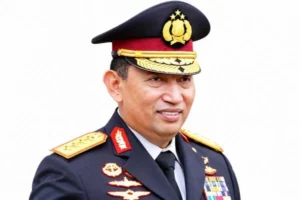
Secretary of the Cabinet Teddy Indra Wijaya has steadily emerged as one of the most visible and widely recognized bureaucratic figures in the current administration. Known for his hands-on operational approach, discipline, and frequent presence alongside the President in domestic and international engagements, Teddy has cultivated a distinct public persona.
In an era defined by digital connectivity and social media dissemination, public servants often find themselves thrust into the spotlight of digital fandom. For Seskab Teddy, this has translated into a dedicated following spanning diverse demographics, with educators—traditionally viewed as community leaders and opinion shapers—forming a particularly vocal segment of this support base.
During his speech, Abdul Mu’ti explicitly pointed to this dynamic, noting, "The Cabinet Secretary of the Republic of Indonesia, Mr. Teddy Indra Wijaya. The fans of Seskab Teddy are extraordinary among the teachers." Observers note that this high level of recognition stems from his frequent appearances in state media coverage, his efficient management of the cabinet’s administrative machinery, and his approachable yet professional image in public engagements.

Broader Policy Context: Investing in the Future of Teaching
While the lighthearted acknowledgment of Seskab Teddy’s popularity provided a memorable moment of levity, the National Teachers Day 2026 event was fundamentally anchored in substantive policy announcements aimed at transforming Indonesian education. The administration has placed immense emphasis on upgrading teacher competencies to meet global standards.
In tandem with the celebrations, major announcements regarding international professional development were highlighted. Notably, plans were unveiled to dispatch thousands of Indonesian educators abroad for specialized training programs. This initiative includes sending approximately 3,350 teachers to countries such as Canada and Russia in the upcoming year, designed to expose domestic educators to advanced pedagogical methods, STEM advancements, and innovative classroom management techniques.
This ambitious international deployment represents a cornerstone of the Ministry of Primary and Secondary Education’s strategy under Abdul Mu’ti. By elevating the global exposure of Indonesian teachers, the government aims to systematically improve the quality of instruction at home, directly addressing long-standing disparities in educational outcomes between urban centers and regional areas.
Analysis of Implications: Bureaucracy and Public Engagement
The intersection of bureaucratic popularity and grassroots education policy offers a fascinating case study in modern governance. Analysts suggest that the high regard teachers hold for administrative figures like Seskab Teddy reflects a successful bridging of the gap between the executive branch and local communities.
When national leaders and administrative coordinators are met with palpable enthusiasm by educators—who serve as the backbone of civil society—it signals a strong communicative bridge. For the Ministry of Primary and Secondary Education, this positive sentiment can be leveraged to foster smoother implementation of complex educational reforms. Teachers who feel seen, valued, and connected to the broader apparatus of the state are inherently more receptive to policy transitions, curriculum overhauls, and professional development mandates.
Furthermore, the public acknowledgment by a senior cabinet minister like Abdul Mu’ti normalizes the blending of institutional respect with relatable public admiration. It humanizes the bureaucratic machinery, presenting officials not merely as distant policymakers in Jakarta, but as active participants in a shared national project alongside the nation’s teachers.
Conclusion and Future Outlook
The National Teachers Day 2026 commemoration at the Sentul International Convention Center will be remembered not only for its policy milestones—such as the massive teacher exchange initiatives slated for the coming year—but also for the cultural moments that defined it.
As Abdul Mu’ti highlighted, the extraordinary support for Seskab Teddy Indra Wijaya among educators illustrates the deep resonance of the current administration’s public figures within civil society. Moving forward, the challenge for the government will be to channel this goodwill and enthusiasm into sustained structural improvements for Indonesia’s educational landscape, ensuring that the high spirits witnessed in Bogor translate into enduring progress for classrooms across the nation.