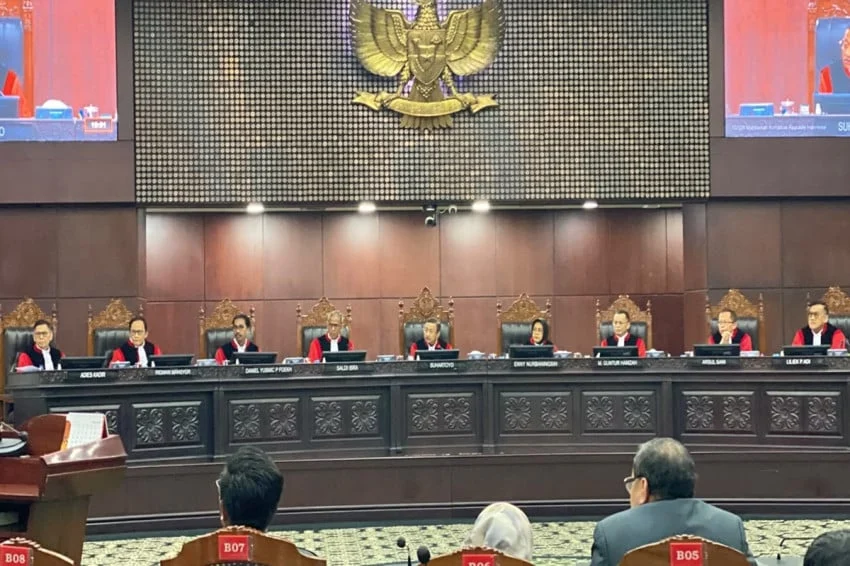
The legal battle between prominent aesthetic practitioner Dr. Richard Lee and the social media personality known as Dokter Detektif (Doktif) reached a new level of intensity on Thursday, September 24, 2026. As the proceedings unfolded at the Tangerang District Court, public attention was drawn not only to the legal arguments presented but also to the physical transformation of Dr. Richard Lee. Observers noted that the defendant appeared significantly thinner than in his previous public appearances, a detail that quickly dominated social media discourse and overshadowed the technical aspects of the hearing for many casual onlookers.
A High-Stakes Legal Confrontation
The courtroom atmosphere was charged with tension as the presiding judges listened to testimonies aimed at dissecting the credibility and character of the parties involved. Dr. Richard Lee, dressed in a crisp white shirt, maintained a stoic demeanor throughout the session. The case, which has captivated the Indonesian medical and aesthetic community, centers on allegations of defamation and professional misconduct, pitting two of the industry’s most vocal influencers against each other.
The presence of Dr. Janet Aprilia Stanzah as a defense witness marked a pivotal moment in the trial. Dr. Janet, a veteran in the aesthetic medical field and former leader of the Perhimpunan Dokter Estetik Indonesia (Perdesti) for the Jakarta chapter, provided testimony that sought to contextualize the behavior and professional history of the plaintiff, known professionally as Doktif.
Testimony and Character Analysis
Dr. Janet’s testimony offered a historical perspective on the person behind the "Doktif" persona, known in professional circles as Amira. Having known the plaintiff since 2012, Dr. Janet provided an account of their early professional interactions within the Perdesti organization. According to Dr. Janet, the individual now known as Doktif was once perceived as a collaborative and pleasant colleague during their early years of practice.

However, Dr. Janet’s testimony took a critical turn when she described the evolution of the plaintiff’s character. She characterized the plaintiff as possessing a "hard and dominant" personality, particularly when engaged in debates or disagreements. This testimony serves as a key component of the defense’s strategy, which aims to illustrate that the confrontational style exhibited by the plaintiff on social media is a reflection of a long-standing personal character trait rather than a purely objective scientific pursuit.
The defense team hopes that by establishing this pattern of behavior, they can cast doubt on the plaintiff’s motivations for initiating legal action. Conversely, representatives for Doktif have maintained that their client’s actions are motivated by a duty to protect consumers from misleading medical claims, arguing that their client’s demeanor is irrelevant to the factual accuracy of their critiques.
The Context of the Dispute
The roots of this legal entanglement trace back to the rapid rise of social media-based medical audits. Over the past two years, Doktif has gained millions of followers by analyzing the chemical compositions and marketing claims of various skincare products. By utilizing laboratory testing and scrutinizing ingredient lists, Doktif positioned themselves as a "watchdog" for the beauty industry.
Dr. Richard Lee, who has built a massive platform advocating for evidence-based skincare and challenging the legitimacy of certain beauty clinics and products, found himself in the crosshairs of these audits. The tension escalated when Doktif began questioning the validity of products and services associated with Dr. Lee’s brand. This eventually culminated in a series of digital confrontations that moved from Instagram and TikTok to the halls of the Indonesian justice system.
The Physical Transformation of Dr. Richard Lee
While the legal proceedings are technical and complex, the public’s fixation on Dr. Richard Lee’s physical state is symptomatic of the "celebrity-courtroom" phenomenon in Indonesia. Legal analysts suggest that for high-profile figures, physical appearance in court often serves as a silent communication tool. Supporters of Dr. Lee have expressed concern over his health, suggesting that the stress of ongoing litigation has taken a toll on his wellbeing. Critics, however, have dismissed the focus on his weight as an irrelevant distraction from the core issues of the trial, urging the public to remain focused on the legal merits of the case.

Chronology of the Conflict
- Early 2024: Doktif begins gaining significant traction on social media, auditing various skincare brands.
- Mid-2024: Public disagreements occur between the camps of Dr. Richard Lee and Doktif, primarily via short-form video platforms.
- Late 2024: Legal filings are initiated, with both parties alleging defamation and interference with business practices.
- March 2026: Formal court proceedings commence at the Tangerang District Court.
- September 24, 2026: The hearing involving Dr. Janet Aprilia Stanzah highlights the character dynamics of the plaintiff.
Broader Implications for the Aesthetic Industry
This case serves as a landmark trial for the digital age of medicine in Indonesia. It raises fundamental questions about the role of influencers in the medical sector. Where does "consumer protection" end and "professional harassment" begin? How should the law treat scientific claims made by unlicensed or social-media-based auditors compared to those made by established medical professionals?
The court’s eventual ruling will likely set a precedent for how medical practitioners interact with independent critics. If the court rules in favor of Dr. Richard Lee, it could signal a cooling-off period for aggressive social media audits. Conversely, a ruling favoring Doktif could embolden a new generation of "digital detectives," potentially leading to a more transparent, albeit more volatile, beauty industry.
Analysis of Expert Testimony
Legal experts observing the case suggest that Dr. Janet’s testimony is a double-edged sword. While it provides a window into the plaintiff’s history, it also highlights the insular nature of the medical aesthetic community in Indonesia. The fact that the witness and the plaintiff share a history within a professional organization suggests that the conflict is as much about professional jealousy and internal politics as it is about consumer safety.
The judiciary faces the arduous task of filtering through these personal histories to find the objective truth regarding the alleged defamation. The court is expected to continue hearing from various experts in dermatology and chemical engineering in the coming weeks to determine if the claims made by the plaintiff were indeed grounded in verifiable science or if they crossed the line into personal vendetta.
Looking Ahead
As the trial progresses toward its conclusion, the eyes of the Indonesian public remain fixed on the Tangerang District Court. The legal teams for both sides are preparing for final rounds of arguments, which will likely involve a deep dive into the specific chemical reports that sparked the initial controversy.

For Dr. Richard Lee, the trial represents a significant challenge to his reputation and his business empire. For Doktif, it is a test of the viability of their business model. Regardless of the verdict, the case has already fundamentally altered the landscape of medical communication in Indonesia, proving that in the digital era, the courtroom is simply an extension of the public square.
The court is scheduled to reconvene next week, with further testimonies expected to shed light on the technical aspects of the ingredient claims that form the backbone of the dispute. As the legal drama continues, the broader implications for free speech, medical ethics, and the digital marketplace remain the subject of intense debate among legal and industry experts alike.