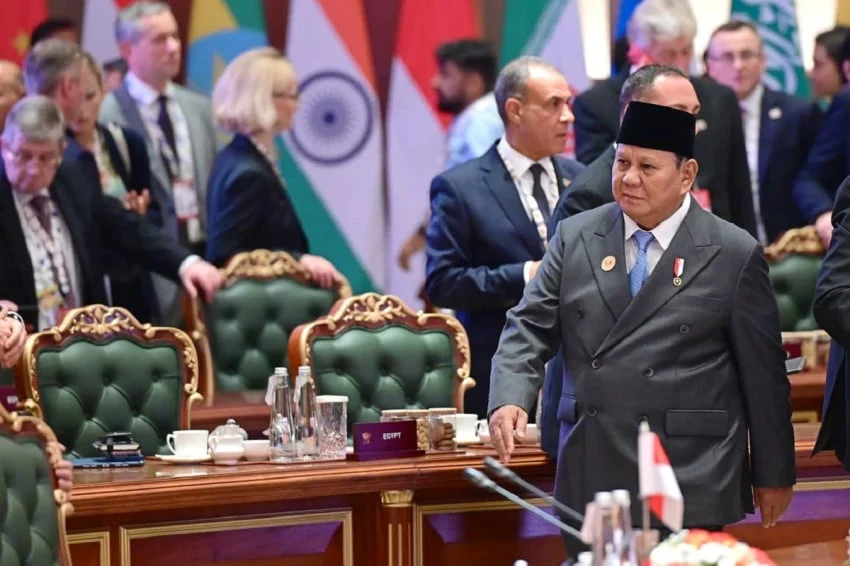
President Prabowo Subianto delivered a significant address during the 18th BRICS Summit in New Delhi, India, on Saturday, September 12, 2026, centering his discourse on the imperative of national resilience and the strategic necessity of a reformed, inclusive global governance framework. Participating in a high-level restricted session titled "Inclusive Global Governance and Strengthening Multilateralism," the Indonesian leader articulated a vision where sovereign independence serves as the bedrock for effective international cooperation.
A Call for Strategic Autonomy in a Multipolar World
The summit, which brought together heads of state from the world’s most influential emerging economies, provided a platform for President Prabowo to underscore that the strength of any multilateral alliance is derived directly from the stability and self-sufficiency of its constituent members. Addressing his counterparts, the President stressed that the internal capacity of a nation to secure the fundamental welfare of its populace—ranging from food security and energy sovereignty to universal education and economic opportunity—is the prerequisite for meaningful global engagement.
"With unity, we become inherently stronger," President Prabowo stated during the session. "However, strength must originate from within. It starts by fulfilling the needs of our people: ensuring food security, guaranteeing energy supplies, educating our youth, and providing equitable pathways to prosperity. This is the pathway to building a resilient and truly independent nation."
The President’s emphasis on domestic foundational strength is a cornerstone of his administration’s foreign policy, which seeks to position Indonesia as a non-aligned, proactive player in global affairs. By prioritizing national self-reliance, Indonesia aims to minimize external dependencies that could constrain its diplomatic flexibility, thereby enabling the country to navigate the complexities of contemporary geopolitical rivalries without yielding to external pressures.
The Evolution and Context of the BRICS Summit
The 18th BRICS Summit in New Delhi represents a critical juncture for the bloc, which has increasingly become the focal point for the "Global South." Since its inception, BRICS has evolved from an acronym coined by an investment banker into a robust institutional framework that challenges the traditional hegemony of Western-led economic systems.
The New Delhi gathering is particularly notable for its focus on the reform of global financial institutions and the promotion of a more equitable international order. The inclusion of new member states and the ongoing discussions regarding a common investment framework underscore the bloc’s ambition to move beyond mere economic cooperation into the realm of integrated global governance.
For Indonesia, participation in this summit is a strategic maneuver designed to diversify its economic partnerships. With the global economy facing headwinds from inflation, supply chain disruptions, and shifting trade alliances, Jakarta’s engagement with BRICS offers a hedge against volatility in traditional markets.
Chronology of Indonesia’s Diplomatic Engagement
Indonesia’s journey toward its current diplomatic stance has been characterized by a measured approach to international blocs. Historically, Indonesia has adhered to a "free and active" foreign policy (bebas-aktif), avoiding formal military alliances while actively participating in economic forums like the G20 and ASEAN.
- 2022: Indonesia successfully presided over the G20, navigating the diplomatic challenges posed by the conflict in Ukraine to produce a joint communique, establishing its credentials as a bridge-builder.
- 2024: President Prabowo Subianto assumed office, signaling a shift toward more assertive economic diplomacy focused on resource downstreaming and food security.
- 2025: Jakarta intensified its outreach to non-traditional partners, focusing on infrastructure investment and the diversification of energy sources.
- September 2026: The 18th BRICS Summit serves as the venue for President Prabowo to formally articulate his vision for a multipolar order characterized by "inclusive governance."
Economic Data and Strategic Implications
The importance of the President’s message is reflected in the current global economic landscape. According to recent data from the International Monetary Fund (IMF), BRICS nations now account for more than 30% of global GDP, surpassing the G7 in terms of purchasing power parity. This shift in economic gravity provides the backdrop for the President’s call for a new multilateralism that reflects the reality of a changing global power balance.
Indonesia’s specific focus on food and energy security is well-supported by domestic data. As the world’s fourth-most populous nation, Indonesia has launched ambitious programs to achieve self-sufficiency in rice production and is aggressively transitioning to renewable energy, including geothermal and solar, to mitigate the risks associated with global oil price fluctuations.
Analysts note that President Prabowo’s focus on internal strength is a pragmatic recognition that global influence is fleeting if not anchored by domestic stability. By prioritizing the "foundational" elements of the state, Indonesia seeks to build a resilient economy that can withstand the shocks of global geopolitical tensions, such as trade wars or sanctions regimes.
Reactions and Diplomatic Perspectives
The Indonesian leader’s address was met with strong interest from other delegates at the New Delhi summit. Prime Minister Narendra Modi, the host of the summit, has consistently advocated for a "Global South" voice in international forums, and President Prabowo’s rhetoric resonated with the Indian administration’s own emphasis on "Atmanirbhar Bharat" (Self-reliant India).
Diplomatic observers suggest that the alignment between New Delhi and Jakarta on the issue of strategic autonomy could lead to deeper bilateral cooperation in defense and technology. By focusing on the shared challenges of development, Indonesia and other BRICS members are effectively recalibrating the purpose of the bloc—shifting from a purely financial entity to a collective security and governance coalition.
However, the path forward is not without challenges. Critics of the BRICS expansion argue that the bloc lacks the ideological homogeneity required to implement sweeping reforms of the global order. Skeptics suggest that balancing the interests of disparate nations—ranging from major commodity exporters to manufacturing hubs—will require significant diplomatic finesse.
Implications for Global Governance
President Prabowo’s intervention at the summit highlights a fundamental shift in how emerging powers perceive their role in global governance. The era of "top-down" multilateralism, where international norms were largely set by established Western powers, is being challenged by a desire for a more pluralistic approach.
The President’s insistence that "the strength of a nation begins at home" serves as a reminder to the international community that global governance is only as effective as the domestic health of its participants. For Indonesia, this means that while it remains committed to the principles of the United Nations and the World Trade Organization, it will prioritize policies that protect its national sovereignty and the economic well-being of its citizens.
In the long term, the implications of this summit may be profound. If the BRICS nations can successfully coordinate their policies on food security, infrastructure financing, and regional trade, they may create an alternative economic ecosystem that provides a buffer for nations seeking to avoid the risks of global polarization.
Looking Toward the Future
As the 18th BRICS Summit concludes, the focus will now shift to the implementation of the commitments made in New Delhi. For Indonesia, the challenge will be to translate the momentum of the summit into tangible economic gains. The government’s focus on downstreaming natural resources and expanding the manufacturing sector will likely require the very partnerships that the BRICS forum aims to foster.
President Prabowo’s performance in New Delhi indicates a clear trajectory for Indonesian foreign policy: a focus on proactive, multi-faceted engagement that prioritizes the national interest while contributing to a stable, multipolar global order. As the world watches, the outcome of these discussions will serve as a bellwether for the future of international cooperation in the latter half of the decade.
The President’s message, emphasizing that "we are stronger when we are united," is more than a diplomatic pleasantry; it is a strategic roadmap for a nation positioning itself as a leader among emerging economies. By linking domestic resilience to global multilateralism, President Prabowo has set a clear tone for his administration’s diplomatic agenda, ensuring that Indonesia remains a pivotal actor in the shaping of the global future.