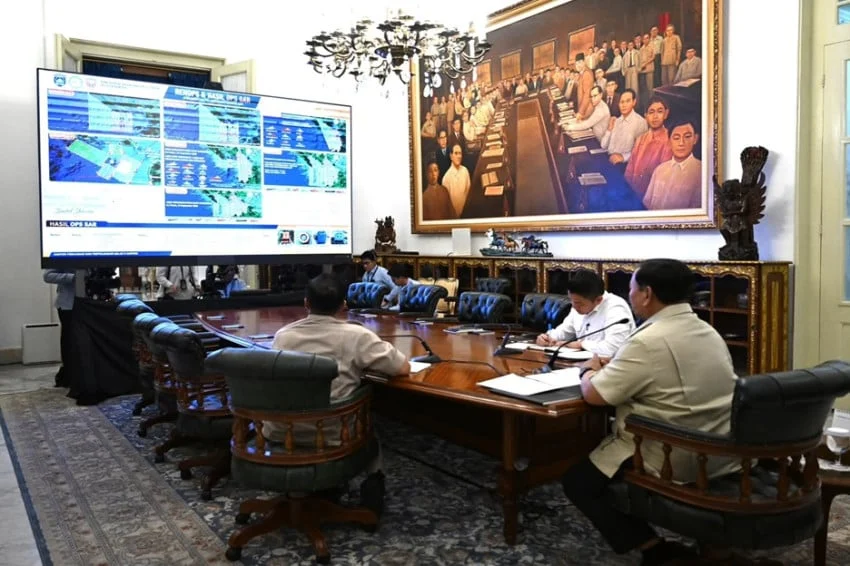
President Prabowo Subianto has issued a stern directive to law enforcement and regulatory bodies, mandating the rigorous prosecution of corporations found responsible for forest and land fires (karhutla) across Indonesia. Speaking during a high-level limited cabinet meeting at the Presidential Palace in Jakarta, the President underscored that the era of leniency for environmental offenders is over. His administration intends to leverage the full extent of the law, including the permanent revocation of business licenses, to ensure corporate accountability for ecological destruction.
The directive comes at a critical juncture for Indonesia’s environmental policy, as the nation grapples with the recurring cycle of seasonal haze that impacts not only biodiversity and air quality but also public health and international trade relations. By positioning corporate culpability at the forefront of the government’s climate agenda, the President is signaling a departure from past enforcement patterns, which critics have often described as inconsistent.
The Presidential Mandate: A Shift in Enforcement
During the Cabinet meeting, which also addressed broader national concerns such as seismic activity in East Nusa Tenggara, maritime safety protocols following the Virgo vessel accident, and the status of missing media personnel, President Prabowo dedicated significant time to the issue of forest fires. His message was unambiguous: forest fires are not merely environmental accidents; they are often systemic failures or intentional acts driven by profit-seeking motives, particularly in the palm oil and timber sectors.
"We will not provide any mercy to those who deliberately destroy our natural heritage," the President stated. He explicitly instructed the Ministry of Environment and Forestry, along with the National Police and the Attorney General’s Office, to expedite the investigation of 95 corporations currently under scrutiny. The President emphasized that the state’s primary instrument of deterrence should be the immediate withdrawal of land concessions and operational permits for any firm found to have facilitated burning to clear land, as this method remains the cheapest way to prepare soil for cultivation.
Chronology of the Crisis and Regulatory Responses
The issue of forest fires has long plagued Indonesia, reaching a catastrophic peak in 2015 and 2019, which resulted in billions of dollars in economic losses and widespread respiratory illnesses. The current administration’s focus on the issue is a response to the recent surge in fire hotspots that have emerged despite improved early warning systems.
- Early 2026: The Ministry of Environment and Forestry intensified satellite monitoring, identifying high-risk areas in Sumatra and Kalimantan.
- Mid-2026: A spike in drought conditions led to a significant increase in fire hotspots, prompting local authorities to declare emergency statuses.
- September 2026: Following the escalation, President Prabowo convened the limited meeting to consolidate the government’s response, resulting in the current mandate for swift legal action.
- Current Status: Law enforcement agencies have confirmed that 95 corporate entities are currently in the investigation and pre-investigation phases, representing a significant portion of the total land-clearing activities currently being audited.
Supporting Data and Economic Implications
The economic footprint of forest fires in Indonesia is extensive. According to data from the World Bank and various environmental research institutions, the 2015 forest fire season cost Indonesia approximately $16 billion in lost GDP, a figure that accounts for agricultural losses, healthcare costs, and the disruption of air and sea transport due to hazardous haze.
The current strategy of targeting corporate entities is rooted in the fact that, statistically, a large percentage of fire hotspots occur within existing industrial forest plantation (HTI) concessions and palm oil estates. By targeting the source of the capital, the government aims to disrupt the supply chain that benefits from illegal land clearing. Industry experts suggest that the threat of license revocation is the most potent tool in the government’s arsenal. Unlike monetary fines, which are often viewed by large corporations as a mere "cost of doing business," the loss of a license represents an existential threat to the company’s revenue stream.
Stakeholder Perspectives and Institutional Challenges
Environmental advocacy groups have expressed cautious optimism regarding the President’s directive. Organizations such as Greenpeace Indonesia and WALHI (Friends of the Earth Indonesia) have long argued that the legal system often fails to reach the beneficial owners of corporations, instead settling for low-level contractors or employees on the ground.
Legal experts note that while the President’s command is robust, the implementation phase faces significant hurdles. "The challenge lies in the evidentiary standard required to link a fire to a specific corporate directive," noted a legal analyst specializing in environmental law. "To make these cases stick, the government must prove not just that a fire occurred on a concession, but that it was a result of a management-level policy to clear land through burning."
Furthermore, the government must navigate complex jurisdictional issues where land ownership may be contested or overlap between central and regional authorities. Coordination between the Ministry of Environment and Forestry and the local government is essential to ensure that when a license is revoked, the process is legally bulletproof and cannot be easily overturned in administrative courts.
Broader Impact: Sustainability and Global Reputation
The aggressive stance taken by the Prabowo administration serves as a vital component of Indonesia’s international climate commitments. As a signatory to the Paris Agreement and a nation with vast tropical rainforests, Indonesia’s ability to curb deforestation is under the global microscope. International trade partners, particularly the European Union with its Deforestation Regulation (EUDR), are increasingly demanding traceability and proof that products are not sourced from land cleared through fire.
By demonstrating that it is taking domestic enforcement seriously, the Indonesian government is not only protecting its internal ecosystem but also safeguarding the market access of its agricultural commodities. A failure to control these fires could lead to trade barriers that would be far more damaging to the economy than the costs associated with stricter enforcement.
The Path Forward: Towards Systemic Accountability
As the investigations into the 95 identified corporations proceed, the public and international community will be watching to see how many licenses are actually revoked and how many cases result in criminal convictions. The President’s rhetoric has set a high bar for the bureaucracy. The success of this policy will depend on the transparency of the investigation process and the independence of the judicial proceedings.
If the government succeeds in setting a precedent through these 95 cases, it could mark a transformative era for land management in Indonesia. Moving forward, the integration of real-time satellite monitoring with rapid-response legal teams is expected to become the new standard for the Ministry of Environment and Forestry.
In conclusion, the directive from President Prabowo Subianto is a clear signal that the cost of environmental negligence has been recalibrated. By prioritizing the revocation of permits over simple financial penalties, the administration is moving toward a strategy of deterrence that aligns with both the urgency of the climate crisis and the long-term economic necessity of sustainable resource management. The coming months will be a litmus test for the government’s resolve, as the legal system begins to process these high-stakes cases against major industrial players. The outcome will likely define the environmental legacy of the current administration and determine the future trajectory of Indonesia’s natural resource stewardship.