A Landmark Initiative for Grassroots Development
The coaching clinic is a cornerstone of the MilkLife Soccer Challenge (MLSC) 2026-2027 season, a strategic partnership between the Djarum Foundation’s Bakti Olahraga, MilkLife, and The Pokémon Company. By targeting the formative years of 10 to 13, the program aims to bridge the developmental gap that has historically hindered the progress of women’s football in Indonesia. The participants were drawn from the Greater Jakarta area, including Jakarta, Tangerang, and Bekasi, and represent the brightest prospects of the MilkLife Soccer Extra Training program.
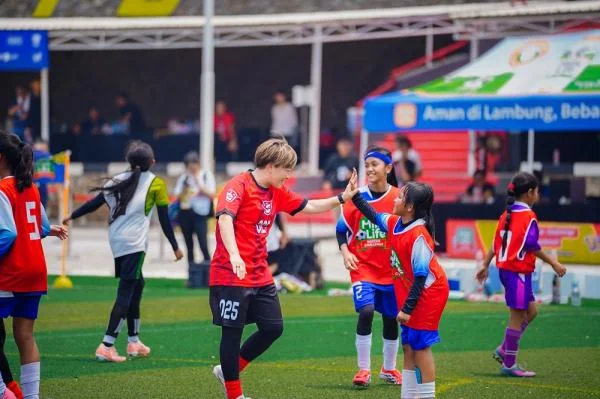
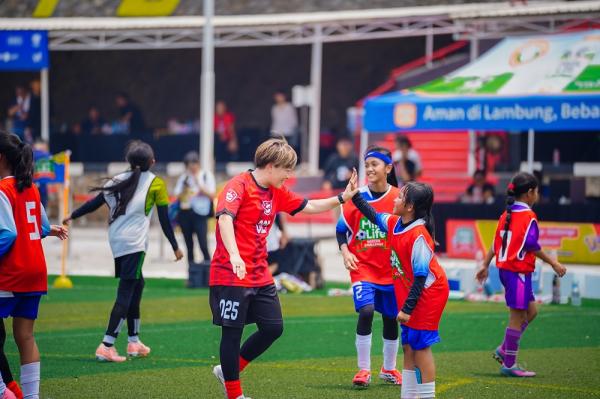
The curriculum went beyond basic drills; it provided a holistic approach to the game, incorporating tactical awareness, technical precision, and the psychological fortitude required to compete at an elite level. For the 74 young athletes, the opportunity to train alongside Aya Miyama—the former captain of the Nadeshiko Japan—and Mana Iwabuchi, a playmaker known for her technical ingenuity, served as a powerful motivator.
The Visionary Perspective of Aya Miyama
Aya Miyama, whose leadership was pivotal in Japan’s rise to the pinnacle of world football in 2011, offered a measured yet optimistic assessment of the talent pool she observed in Cijantung. "What I see today is not just raw athleticism, but a genuine hunger to learn and an aptitude for the game that, if nurtured correctly, could eventually see Indonesia rival nations like Japan," Miyama noted during the session.
Her assessment is grounded in the reality of the sport’s trajectory. While Japan’s "Nadeshiko" model is built upon decades of investment, youth academies, and a professional domestic league (WE League), Indonesia is currently in a nascent stage of structural development. Miyama’s observation suggests that the fundamental building blocks—agility, spatial awareness, and passion—are already present within the Indonesian youth demographic. The challenge, she implied, lies in the sustained support, coaching quality, and infrastructure required to transform that potential into a consistent international performance.
Mana Iwabuchi: The Technical Catalyst
Mana Iwabuchi, who retired from professional football after a stellar career in Japan and Europe, emphasized the importance of technical literacy from a young age. "In Japan, we start with the ball at our feet as early as possible. Seeing these girls in Jakarta demonstrate such quick reaction times and willingness to experiment with different passing lanes is a testament to the effectiveness of programs like the MilkLife Soccer Challenge," Iwabuchi remarked.
Her presence provided a masterclass in playmaking. During the training sessions, Iwabuchi focused on tight-space maneuvers, encouraging the participants to prioritize ball control under pressure. This specific focus is essential for the modern game, where the transition between defense and attack requires rapid decision-making—an area where Indonesian football has traditionally struggled.
The Broader Landscape of Indonesian Women’s Football
The arrival of such high-profile figures reflects a growing trend in Southeast Asia: a renewed commitment to women’s football. Historically, the Indonesian women’s national team has faced challenges related to limited match exposure, insufficient training facilities, and a lack of a formalized youth pipeline. However, the recent influx of private sector involvement, such as the Djarum Foundation’s efforts, is creating a roadmap for a more professionalized system.

The MilkLife Soccer Challenge acts as a catalyst for the "All-Stars" program, which is scheduled for 2027. This long-term planning is crucial. According to developmental experts, the transition from grassroots to professional football requires a seamless pathway where young players are consistently exposed to high-level competition and elite coaching methodologies. By integrating international legends into the local training environment, the program ensures that Indonesian youth are benchmarking their progress against global standards.
Chronology of Recent Developments
The involvement of Japanese legends in the 2026 season of the MLSC is part of a larger diplomatic and sporting collaboration. Following the success of initial scouting missions in 2025, the 2026-2027 season has been marked by increased investment in scouting and technical training.
- Early 2026: Launch of the MilkLife Soccer Challenge expansion, focusing on scaling up from local tournaments to a regional structure encompassing Jakarta, Tangerang, and Bekasi.
- August 2026: Integration of the "Extra Training" curriculum, designed to identify players with high-performance potential.
- September 17, 2026: The marquee "MilkLife Soccer Challenge with Pokemon" event, featuring Aya Miyama and Mana Iwabuchi, serves as the primary technical highlight of the season.
- Late 2026-2027 Outlook: Preparation for the MLSC All-Stars tournament, where the top 74 participants will be evaluated for potential placement in domestic professional pipelines.
Analysis: Implications for Future Competition
The optimism expressed by Miyama and Iwabuchi is significant, but it must be viewed within the context of the competitive reality in the Asian Football Confederation (AFC). Countries like Australia, Japan, South Korea, and China have invested heavily in women’s football for years. For Indonesia to "catch up," as suggested by the legends, the nation must address three core pillars:
- Systemic Consistency: Programs like the MilkLife Soccer Challenge must be replicated across other provinces to ensure a wider talent pool.
- League Infrastructure: There is an urgent need for a sustainable, high-frequency women’s league where young players can transition from youth training to competitive professional matches.
- Coaching Education: While legends like Miyama and Iwabuchi provide inspiration, the day-to-day development relies on local coaches trained in modern, international-standard methodologies.
The collaboration with The Pokémon Company also highlights an innovative approach to engagement. By blending sports with globally recognized branding, the organizers are effectively increasing the visibility of the sport, which is vital for attracting young girls to the game and maintaining their interest through the formative teenage years.

Official Response and Long-term Vision
Representatives from the Djarum Foundation have emphasized that the partnership with Japanese football icons is intended to instill a "winning mentality" from the very start. By exposing young players to the rigor and discipline of the Japanese training style, the organizers hope to normalize the standard of excellence that characterizes top-tier international play.
As the 2026 season progresses, the focus will shift toward evaluating how the 74 participants apply the lessons learned from their Japanese mentors. The success of this program will not be measured solely by the results of the upcoming All-Stars tournament, but by the number of these young athletes who continue to pursue football at the collegiate or professional levels over the next five to ten years.
In conclusion, the visit of Aya Miyama and Mana Iwabuchi to Jakarta marks a pivotal moment in the development of women’s football in Indonesia. While the gap between Indonesia and global powerhouses remains substantial, the strategic integration of grassroots training with world-class mentorship provides a tangible path forward. If the current trajectory of private-sector investment and high-level technical exposure is maintained, Indonesia may well be on its way to becoming a formidable force in the region. The seeds sown in the KingKong Arena this week represent the beginning of a long-term investment in the next generation of Indonesian athletes.