JAKARTA — The political landscape in Indonesia faces a fresh wave of controversy as senior figures from the Indonesian Democratic Party of Struggle (PDI-P) renew calls for Vice President Gibran Rakabuming Raka to step down from his office. This demand follows a decisive ruling by the Supreme Court (Mahkamah Agung – MA) declaring the certificate of equivalency for high school education or its equivalent, utilized during administrative registration processes, to be legally invalid.
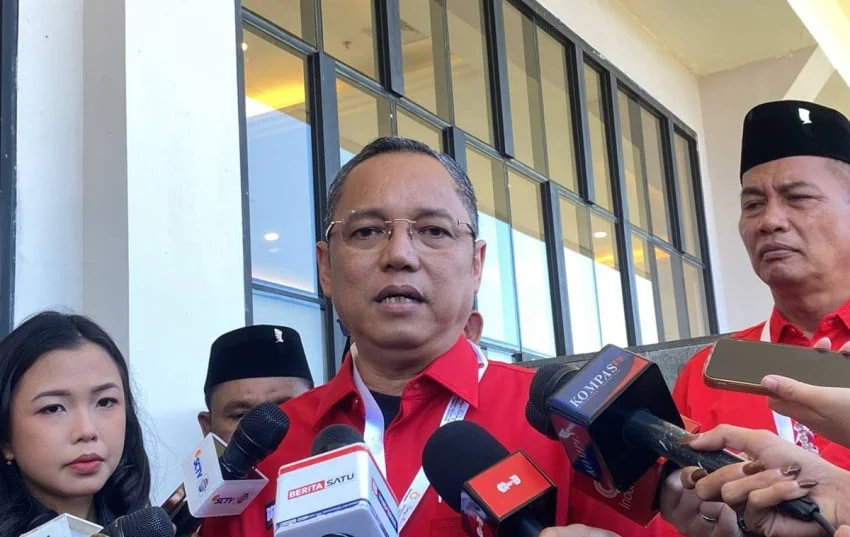
Speaking to reporters in Jakarta, Deddy Yevri Sitorus, Chairperson of the Central Executive Board (DPP) of PDI-P, asserted that the judiciary’s decision effectively closes any remaining legal loopholes regarding the administrative requirements fulfilled during the previous presidential election cycle. Sitorus emphasized that the implications of the Supreme Court’s verdict require immediate introspection and decisive action from the executive branch, suggesting that the legislature must step in should the Vice President choose to remain in office.
The unfolding situation has triggered intense discussions among constitutional law experts, political analysts, and the wider public regarding executive legitimacy, the rule of law, and the enforcement of electoral regulations in the world’s third-largest democracy.
Background Context and the Legal Battle Over Administrative Eligibility
The controversy surrounding Vice President Gibran Rakabuming Raka’s educational credentials and administrative documentation is not an isolated incident but rather the culmination of a protracted legal and political struggle that began prior to the 2024 general elections. When Gibran was nominated as the vice-presidential running mate to then-presidential candidate Prabowo Subianto, civil society groups, academic coalitions, and political opponents repeatedly scrutinized his registration documents submitted to the General Elections Commission (KPU).
At the center of the dispute was the validity of his educational background obtained abroad and the subsequent local administrative validation processes. Candidates for the presidency and vice-presidency are mandated by law to fulfill specific educational thresholds, typically verified through high school diplomas or officially recognized equivalents issued by authorized government bodies. Questions arose regarding whether the Ministry of Education, Culture, Research, and Technology’s equivalency letters complied strictly with statutory requirements.
Over the past two years, multiple lawsuits were filed by citizens, activists, and legal aid organizations seeking judicial review of the administrative clearances granted by electoral authorities. While initial challenges faced procedural hurdles or were dismissed by lower administrative courts, higher judicial bodies have progressively scrutinized the foundational paperwork, culminating in the recent Supreme Court decision that invalidated the specific high school equivalency certification tied to the case.
Chronology of Key Legal and Political Milestones
To understand the gravity of the current situation, it is essential to trace the timeline of events that have shaped the dispute over the vice-presidential credentials:
- October 2023: Gibran Rakabuming Raka registers as a vice-presidential candidate alongside Prabowo Subianto, submitting educational documents and equivalency certificates to the General Elections Commission (KPU).
- February 2024: The presidential election takes place, resulting in a victory for the Prabowo-Gibran ticket, certified by the KPU amid ongoing public debates concerning candidacy eligibility and constitutional court ethics rulings.
- Mid-2024 to 2025: Various civil society organizations and legal coalitions file administrative lawsuits and judicial reviews challenging the validity of the high school equivalency certificates used during the registration phase.
- Late 2025: The Constitutional Court (Mahkamah Konstitusi – MK) reviews related petitions concerning candidate vetting procedures, highlighting gaps in documentation verification while stopping short of immediate disqualification due to jurisdictional constraints at that specific stage.
- November 2026: The Supreme Court issues a landmark ruling declaring the specific high school equivalency certificate invalid, removing the legal basis for the administrative clearance previously granted.
- November 2, 2026: PDI-P DPP Chairperson Deddy Yevri Sitorus publicly calls for Gibran Rakabuming Raka to resign honorably, warning that failure to do so could prompt parliamentary intervention and severely compromise the moral authority of the executive office.
PDI-P’s Stance: Ethical Responsibility and Institutional Consequences
Elaborating on his party’s position, Deddy Yevri Sitorus stated that the Supreme Court’s decision operates as a unified legal perspective alongside previous evaluations by the Constitutional Court. According to Sitorus, the cumulative effect of these judicial findings establishes that the administrative prerequisites for the vice-presidential candidacy were fundamentally compromised.
"The consequence, both morally and ethically, is that Gibran must step down from his current position," Sitorus told journalists. He argued that clinging to power in the face of rulings that undermine the administrative legitimacy of the office would turn the institution into a target of public mockery. "I propose that Gibran gracefully and honorably resign," he added.
Sitorus further noted that if the executive branch remains passive, the House of Representatives (DPR) holds the constitutional obligation to follow up on the judicial findings. This could potentially lead to parliamentary inquiries or oversight mechanisms designed to address potential breaches of electoral administration laws.
Broader Political Reactions and Legal Expert Analysis
The call for resignation has elicited polarized responses across the political spectrum. Constitutional law experts remain divided on the direct executive consequences of administrative rulings concerning educational certificates post-inauguration.
Legal scholars favoring institutional strictness argue that an administrative flaw in candidacy requirements, once validated by final judicial review, invalidates the foundational legitimacy of the mandate. Proponents of this view, including prominent legal scholar and former Deputy Minister of Law and Human Rights Denny Indrayana, have previously asserted that holding onto the vice-presidency under such circumstances constitutes a form of constitutional defiance. Indrayana and other critics maintain that executive officials must uphold the highest standards of legality from the inception of their candidacy through the entirety of their term.
Conversely, defenders of the administration and allied political parties contend that the transition of power and the official inauguration of a democratically elected ticket create an entrenched constitutional reality that cannot be easily undone by retroactive challenges to administrative paperwork. Representatives from coalition parties supporting the government have argued that judicial reviews regarding administrative details should not override the sovereign mandate expressed by millions of voters at the ballot box. They characterize calls for resignation as politically motivated maneuvers aimed at destabilizing the executive branch rather than genuine concerns for legal compliance.
Implications for Governance and Stability
The ongoing controversy poses significant implications for political stability and institutional trust in Indonesia. As the nation navigates complex economic and social challenges, sustained friction between the legislative branch, the judiciary, and the executive office could distract from critical policy implementation.
- Erosion of Public Trust: Persistent debates over the legitimacy of top leaders risk diminishing public confidence in state institutions, particularly the electoral management bodies responsible for vetting candidates.
- Legislative Pressure: The potential involvement of the DPR introduces a layer of political uncertainty. If opposition parties and critical factions within parliament decide to pursue formal inquiries, parliamentary sessions could become arenas for intense partisan battles over executive accountability.
- Precedent for Future Elections: The final resolution of this case will establish a critical legal precedent regarding how administrative eligibility disputes are handled after an election has concluded, potentially reshaping the vetting framework for future regional and national polls.
Conclusion
As pressure mounts from political opposition figures and legal observers, the central government faces a critical juncture. While the administration maintains its functional operations, the dual pressure of a Supreme Court ruling invalidating key educational credentials and vocal demands for resignation from major political forces like PDI-P ensures that the issue of executive eligibility will remain at the forefront of national discourse. Whether the executive branch addresses these concerns through voluntary political maneuvers or if the legislature initiates formal oversight proceedings will depend heavily on the political calculus of coalition leaders in the coming weeks.