
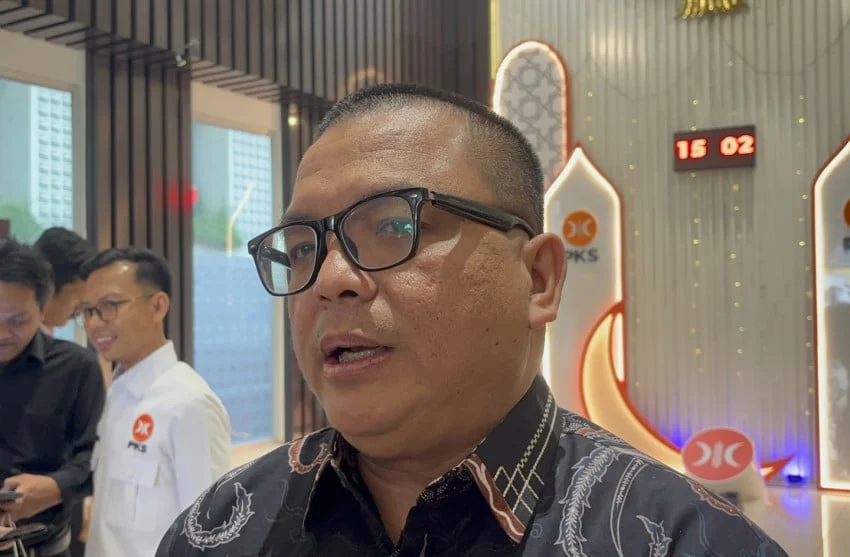
JAKARTA — Former Deputy Minister of Law and Human Rights, Denny Indrayana, has confirmed that he has initiated informal dialogues with senior figures within the Indonesian Democratic Party of Struggle (PDI-P) to explore the legal and political viability of impeaching Vice President Gibran Rakabuming Raka. The discussions, according to Indrayana, are centered on the ongoing controversy surrounding the validity of the Vice President’s educational credentials, a matter that has recently escalated following deliberations within the Constitutional Court (MK).
Speaking from the headquarters of the Prosperous Justice Party (PKS) in South Jakarta on Thursday, October 29, 2026, Indrayana stated that while his engagement with opposition parties is ongoing, the discourse with PDI-P remains in a preliminary, non-official phase. He suggested that the party is currently deliberating the matter through its internal mechanisms.
The Genesis of the Impeachment Discourse
The push for impeachment stems from a series of legal challenges questioning the authenticity of Gibran Rakabuming Raka’s academic documents, specifically those related to his junior high and high school education, as well as supplementary documents from Insearch and MDIS. These documents were recently presented as evidence in the Administrative Court (PTUN), sparking a renewed wave of public and political scrutiny.
For critics, the validity of these credentials is not merely a personal matter for the Vice President but a fundamental issue regarding the eligibility requirements for the nation’s second-highest office. Indrayana, a constitutional law expert, has long argued that any irregularity in these credentials could constitute a breach of the constitutional requirements for holding public office, thereby providing grounds for an impeachment process under Article 7A of the 1945 Constitution.
Chronology of Legal and Political Developments
The current political tension is the culmination of a multi-year saga that began during the 2024 election cycle.
- 2023-2024 (Pre-Election Phase): Initial allegations regarding the Vice President’s educational background began circulating, leading to various lawsuits filed in civil courts. These were largely dismissed due to lack of standing or insufficient evidence.
- Early 2025: Post-inauguration, the focus shifted to the Administrative Court (PTUN), where plaintiffs sought to compel the disclosure of original academic records to verify claims made in official government filings.
- October 2026: The PTUN proceedings saw a significant development as specific documents—ranging from primary school certificates to international academic transcripts—were submitted for judicial review. This prompted legal experts, including Indrayana, to revive the constitutional debate regarding the impeachment mechanism.
The Role of Political Coalitions
Indrayana’s move to consult with PDI-P is strategically significant. As the largest opposition force in the House of Representatives (DPR), PDI-P holds the necessary political capital to initiate or block high-level parliamentary inquiries.
While Indrayana confirmed that his communication with PDI-P has been received with a "positive response" regarding the exploration of options, he maintained professional discretion. "I am in communication with colleagues in PDI-P, and it appears they are processing this internally," Indrayana noted. He declined to name the specific elite members involved in these discussions, citing the sensitivity of the internal party deliberations.
When questioned about the potential for a formal, public-facing coalition to pursue impeachment, Indrayana was cautious. "There has been no formal meeting to date. It is better for PDI-P to address their own stance directly. However, I remain optimistic that the legal facts will be addressed with the seriousness they deserve."
Constitutional Framework for Impeachment
The process of impeaching a President or Vice President in Indonesia is governed by a stringent constitutional framework. Article 7A of the 1945 Constitution stipulates that the President and/or Vice President may be dismissed from office during their term by the People’s Consultative Assembly (MPR) upon the proposal of the House of Representatives (DPR).
The grounds for such a move are limited to:
- Committing a violation of the law in the form of treason against the state, corruption, bribery, or other serious crimes.
- Committing a disgraceful act.
- Proving no longer to meet the requirements to serve as President or Vice President.
The "requirements" clause is precisely where the academic credential controversy resides. If it is proven that the credentials provided during the registration process were fraudulent, it could be argued that the official did not meet the legal requirements at the time of their election. However, the path to impeachment is fraught with procedural hurdles, including a requirement for a two-thirds majority in the DPR to initiate the process, followed by a review by the Constitutional Court, and finally, a vote by the MPR.
The Stance of PDI-P and Other Opposition Parties
The PDI-P leadership has maintained a guarded stance throughout this period. While the party has expressed concerns regarding the state of democracy and legal integrity in the country, it has stopped short of officially endorsing the impeachment of the Vice President. Observers suggest that the party is weighing the long-term political implications of such a drastic move, which would undoubtedly trigger significant social and political volatility.
Conversely, PKS—where Indrayana was hosted—has been more vocal in its criticism of the current administration’s policies and legal challenges. By engaging both PKS and PDI-P, Indrayana is attempting to build a cross-party consensus that could shift the impeachment discourse from a fringe legal argument to a mainstream parliamentary objective.
Broader Impact and Implications for Indonesian Democracy
The potential impeachment of a Vice President on the grounds of academic qualification would be unprecedented in Indonesian history. The implications are wide-reaching:
1. Institutional Stability: A move toward impeachment could test the durability of Indonesia’s democratic institutions. It would force the judiciary to act as the ultimate arbiter of constitutional truth, potentially distancing the court from political pressures.
2. Public Trust: The ongoing debate reflects a growing public demand for transparency in leadership. Regardless of the legal outcome, the persistent questions regarding the Vice President’s credentials have already created a "trust gap" among a segment of the electorate.
3. Future Precedents: The outcome of this case will set a precedent for how future candidates are vetted. It may lead to more rigorous and standardized procedures for verifying the academic and personal credentials of candidates before they are allowed to stand for national office.
4. Market and Economic Sentiment: Political uncertainty is a known catalyst for market volatility. Investors typically prefer stability, and a prolonged, high-stakes impeachment drama could weigh on the Rupiah and impact foreign direct investment (FDI) inflows, as stakeholders monitor the resilience of the Indonesian government.
The Road Ahead
As the legal proceedings at the PTUN continue, the political maneuvering in the hallways of the Senayan legislative complex will likely intensify. Denny Indrayana’s role as an agitator for this constitutional process suggests that he intends to keep the pressure on the legislative branch to fulfill its oversight function.
For now, the situation remains in a state of flux. The "internal process" mentioned by Indrayana regarding PDI-P’s position suggests that the party is not yet ready to commit to a formal impeachment motion. The coming weeks will be critical, as the PTUN is expected to reach a decision on the validity of the evidence presented.
If the court findings lean toward supporting the claims made by the plaintiffs, the political pressure on the House of Representatives to act will increase exponentially. If, however, the court finds the evidence insufficient or the claims meritless, the impeachment narrative will likely collapse, leaving the opposition to find new avenues to challenge the current administration.
Ultimately, the impeachment debate serves as a litmus test for the independence of the Indonesian judiciary and the willingness of the legislature to engage in rigorous oversight of the executive branch. As Denny Indrayana noted, the focus remains on the legal facts, yet in the high-stakes world of Indonesian politics, facts are often merely the starting point for a much larger struggle for power and accountability.
The public remains in a state of watchful waiting, as the intersection of legal battles and political ambitions continues to define the landscape of the nation’s governance. Whether this leads to constitutional reform or a reaffirmation of the current order remains to be seen, but the events of October 2026 have undeniably altered the political trajectory of the country.
