
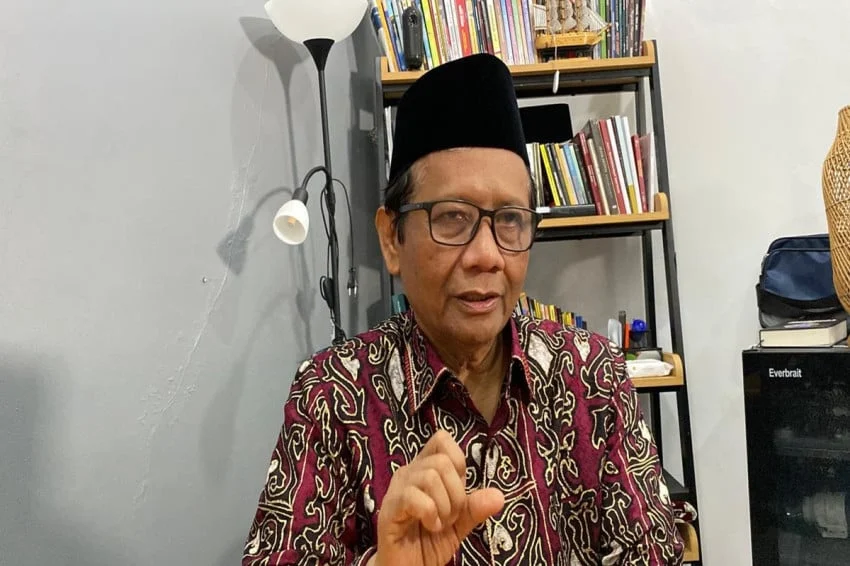
The legal and political landscape of Indonesia faced a significant development following a definitive ruling by the Supreme Court regarding the educational credentials of Vice President Gibran Rakabuming Raka. Former Coordinating Minister for Political, Legal, and Security Affairs, Mahfud MD, publicly addressed the decision handed down by the Supreme Court, which granted the cassation appeal concerning the legal validity of the high school diploma equivalency certificate used by Gibran during his registration as a vice-presidential candidate for the 2024 general elections.
The Supreme Court, through verdict number 742 K/TUN/2026, concluded that the documentation utilized to establish educational eligibility was legally invalid. This judicial determination immediately sparked intense discussions across legal and political circles, shifting the focus from administrative compliance to potential legislative accountability and criminal investigations. The core of the controversy centers on the authenticity and administrative process surrounding the high school equivalency letter issued for Gibran Rakabuming Raka, which served as a fundamental prerequisite for his candidacy alongside President Prabowo Subianto in the 2024 presidential race.
Chronology of the Legal Challenge and Judicial Proceedings
The dispute over the Vice President’s educational qualifications did not emerge overnight; rather, it represents the culmination of a protracted legal battle initiated by civic plaintiffs and scrutiny groups. The chronology of the case traces back to the registration phases of the 2024 Presidential Election, overseen by the General Election Commission (KPU). During the vetting process, candidates are required to submit proof of completing formal education at the senior high school level or its equivalent. For candidates who completed their secondary education overseas, an equivalency certificate issued by the Ministry of Education is mandatory.
Subsequent to the election and the subsequent inauguration of the executive administration, legal challenges regarding the authenticity and procedural issuance of the equivalency letter were brought before the State Administrative Court (PTUN). Plaintiffs, led by figures such as HM Subhan, challenged the administrative decrees that validated the document. Initially, the litigation moved through various stages of the administrative court system, involving intermittent withdrawals, refilings, and intense legal maneuvers by both the plaintiffs and the legal team representing the defense of the educational documents, who previously detailed aspects of Gibran’s schooling history in Singapore.
The case ultimately ascended to the Supreme Court via a cassation appeal. On Friday, October 30, 2026, notification of the Supreme Court’s decision reached the plaintiffs through the electronic court system. The ruling decisively overturned previous lower court interpretations, establishing that the high school diploma equivalency certificate failed to meet the necessary legal and administrative thresholds, rendering it invalid for the purposes of the 2024 electoral candidacy requirements. Although the complete written text of the verdict had not yet been uploaded to the Supreme Court’s official public directory at the time of initial reporting, the operative conclusion of the ruling quickly entered the public domain.
Mahfud MD’s Perspective on Political and Criminal Implications
Weighing in on the ramifications of the Supreme Court’s decision, Mahfud MD utilized his verified social media platform to articulate a dual-pronged approach to the crisis. According to the former constitutional court justice, the judicial verdict delivered by the nation’s highest court leaves little room for ambiguity regarding the legal status of the document in question.
"The follow-up regarding his position as Vice President is up to politics; whichever path they choose to take," Mahfud stated via his official account @mohmahfudmd, delineating the boundary between judicial findings and political action. By framing the executive tenure as a matter for political resolution, Mahfud pointed toward the legislative branch—specifically political parties represented within the House of Representatives (DPR)—as the appropriate venue for addressing the broader governance implications of the ruling.
However, Mahfud emphasized that the resolution of the matter should not be restricted solely to political maneuvering or institutional forbearance. He explicitly called for formal criminal investigations into the creation of the disputed equivalency letter and what he characterized as the illicit insertion or smuggling of specific regulatory provisions. Specifically, Mahfud pointed to Article 18, paragraph (3) of General Election Commission Regulation (PKPU) Number 19 of 2023 as an area requiring rigorous scrutiny.
"The KPU and the Directorate General of Early Childhood, Primary, and Secondary Education should be examined immediately," Mahfud asserted, advocating for transparent investigations into the administrative procedures that facilitated the issuance and acceptance of the contested document during the candidate verification stage.
Background Context of Educational Equivalency Regulations in Indonesian Elections
To understand the weight of the Supreme Court’s ruling and Mahfud’s commentary, it is essential to examine the regulatory framework governing educational requirements for high-office candidates in Indonesia. The Election Law mandates that candidates for the presidency and vice-presidency must possess a minimum educational attainment of senior high school graduation or its equivalent. For individuals whose educational backgrounds involve international curricula or institutions outside the domestic public school system, the Ministry of Education provides a formal equalization process.
This process requires applicants to submit authentic transcripts, completion certificates, and proof of curriculum accreditation from the foreign institution. The Directorate General evaluates these submissions to issue a formal decree or certificate of equivalency. In the case of Gibran Rakabuming Raka, whose educational background included schooling in Singapore, the equivalency certificate became the pivotal document submitted to the KPU to satisfy electoral prerequisites.
Critics and plaintiffs argued that procedural irregularities plagued the issuance of this document, suggesting that the criteria applied deviated from standard administrative law. The inclusion of specific regulatory clauses in PKPU No. 19/2023 became a focal point of contention, with legal analysts debating whether administrative rules were retroactively or improperly adjusted to accommodate candidate eligibility criteria. The Supreme Court’s recent cassation ruling indicates a judicial validation of these concerns, finding that the administrative instruments failed to comply with statutory mandates.
Institutional and Stakeholder Reactions
Following the public disclosure of the Supreme Court’s verdict and Mahfud MD’s statements, anticipation has grown regarding the official responses from key institutional stakeholders, including the General Election Commission (KPU), the Ministry of Education, and political factions within the House of Representatives.
The KPU faces intense scrutiny regarding its vetting procedures during the 2024 election cycle. As the independent body tasked with ensuring that all candidates strictly adhere to constitutional and statutory requirements, the KPU’s acceptance of the disputed equivalency certificate is now viewed through a highly critical lens. Legal experts suggest that if the document is judicially declared invalid retrospectively, questions regarding the integrity of the candidate verification process will require formal administrative and potentially ethical reviews of the election commissioners who oversaw that cycle.
Similarly, the Directorate General of Early Childhood, Primary, and Secondary Education within the relevant educational ministry is implicated in the procedural pathway of the document’s issuance. Calls for an independent audit or investigation into how equivalency letters are processed for high-profile figures have gained momentum among legal advocacy groups and academic commentators.
In the political arena, reactions remain cautious as party leaders assess the potential fallout. While opposition figures and critics view the ruling as a critical test of institutional accountability, governing coalition parties have emphasized the stability of the executive branch and the separation of powers. The debate centers on whether an administrative defect in a pre-election candidacy document can or should trigger constitutional mechanisms regarding executive tenure, or if the matter remains an administrative dispute with historical significance rather than immediate executive disqualification.
Fact-Based Analysis of Broader Implications
The Supreme Court ruling and the ensuing public debate carry profound implications for Indonesian constitutional law, administrative jurisprudence, and electoral governance. Analyzing the situation through a factual and structural lens reveals several key dimensions:
-
Jurisprudence of Administrative Law: The ruling reinforces the principle that administrative acts and state-issued certificates—even those utilized by high-ranking executive officials—remain subject to judicial review and can be annulled if found to violate statutory procedures. This establishes a significant precedent regarding the finality of administrative clearance given to electoral candidates.
-
Electoral Integrity and Regulatory Harmonization: The controversy highlights the critical need for absolute transparency and strict adherence to regulations governing candidate qualifications. The friction between electoral regulations (PKPU) and statutory laws regarding educational equivalency underscores the necessity of harmonizing subsidiary legislation with primary acts to prevent future legal vulnerabilities.
-
Separation of Powers and Political Accountability: Mahfud MD’s distinction between judicial invalidation and political follow-up delineates the limits of judicial reach in matters concerning executive tenure. Under the Indonesian constitutional system, the removal or sanctioning of a sitting Vice President involves complex political and legal mechanisms, such as those overseen by the People’s Consultative Assembly (MPR) or the House of Representatives (DPR), rather than direct enforcement by administrative courts alone.
-
Potential for Criminal Proceedings: By advocating for criminal investigations into the creation of the equivalency letter and regulatory adjustments, the discourse moves beyond civil administrative law into the realm of penal accountability. If law enforcement agencies initiate formal inquiries into administrative officials or electoral bodies, it could set a groundbreaking precedent for accountability within state bureaucracies.
As the complete written judgment from the Supreme Court becomes publicly accessible, legal scholars, political analysts, and institutional actors will continue to dissect its exact legal terminology and mandated remedies. The unfolding developments will undoubtedly test the resilience of Indonesia’s democratic institutions, balancing the rule of law with administrative and political stability in the years following the 2024 elections.
