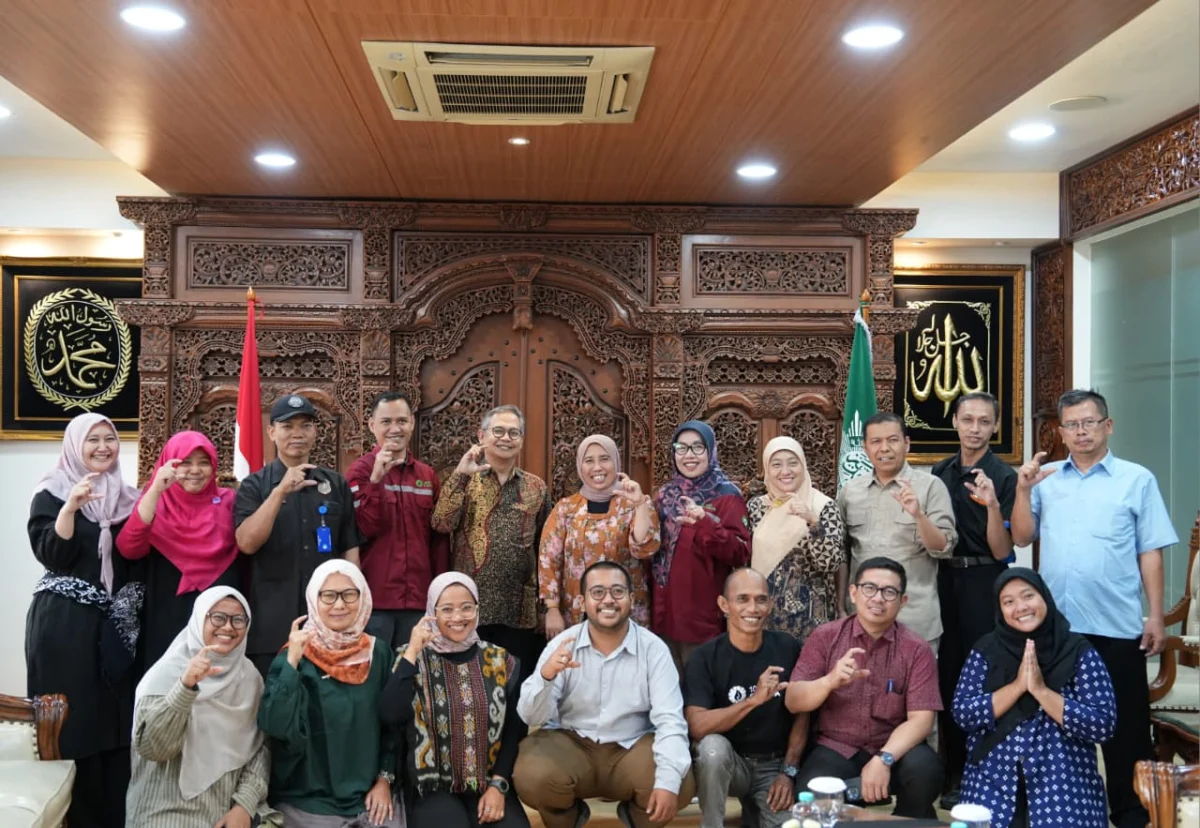
JAKARTA — The Central Leadership (Pimpinan Pusat or PP) of Muhammadiyah has officially concluded a comprehensive energy audit of its primary administrative headquarters in Jakarta. The initiative, which commenced in early September 2026, marks a significant milestone in the organization’s ongoing commitment to ecological stewardship, operational cost optimization, and the institutionalization of a culture of resource conservation. The findings and strategic recommendations derived from the exhaustive assessment were formally presented during the Closing Meeting of the Energy Audit of the PP Muhammadiyah Jakarta Building, held on Tuesday, September 22, 2026, at the organization’s capital headquarters.
The completion of this audit signifies more than a routine infrastructural review; it reflects a broader ideological alignment within Indonesia’s second-largest Islamic organization regarding environmental sustainability. By blending modern technological assessments with theological mandates on moderation and stewardship, Muhammadiyah continues to position itself as a progressive voice in contemporary ecological discourse. The data gathered from the audit will now serve as the foundational bedrock for formulating binding institutional policies aimed at reducing carbon footprints and maximizing energy efficiency across all organizational tiers.
Background and Strategic Context of the Audit
The genesis of the energy audit traces back to the issuance of official administrative directives by the central leadership, specifically the PP Muhammadiyah Circular Letter Number 5/EDR/I.0/B/2026, which formally mandates institutional efficiency and the cultivation of a lifestyle centered on resource conservation. In an era marked by escalating global climate challenges, economic volatility, and rising utility expenditures, religious institutions are increasingly recognizing their moral obligation to lead by example in sustainable resource management.
For decades, large institutional complexes, such as the headquarters of major religious and civil society organizations, have faced growing challenges regarding high energy consumption. Air conditioning systems, extensive lighting arrays, office machinery, and religious facilities operating throughout the week demand substantial power inputs. Recognizing these systemic vulnerabilities, the leadership of Muhammadiyah initiated the audit to transition from passive awareness to active, data-driven resource management.
The assessment was not limited to the primary administrative tower but encompassed the entire architectural footprint of the complex, prominently featuring the At-Tanwir Mosque. By incorporating a major house of worship into the audit, Muhammadiyah underscored the principle that spiritual spaces must equally embody the values of environmental cleanliness, efficiency, and sustainability. The integration of ecological responsibility into places of worship serves a powerful pedagogical function for the millions of congregants who visit the complex annually.
Chronology and Scope of the Assessment
The energy audit operation unfolded over a structured three-week period, adhering to rigorous engineering and environmental standards.
Early September 2026 marked the mobilization phase. A specialized team of auditors, environmental consultants, and facility managers deployed diagnostic tools across the Jakarta headquarters. The initial phase involved baseline data collection, mapping out historical electricity consumption patterns, and cataloging every energy-consuming asset within the compound.
Throughout the middle of September, the technical team conducted granular inspections. The evaluation parameters were comprehensive, focusing on primary energy drivers including electrical grid intake, heating, ventilation, and air conditioning (HVAC) systems, illumination technology, the operational capacity of existing solar panel installations, and overall facility management protocols. Every corridor, office space, meeting hall, and congregational area within the At-Tanwir Mosque was subjected to thermodynamic and electrical load analyses.
By the third week of September, the data had been synthesized, revealing critical insights into the compound’s energy consumption profile. The culmination of this intensive process occurred on Tuesday, September 22, 2026, during the official Closing Meeting. At this gathering, the auditors presented their empirical findings, highlighting both operational efficiencies already in place and critical vulnerabilities requiring immediate remedial action.
Key Findings and Technical Recommendations
According to the diagnostic report presented at the closing meeting, the energy utilization across the PP Muhammadiyah Jakarta complex is categorized as moderately efficient. The facility benefits from modern architectural layouts and proactive baseline management; however, significant opportunities for optimization remain untapped. The inefficiencies identified were primarily linked to facility maintenance schedules, suboptimal operational settings of climate control systems, and behavioral patterns among building occupants.
To address these inefficiencies, the audit report outlined a series of actionable, evidence-based recommendations designed for immediate implementation:
-
HVAC Optimization and Maintenance: Air conditioning units, which constitute one of the largest electrical loads in the complex, were found to suffer from diminished efficiency due to irregular servicing cycles. The audit recommended instituting a mandatory, periodic maintenance schedule for all cooling units. Furthermore, building users have been instructed to standardize thermostat settings between 23 and 26 degrees Celsius, striking a balance between human comfort and energy conservation.
-
Illumination and Electrical Management: The assessment highlighted instances of unoccupied spaces retaining active lighting and electronic equipment. Recommendations included the transition to smart lighting sensors, the replacement of legacy bulbs with high-efficiency LED alternatives, and the enforcement of strict power-down protocols for non-essential office technology outside of standard working hours.
-
Renewable Energy Integration: While the complex already features solar photovoltaic panels, the audit revealed that their output could be significantly optimized. Recommendations included cleaning the solar arrays more frequently to prevent particulate obstruction, inspecting inverter efficiency, and better integrating solar yields with the main grid distribution to offset peak-hour consumption.
-
Financial and Consumption Tracking: Facility management has been urged to institute a rigorous monthly audit of utility bills. Rather than treating electricity invoices as static administrative expenses, the management team must analyze month-to-month fluctuations to immediately identify anomalous spikes in consumption and evaluate the tangible financial impacts of conservation measures.
The Theological and Economic Imperatives of Conservation
Addressing the gathered stakeholders during the closing meeting, PP Muhammadiyah Secretary M. Izzul Muslimin emphasized that the drive for energy efficiency transcends mere administrative bookkeeping. He articulated a profound theological dimension to resource conservation, grounding modern environmentalism in Islamic jurisprudence and ethical teachings.
"Conservation of energy brings benefits in both this world and the hereafter," Izzul stated during his keynote address. "In this worldly life, expenditures are kept under control, ensuring financial sustainability. In the hereafter, God willing, it carries divine reward because resource conservation and the avoidance of waste are explicitly enjoined in the Al-Qur’an."
This framing aligns with Muhammadiyah’s historical theological posture, which views human beings as khalifah (stewards) entrusted with the maintenance and protection of the Earth. Wastefulness (israf), explicitly condemned in Islamic scripture, is interpreted in contemporary contexts to include the inefficient consumption of fossil fuels, electricity, and water. By framing utility savings as both an economic necessity and a religious duty, the leadership aims to motivate employees, members, and the broader public through deeply internalized values rather than purely punitive compliance measures.
Institutionalizing Sustainability: Perspectives from Eco Bhinneka
Echoing the sentiments of the central leadership, Hening Parlan, Director of Eco Bhinneka—a prominent environmental initiative under the Muhammadiyah umbrella—stressed the absolute necessity of transitioning from theoretical planning to concrete, measurable action. Her remarks served as a cautionary reminder that institutional reports frequently gather dust unless backed by unwavering political will and cultural transformation.
"An energy audit must not be allowed to terminate merely as a static report," Hening asserted. "The findings must serve as the foundational catalyst for genuine policy shifts and tangible, real-world actions. Through this, we can observe what has changed, what consumption metrics have decreased, and we can credibly demonstrate our institutional consistency in manifesting a genuinely eco-friendly building."
Hening further emphasized that structural and technological upgrades alone are insufficient without a concurrent shift in human behavior. The most sophisticated solar panels and high-efficiency HVAC systems can be undermined by simple human negligence, such as leaving doors open while air conditioning units are running or failing to extinguish lights upon exiting a room. Consequently, the ongoing campaign places heavy emphasis on cultivating micro-habits among the personnel occupying the Jakarta headquarters. Simple behavioral adjustments—powering down workstations, turning off conference room lights, and minimizing standby power consumption—are viewed as essential components of a holistic organizational culture.
Broader Impacts and Implications for the Muhammadiyah Network
The successful conclusion of the energy audit at the Jakarta headquarters carries significant implications that extend far beyond a single administrative building. As one of Indonesia’s most influential civil society organizations, operating thousands of schools, universities, hospitals, and social welfare institutions nationwide, Muhammadiyah possesses a vast infrastructural footprint.
The methodologies, policy frameworks, and behavioral guidelines developed during the Jakarta headquarters audit are intended to serve as a scalable prototype. Once fully refined, these protocols can be cascaded downward across Muhammadiyah’s extensive national network. Universities such as Universitas Muhammadiyah Jakarta, secondary educational institutions, and healthcare facilities managed by the organization could soon adopt similar energy audits, potentially yielding massive cumulative reductions in carbon emissions and operational expenditures on a national scale.
Furthermore, this initiative reinforces Muhammadiyah’s growing leadership in the field of religious environmentalism, often referred to as "Green Islam." In recent years, Islamic organizations globally have increasingly engaged with climate change mitigation, recognizing that faith communities possess unmatched mobilization capacities. By marrying rigorous scientific audits with traditional theological incentives, Muhammadiyah provides a compelling model for how civil society institutions in developing nations can actively contribute to national carbon reduction targets and sustainable development goals (SDGs).
Conclusion and Next Steps
The completion of the energy audit at the PP Muhammadiyah Jakarta building represents a pivotal juncture in the organization’s administrative and environmental evolution. By systematically evaluating its energy infrastructure, identifying critical areas for conservation, and reinforcing the religious and economic value of frugality, Muhammadiyah has established a benchmark for institutional sustainability in Indonesia.
As the organization moves into the implementation phase, the focus will shift toward executing the technical recommendations provided by the audit team, monitoring monthly utility metrics, and fostering enduring behavioral changes among building occupants. Ultimately, the success of this initiative will be measured not merely in kilowatt-hours saved or financial expenditures reduced, but in the institutionalization of a permanent culture of ecological mindfulness that resonates throughout the entire Muhammadiyah network.