The legal battle surrounding the authenticity of the academic credentials of Indonesia’s 7th President, Joko Widodo (Jokowi), has reached a critical juncture with the East Jakarta District Court accepting the preliminary plea, or eksepsi, filed by defendant Tifauzia Tyassuma, widely known as Dokter Tifa. This decision, announced on Thursday, July 23, 2026, marks a procedural victory for Dokter Tifa in a defamation and false diploma case, yet it leaves the core question of the diploma’s clarity unresolved, as stated by Ahmad Khozinudin, Coordinator of Non-Litigation for the Anti-Criminalization of Academics and Activists (TA-AKAA) advocacy team. The ruling, which declares the prosecution’s indictment "batal demi hukum" (null and void by law), effectively halts the current proceedings but does not definitively clear or condemn the accusations regarding the President’s academic background.
Background to the Diploma Controversy
The controversy surrounding President Joko Widodo’s academic qualifications has intermittently flared since his political ascent, gaining renewed traction in recent years. Allegations primarily revolve around claims that the diploma purportedly issued by Gadjah Mada University (UGM) to Joko Widodo is not authentic. Critics have pointed to various perceived discrepancies, including the format of the diploma, the signature, and the graduation year, suggesting that the document presented as evidence of his graduation might be inconsistent with UGM’s practices during the period of his alleged study. These claims have been widely circulated on social media platforms and discussed in various online forums, often fueled by figures critical of the President’s administration.
Gadjah Mada University, a prestigious state university in Yogyakarta, has repeatedly issued official statements confirming President Joko Widodo’s status as an alumnus. UGM officials, including its Rector, have consistently affirmed that Joko Widodo (then known as Ir. Joko Widodo) graduated from the Faculty of Forestry in 1985. They have presented various forms of documentation, including academic transcripts and a photograph of his graduation ceremony, to substantiate their claims. However, these affirmations have not entirely quelled the doubts among a segment of the public and certain activist groups, who continue to demand further, more transparent verification. The persistence of these allegations highlights a broader issue of public trust and the weaponization of information, or misinformation, in the political landscape.
The Role of Dokter Tifa and TA-AKAA
Dokter Tifa, whose full name is Tifauzia Tyassuma, is an academic and public figure known for her outspoken views on various social and political issues. A medical doctor by profession, she has gained a significant following on social media, where she frequently shares her opinions, often critical of government policies and figures. Her involvement in the diploma controversy stemmed from her public statements and social media posts, in which she questioned the authenticity of President Jokowi’s UGM diploma. These statements led to her being reported to the authorities and subsequently charged with defamation and spreading false information, crimes under Indonesia’s Electronic Information and Transactions (ITE) Law.
Ahmad Khozinudin, representing the Tim Advokasi Anti Kriminalisasi Akademisi dan Aktivis (TA-AKAA), has been a vocal supporter of Dokter Tifa. TA-AKAA is an advocacy group dedicated to defending academics and activists who face legal challenges, particularly those arising from their critical statements or research. Khozinudin’s involvement underscores the group’s stance on freedom of expression and the right of academics to raise questions of public interest without fear of criminalization. His role as Coordinator of Non-Litigation suggests a focus on broader advocacy and public education concerning such cases, beyond the direct courtroom defense. Khozinudin and TA-AKAA have positioned themselves as proponents of transparency, arguing that public figures, especially the head of state, should be subject to scrutiny regarding their backgrounds and qualifications.
Chronology of the Legal Proceedings
The legal saga unfolded over several months, originating from the persistent public discourse surrounding President Jokowi’s diploma.
- Early 2022: The allegations regarding President Jokowi’s diploma resurfaced prominently, gaining traction on social media and various independent news platforms.
- October 2022: A citizen named Bambang Tri Mulyono filed a civil lawsuit against President Jokowi at the Central Jakarta District Court, seeking a declaration that the President used a fake diploma during the 2019 presidential election. This civil case, though separate from Dokter Tifa’s criminal case, amplified the public debate.
- Late 2022: Dokter Tifa made a series of public statements and social media posts questioning the authenticity of the President’s diploma, drawing attention and criticism.
- Early 2023: Following complaints from various parties, law enforcement initiated an investigation into Dokter Tifa’s statements.
- Mid-2023: Dokter Tifa was officially named a suspect, and subsequently, a criminal indictment was prepared against her by the public prosecutor, charging her with defamation and spreading false news under the ITE Law.
- Late 2025/Early 2026: The trial commenced at the East Jakarta District Court. During the initial stages of the trial, Dokter Tifa’s legal team filed an eksepsi, or preliminary plea, arguing that the prosecution’s indictment was procedurally flawed or legally unsound. An eksepsi challenges the formal requirements or legal basis of the indictment, not the factual merits of the case itself.
- July 23, 2026: The Majelis Hakim (Panel of Judges) at the East Jakarta District Court deliberated on Dokter Tifa’s eksepsi and delivered their verdict, accepting it and declaring the indictment "batal demi hukum."
The Court’s Decision: Accepting the Eksepsi
The East Jakarta District Court’s decision to accept Dokter Tifa’s eksepsi signifies a crucial procedural development. In Indonesian legal practice, an eksepsi can be filed by the defense to challenge the formal validity or legal sufficiency of the public prosecutor’s indictment (surat dakwaan). Common grounds for an eksepsi include:
- Obscurity or vagueness of the indictment (obscuur libel): The charges are unclear, incomplete, or confusing, making it difficult for the defendant to prepare a proper defense.
- Lack of jurisdiction: The court does not have the authority to hear the case.
- Error in persona: The defendant is wrongly identified.
- Ne bis in idem: The defendant has already been tried for the same offense.
- Indictment outside the scope of law: The acts described do not constitute a criminal offense.
While the specific grounds cited by the East Jakarta District Court for accepting Dokter Tifa’s eksepsi were not detailed in the initial report, Ahmad Khozinudin’s statement suggests that the indictment itself may have lacked the necessary clarity or precision. "The case had to end in a draw, meaning there is no clarity about this diploma," Khozinudin remarked, indicating that the procedural flaws in the prosecution’s case prevented a substantive examination of the diploma’s authenticity. This outcome means that the trial cannot proceed based on the original indictment, and the factual allegations regarding the diploma’s authenticity were not adjudicated.
Statements and Reactions
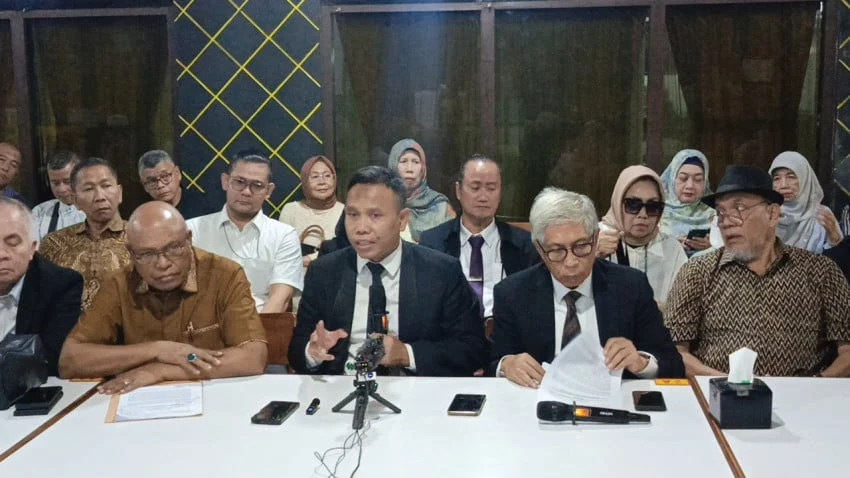
Ahmad Khozinudin, speaking at a press conference in Tendean, Jakarta Selatan, conveyed a mix of resignation and ongoing determination. He acknowledged the procedural victory for Dokter Tifa but expressed disappointment that the core issue of the diploma’s authenticity remained unaddressed. "But in the end, we also have to be big-hearted, that not all heroes can complete their struggle. Not all fighters reach the finish line," Khozinudin stated, reflecting the TA-AKAA’s long-standing quest for definitive answers regarding the President’s academic records. He further emphasized the "empty-empty" outcome, meaning neither side achieved a definitive resolution on the substance of the claims.
The reaction from legal experts generally underscores the procedural nature of the ruling. Accepting an eksepsi on grounds of an "obscuur libel" or other procedural defects means the court found the indictment formally flawed, not that the defendant is innocent or the allegations are false. Prosecutors typically have the option to revise their indictment to address the court’s concerns and refile the charges. This means the legal battle may not be over, but rather temporarily paused, awaiting a more robust and legally sound indictment from the prosecution.
For supporters of President Jokowi, the court’s decision might be viewed as a technicality that prolongs a baseless accusation. They would likely reiterate UGM’s consistent affirmations of the President’s graduation. Conversely, for critics and those who have questioned the diploma, the ruling, while not a substantive win, could be interpreted as highlighting the difficulty of proving the authenticity or inauthenticity of the document through current legal channels. It might also fuel calls for greater transparency from the presidential office and academic institutions.
Broader Implications and Unanswered Questions
The acceptance of Dokter Tifa’s eksepsi carries several significant implications, both legal and political.
- Legal Implications: The declaration of "batal demi hukum" renders the current indictment void. This means the legal proceedings against Dokter Tifa, under this specific indictment, are terminated. However, it does not preclude the public prosecutor from revising the indictment, addressing the procedural flaws identified by the court, and then refiling the case against Dokter Tifa. The prosecution will need to carefully review the court’s reasoning for accepting the eksepsi to ensure any new indictment meets the required legal standards. This process could lead to a renewed trial or a different legal strategy from the prosecution.
- Political Implications: The ruling prolongs the ambiguity surrounding the diploma controversy. For a segment of the public, the lack of a definitive judicial ruling on the merits of the diploma’s authenticity will sustain doubts and discussions. This can be problematic for public trust in institutions, especially in an era rife with disinformation campaigns. The case touches upon the broader issue of accountability and transparency for public officials, particularly the head of state. While the President’s office and UGM have maintained their stance, the persistent legal challenges, even if procedural, contribute to a narrative of lingering questions.
- Freedom of Speech vs. Defamation: The case also highlights the ongoing tension between freedom of expression and defamation laws in Indonesia, particularly the ITE Law, which has been criticized for its broad interpretations and potential to stifle dissent or legitimate public inquiry. Dokter Tifa’s case, like many others involving public figures, underscores the delicate balance courts must strike between protecting reputations and safeguarding the right to critically examine public information.
- Public Trust and Academic Integrity: The sustained debate over presidential academic credentials also has implications for public trust in academic institutions and the integrity of educational qualifications. When the diploma of the nation’s leader is under such scrutiny, it can, however unfairly, cast a shadow on the verification processes of higher education.
Future Outlook
With the indictment declared null and void, the immediate future of Dokter Tifa’s case rests with the public prosecutor. They have the option to either accept the court’s decision and potentially drop the case, or to meticulously revise the indictment to rectify the identified procedural flaws and refile charges. Given the high-profile nature of the case and the involvement of the President’s name, it is plausible that the prosecution will opt to refile, aiming for a more robust indictment that can withstand procedural challenges.
For TA-AKAA and other activists, the procedural victory is a moment of reflection. While not achieving the ultimate goal of a substantive ruling on the diploma, it affirms the importance of legal due process and the right to challenge potentially flawed legal proceedings. The group will likely continue its advocacy for transparency and accountability, pushing for clearer answers to the questions they have raised.
The "empty-empty" outcome, as described by Khozinudin, ensures that the discussion around President Jokowi’s diploma will continue to echo in Indonesia’s public discourse, maintaining a state of unresolved contention. The path forward for all parties involved remains complex, navigated by legal strategies, public opinion, and the persistent quest for clarity in a highly politicized environment.