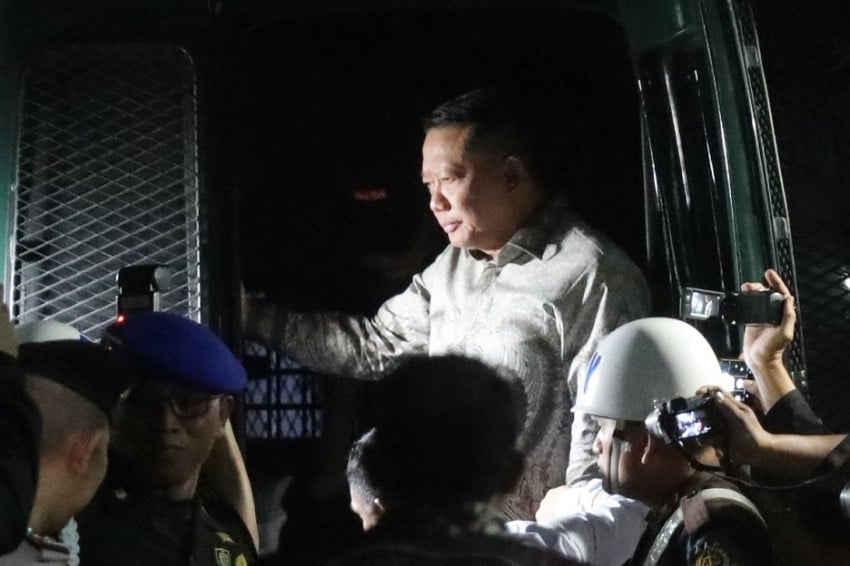
JAKARTA – In a development that has sent ripples through Indonesia’s legal and political landscape, the Attorney General’s Office (Kejagung) officially detained former Deputy Attorney General for Special Crimes (Jampidsus), Febrie Adriansyah, on the evening of Friday, July 24, 2026. Adriansyah’s detention marks a significant escalation in what appears to be a high-profile investigation, with the former top prosecutor being placed in the Komisi Pemberantasan Korupsi (KPK) Detention Center. The transfer, observed by SindoNews, occurred around 11:23 PM WIB at the KPK’s Red and White Building, where Adriansyah arrived in a Kejagung detention vehicle. Notably, eyewitnesses reported that he was not handcuffed and did not wear the distinctive orange vest typically used to identify detainees in Indonesia, a detail that immediately sparked widespread discussion regarding procedural norms for high-ranking officials.
The detention of a figure of Febrie Adriansyah’s stature, who once led the powerful division responsible for prosecuting major corruption and special criminal cases, underscores the intensity of the ongoing efforts to uphold accountability within state institutions. His role as Jampidsus positioned him at the forefront of the nation’s fight against financial crimes, making his own legal predicament particularly poignant and impactful. The move by the Attorney General’s Office to detain its former senior official signals a potentially transformative moment for Indonesia’s anti-corruption drive, emphasizing that no one is beyond the reach of the law, regardless of their past position or influence.
The Detention and Transfer: Unpacking the Details
The dramatic late-night transfer of Febrie Adriansyah to the KPK detention facility captured immediate public and media attention. Arriving at the KPK headquarters, a symbol of Indonesia’s anti-corruption efforts, Adriansyah was escorted from a vehicle belonging to the Attorney General’s Office. The visual specifics of his transfer—namely, the absence of handcuffs and a detainee’s vest—were instantly highlighted by observers. Standard procedure in Indonesia typically mandates that individuals officially detained, especially in high-profile cases, wear a distinctive vest (often orange) as a public identifier and are often handcuffed during transit to prevent escape or to signal their status. This deviation from customary protocol for a former high-ranking official has raised questions among legal observers and the general public about potential differential treatment or specific arrangements made for Adriansyah.
The use of the KPK’s detention facility by the Attorney General’s Office also signifies an important aspect of inter-agency cooperation, or at least logistical coordination. While the investigation and detention were initiated by Kejagung, housing Adriansyah in a KPK facility suggests either a lack of adequate space at Kejagung’s own facilities, a strategic decision to maintain neutrality, or a collaborative arrangement between the two key anti-corruption bodies. This inter-agency dynamic itself adds another layer of complexity to the unfolding narrative, as both Kejagung and KPK are powerful entities with overlapping mandates in fighting corruption.
Background of Febrie Adriansyah and the Jampidsus Role
Febrie Adriansyah’s career trajectory within the Attorney General’s Office was marked by a steady rise through the ranks, culminating in his appointment as Jampidsus. This role is one of the most critical and sensitive positions within the Indonesian legal framework. The Jampidsus division is specifically tasked with investigating and prosecuting complex and high-impact criminal cases, particularly those involving corruption, money laundering, and other special crimes that often involve significant financial losses to the state or affect public trust.
Under Adriansyah’s leadership, the Jampidsus office handled numerous prominent cases, targeting high-ranking officials, corporate executives, and individuals involved in large-scale illicit activities. The division’s work often involves intricate financial investigations, forensic accounting, and navigating complex legal challenges. The successful prosecution of such cases relies heavily on the integrity, expertise, and impartiality of the Jampidsus and their team. Given this background, the detention of a former Jampidsus is not merely the detention of an individual but potentially an event that could profoundly impact public confidence in the very institutions designed to uphold justice and combat corruption. It also raises questions about the internal mechanisms of oversight and accountability within the Attorney General’s Office itself.
Context of Anti-Corruption Efforts in Indonesia
Indonesia has a long and often challenging history with corruption. Over the past two decades, significant strides have been made to establish robust legal frameworks and institutions to combat this pervasive issue. The establishment of the KPK in 2002 was a landmark achievement, designed to be an independent body with broad powers of investigation, prosecution, and prevention. Alongside the KPK, the Attorney General’s Office, particularly through its Jampidsus division, plays a crucial role in the national anti-corruption strategy.
The fight against corruption is often characterized by cycles of intense public scrutiny and high-profile arrests. Statistics from various anti-corruption watchdogs, such as Transparency International’s Corruption Perception Index, consistently highlight the need for continuous and rigorous efforts. While Indonesia has shown incremental improvements, the perception of corruption, especially within the public sector, remains a significant concern. The detention of a former Jampidsus comes at a time when public expectations for clean governance and accountability are particularly high. It signals a potential deepening of the anti-corruption drive, extending investigations even into the highest echelons of law enforcement agencies. This development could either reinforce public trust by demonstrating impartiality or, depending on the transparency and fairness of the process, erode it further if handled poorly.
Chronology Leading to Detention: An Inferred Timeline
While the specific details of the investigation leading to Febrie Adriansyah’s detention remain officially undisclosed, such high-profile cases typically follow an extensive and intricate investigative timeline. Generally, a case of this magnitude would likely involve:
- Initial Intelligence Gathering and Public Complaints: Investigations often begin with tips from whistleblowers, public complaints, or intelligence reports indicating suspicious activities or allegations of misconduct.
- Preliminary Investigation (Penyelidikan): This phase involves gathering initial evidence to determine if a criminal act has occurred. This could include interviews, document analysis, and discreet surveillance.
- Formal Investigation (Penyidikan): If sufficient preliminary evidence is found, the case moves to a formal investigation. This stage grants investigators broader powers, including summoning witnesses, seizing documents, and conducting searches. This phase can last for months or even years, especially in complex corruption cases involving multiple actors and cross-jurisdictional elements.
- Determination of Suspect Status: Based on the evidence collected during the formal investigation, a person can be named a suspect if there is sufficient initial evidence (at least two pieces of evidence) linking them to a criminal act.
- Issuance of Detention Order: Once suspect status is established and investigators deem it necessary for the purposes of the investigation (e.g., to prevent tampering with evidence, flight risk, or repetition of the crime), a detention order is issued.
Given the gravity of the Jampidsus position, it is highly probable that the investigation into Febrie Adriansyah was conducted with extreme discretion and meticulousness. The decision to detain him would have been made after careful consideration of all available evidence and legal justifications. This meticulous approach is typical for cases involving individuals who possess deep knowledge of legal procedures and potentially sensitive information. The fact that the detention occurred on a Friday night, often a strategic time for such announcements, suggests a deliberate move to manage public reaction and prepare for the ensuing legal processes.
Official Silence and Anticipated Statements
In the immediate aftermath of Febrie Adriansyah’s detention, official statements from both the Attorney General’s Office and the KPK have been conspicuously limited. This silence, while frustrating for the public and media eager for details, is not uncommon in the early stages of high-profile investigations. Authorities often maintain a tight lid on information to protect the integrity of the ongoing investigation, prevent evidence tampering, and ensure due process for the accused.
However, the lack of immediate clarity regarding the specific charges against Adriansyah, combined with the unusual circumstances of his transfer, will inevitably fuel speculation. It is anticipated that in the coming days, as the legal process unfolds, official statements will be released, providing more concrete details about the nature of the allegations. These statements will be crucial for managing public perception and demonstrating the transparency and impartiality of the legal institutions involved. Legal experts and civil society organizations will be closely watching for these disclosures, scrutinizing every detail for adherence to legal procedures and principles of fairness. The pressure on both Kejagung and KPK to provide a clear and compelling narrative will be immense.
Inter-Agency Dynamics: Kejagung and KPK
The decision by the Attorney General’s Office to detain Febrie Adriansyah at a KPK facility highlights a complex, and at times, tense relationship between Indonesia’s two primary anti-corruption bodies. Historically, there have been instances of rivalry, power struggles, and jurisdictional disputes between Kejagung and KPK. Both institutions possess significant investigative and prosecutorial powers, leading to occasional overlaps and potential friction.
However, the current situation, where Kejagung utilizes KPK’s detention facilities, could be interpreted in several ways:
- Practical Necessity: Kejagung’s own detention facilities might be at capacity or deemed unsuitable for a detainee of Adriansyah’s profile, requiring the use of KPK’s modern and secure facilities.
- Symbolic Gesture of Cooperation: It could be a deliberate move to project an image of inter-agency cooperation and synergy in the fight against corruption, demonstrating a united front against internal misconduct, regardless of the agency involved.
- Strategic Neutrality: Housing a former Kejagung official in a neutral KPK facility might be seen as an attempt to ensure the integrity of the detention process and mitigate any perceptions of internal bias or undue influence within Kejagung.
Regardless of the primary motivation, this arrangement signals a potentially evolving dynamic between the two institutions. It underscores the shared national objective of combating corruption, even when it involves prosecuting individuals from within the very structures designed to uphold the law. The effectiveness of this cooperation will be closely monitored, particularly given the historical context of their relationship.
Legal and Procedural Implications
The absence of handcuffs and a detainee vest during Febrie Adriansyah’s transfer has become a focal point of discussion, raising significant questions about legal and procedural implications. While there might be specific internal protocols for high-ranking officials or circumstances that allow for such deviations, the public perception is often one of differential treatment.
Standard Procedures: Generally, when a person is formally detained and transferred, especially in a corruption case, they are subjected to standard procedures that include wearing a detainee vest and, often, being handcuffed. These measures serve multiple purposes: to publicly identify the individual as a detainee, to prevent flight, and to ensure the safety of both the detainee and the escorting officers.
Arguments for Deviation: Potential justifications for the deviation could include:
- Security Assessment: A risk assessment might have determined that Adriansyah did not pose a flight risk or a threat during transfer.
- Health Concerns: Although not indicated, specific health conditions could sometimes lead to adjustments in procedural norms.
- Internal Protocols: There might be unwritten or specific internal protocols for individuals who held extremely sensitive positions, although this would likely draw criticism for creating a two-tiered justice system.
Criticism and Concerns: Legal experts and civil society groups are likely to voice concerns that such deviations, however minor they may seem, can undermine the principle of equality before the law. It fuels perceptions that individuals with power or influence receive preferential treatment, which can erode public trust in the justice system. It emphasizes the need for consistent application of legal procedures for all citizens, regardless of their background or former position. The Attorney General’s Office will likely face pressure to clarify the reasons behind this procedural anomaly.
Public Reaction and Calls for Transparency
The detention of a former Jampidsus is inherently a matter of significant public interest. Initial reactions are likely to range from shock and disappointment to cautious optimism that the anti-corruption drive is truly impartial. Social media platforms and public forums are expected to be abuzz with discussions, analyses, and demands for further information.
The public’s expectations for transparency in this case will be exceptionally high. Citizens will demand not only clear communication regarding the charges and the progress of the investigation but also assurances that the legal process will be conducted fairly, without undue influence or political interference. Any perceived lack of transparency or procedural irregularities could lead to cynicism and a further erosion of public trust in state institutions. Civil society organizations, particularly those focused on good governance and anti-corruption, will play a crucial role in monitoring the process, advocating for accountability, and ensuring that public interest remains at the forefront. Their scrutiny will be vital in holding the authorities to account and ensuring that justice is not only done but is also seen to be done.
Broader Impact on Governance and Rule of Law
The detention of Febrie Adriansyah carries profound implications for governance and the rule of law in Indonesia.
- Strengthening Accountability: On one hand, it could serve as a powerful testament to the principle that no one is above the law, even those entrusted with enforcing it. This could significantly strengthen the perception of accountability within government institutions and deter future acts of corruption by high-ranking officials.
- Internal Scrutiny: The event is likely to trigger heightened internal scrutiny within the Attorney General’s Office and other law enforcement agencies. It may prompt reviews of internal oversight mechanisms, ethics codes, and anti-corruption measures to prevent similar incidents in the future.
- Public Trust: The ultimate impact on public trust will depend entirely on the transparency, fairness, and eventual outcome of the legal process. A robust and impartial investigation leading to a just resolution could enhance public confidence in the justice system. Conversely, a flawed or opaque process could severely damage it.
- Political Repercussions: High-profile cases often have political ramifications, potentially influencing public discourse, electoral dynamics, and the broader political landscape. It could also set a precedent for how future cases involving powerful figures are handled.
As Indonesia continues its complex journey towards establishing robust governance and a truly equitable rule of law, the case of Febrie Adriansyah will undoubtedly be a defining moment. It underscores the continuous challenge of rooting out corruption at all levels of government and the critical importance of strong, independent, and impartial institutions to achieve this goal. The coming weeks and months will be crucial in determining the full scope of the allegations and the ultimate consequences for a former official who once stood at the pinnacle of Indonesia’s fight against special crimes. The nation watches keenly, awaiting a process that upholds justice and reinforces the integrity of its legal system.