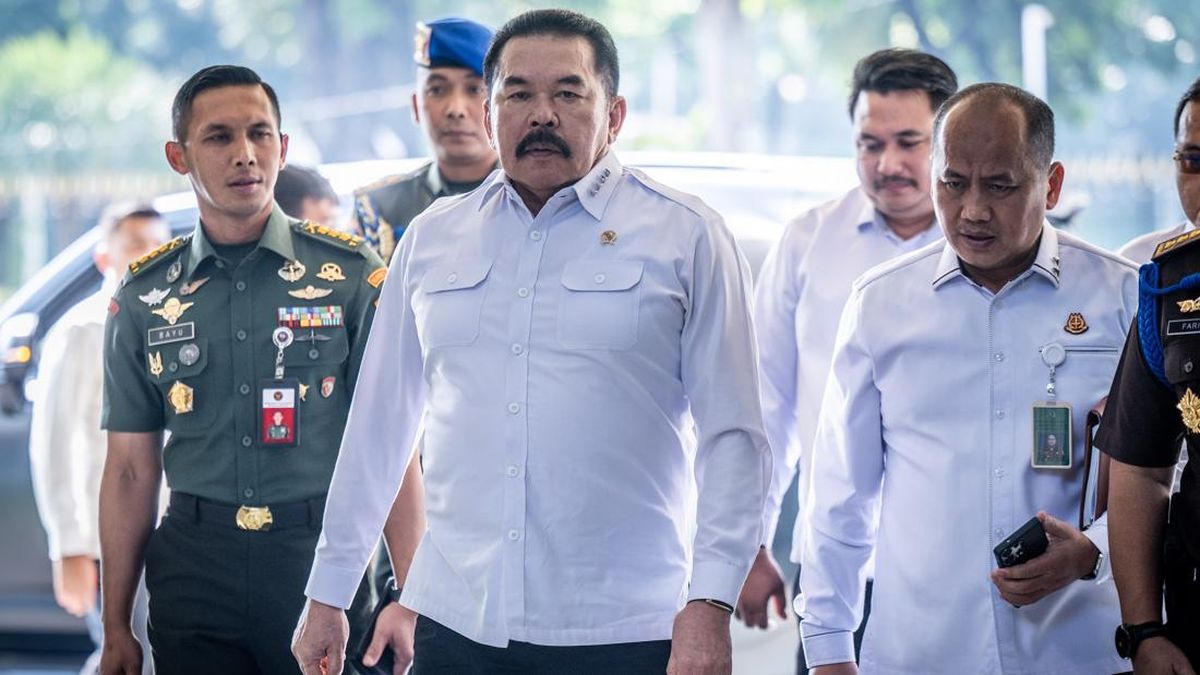
Jakarta, Indonesia – Attorney General Sanitiar Burhanuddin has unequivocally asserted that the specialized "Team 9" retains full jurisdiction over the ongoing investigation into former Junior Attorney General for Special Crimes (Jampidsus), Febrie Adriansyah. This pronouncement, made during a significant reshuffle and inauguration ceremony for high-ranking officials at the Attorney General’s Office (AGO) headquarters on Friday, July 24, 2024, underscores the institution’s commitment to maintaining a robust and uncompromised approach to internal corruption cases. The high-stakes probe, which implicates Adriansyah in multiple alleged corruption and money laundering schemes, has drawn intense public and media attention, positioning itself as a critical test of the AGO’s integrity and resolve.
The Mandate and Leadership of Team 9
The specialized investigative unit, known as Team 9, comprises nine seasoned prosecutors specifically designated to handle the complex allegations against Febrie Adriansyah. This team operates under the direct leadership of the Junior Attorney General for Supervision (Jamwas), Rudi Margono, a move designed to ensure impartiality and thoroughness, particularly given the sensitive nature of prosecuting a former high-ranking official within the AGO itself. Burhanuddin’s statement on July 24 was a clear reaffirmation of this structure and its authority. "Specifically regarding the handling of cases with alleged corruption originating from Polri (Indonesian National Police) investigations, naming suspects DR and FA, which have now been transferred to the Attorney General’s Office, I affirm that the handling of these cases remains the sole authority of Team 9, led by Rudi Margono, as the Junior Attorney General for Supervision," Burhanuddin stated emphatically during the ceremony. This explicit declaration aims to dispel any ambiguities or potential challenges to the investigative team’s mandate.
The ceremony itself was a notable event, marking significant leadership changes within the AGO. Among those inaugurated were Asep Nana Mulyana as the new Deputy Attorney General, Leonard Eben Ezer Simanjuntak as the Junior Attorney General for General Crimes (Jampidum), and Kuntadi as the new Junior Attorney General for Special Crimes (Jampidsus), the very position previously held by the now-accused Febrie Adriansyah. These appointments occur at a critical juncture, as the AGO navigates one of its most challenging internal investigations in recent history.
Febrie Adriansyah: From Top Prosecutor to Accused
Febrie Adriansyah’s journey from a prominent anti-corruption prosecutor, leading many high-profile investigations, to becoming a central figure in a corruption and money laundering probe, represents a stunning reversal. As Jampidsus, Adriansyah was at the forefront of the nation’s fight against financial crimes and state asset embezzlement. His involvement in the current allegations has sent ripples across Indonesia’s legal and political landscape, raising questions about accountability even at the highest echelons of law enforcement. The case involves two primary suspects: Don Ritto, a private individual, and Febrie Adriansyah himself. Don Ritto is specifically implicated in money laundering activities believed to stem from corruption, while Adriansyah is accused of direct involvement in corruption and/or money laundering related to the legal handling of state officials in the ASABRI case, among other alleged corruption schemes.
Chronology of a High-Stakes Investigation
The investigation into Febrie Adriansyah and Don Ritto has unfolded rapidly, marked by several key developments:
- Initial Police Investigation and Transfer: The case initially began under the purview of the Indonesian National Police (Polri). Recognizing the intricacies and the involvement of a former high-ranking prosecutor, the Polri eventually transferred the investigation’s findings and evidence to the Attorney General’s Office for further processing and prosecution. This inter-agency cooperation, while standard in some cases, took on added significance given the profile of the accused.
- Formation of Team 9: Upon receiving the case, the AGO, under Attorney General Burhanuddin, moved swiftly to establish Team 9. This team was specifically designed to ensure independence and mitigate potential conflicts of interest, especially considering Adriansyah’s former position. The fact that many members of Team 9 are senior prosecutors with previous experience in the Corruption Eradication Commission (KPK) lends credibility to the AGO’s commitment to a thorough and impartial probe. These prosecutors are known for their resilience and lack of "resistance" to handling even the most sensitive corruption cases.
- Issuance of New Investigation Warrants (Sprindik): To formalize the continuation of the investigation within the AGO’s framework, three new Surat Perintah Penyidikan (Sprindik – Investigation Warrants) were issued. Anang Supriatna, the Head of the AGO’s Legal Information Center (Kapuspenkum), confirmed that these warrants were a direct consequence of the case’s transfer from the police. These warrants signify the formal initiation of the investigative phase by the AGO.
- Specific Cases Under Scrutiny: The three new Sprindiks are linked to significant past and ongoing corruption scandals that have rocked Indonesia. These include:
- PT Krakatau Steel Corruption and Money Laundering: This refers to allegations of corruption and money laundering within PT Krakatau Steel, Indonesia’s largest steel producer. Past investigations into the company have often centered on procurement irregularities, inflated project costs, and illicit financial flows, leading to substantial state losses. The specifics of Adriansyah’s alleged involvement remain part of the ongoing probe.
- PLTU Coal Procurement Leading to Blackout: This complex case involves the procurement of coal for coal-fired power plants (PLTU) operated by PLN, the state electricity company. The allegations suggest corrupt practices in these procurements, which purportedly led to operational failures, including a major blackout. Corruption in energy infrastructure projects is a recurring issue in Indonesia, often involving massive funds and significant public impact.
- ASABRI Case: The ASABRI (Asuransi Sosial Angkatan Bersenjata Republik Indonesia) scandal is one of Indonesia’s largest corruption cases, involving embezzlement of funds from the state-owned social insurance company for military and police personnel. The case, which came to light in 2020, involved staggering state losses estimated in the tens of trillions of Rupiah (billions of US dollars) due to fraudulent investments and asset mismanagement. Adriansyah’s alleged involvement in the "legal handling" of state officials within this case suggests potential interference or illicit gains related to the prosecution or protection of individuals tied to the ASABRI debacle.
- Discovery of Gold and Cash: A significant breakthrough in the investigation came with the discovery of 74 kilograms of gold and Rp543 billion (approximately USD 33 million, depending on exchange rates) in cash at Febrie Adriansyah’s residence. This discovery, reportedly made by the Korps Tindak Pidana Korupsi (Kortas Tipidkor) Polri (Anti-Corruption Corps of the National Police), was subsequently handed over to Team 9. The sheer volume of these assets immediately triggered a new, separate Sprindik for alleged money laundering (Print-03/F.2/Fd.2/07/2024 dated July 20, 2024), specifically targeting the origin and accumulation of these illicit gains. This finding dramatically escalates the severity and public perception of the case.
Broader Context: Indonesia’s Anti-Corruption Landscape
Indonesia has long grappled with systemic corruption, a challenge that consistently undermines public trust, distorts economic development, and erodes the rule of law. Despite significant efforts by institutions like the AGO and the KPK, high-profile corruption cases involving public officials, particularly those in law enforcement or the judiciary, continue to surface. Such cases are particularly damaging as they strike at the very institutions tasked with upholding justice. The country’s anti-corruption legal framework, primarily Law No. 31 of 1999 as amended by Law No. 20 of 2001 on the Eradication of Criminal Acts of Corruption, provides broad powers for investigation, prosecution, and asset recovery. However, the effectiveness of these laws hinges on the unwavering commitment and integrity of the implementing agencies.
The investigation into Febrie Adriansyah is not an isolated incident but rather fits into a broader narrative of Indonesia’s ongoing struggle to combat corruption at all levels. Public perception of corruption remains a critical issue, with various international indices consistently highlighting the need for stronger governance and transparency. The prosecution of a former Jampidsus, a figure once seen as a champion against corruption, inevitably sparks intense public debate and scrutiny, testing the credibility of the entire justice system.
Implications for the Attorney General’s Office and Public Trust
The case carries profound implications for the Attorney General’s Office. Firstly, it represents an internal integrity challenge. By demonstrating its capacity and willingness to prosecute one of its own highest-ranking former officials, the AGO can send a powerful message about its commitment to internal reform and accountability. Failure to handle this case transparently and justly could severely damage the institution’s already fragile public trust.
Secondly, the successful prosecution of Adriansyah could bolster the AGO’s reputation as a credible and independent anti-corruption agency, distinguishing it from past criticisms of being susceptible to political influence or internal capture. Conversely, any perceived leniency or procedural missteps could erode confidence further.
Legal experts and civil society organizations in Indonesia are closely monitoring the developments. Many emphasize that this case serves as a litmus test for the AGO’s resolve. Transparency throughout the investigative and prosecutorial stages is paramount. Public access to information, within legal boundaries, and regular updates from the Kapuspenkum will be crucial in maintaining public confidence. Analysts suggest that the AGO must demonstrate unwavering commitment to due process, ensuring that the investigation is thorough, fair, and free from external interference.
Moreover, the sheer scale of the alleged illicit wealth—74 kilograms of gold and hundreds of billions in Rupiah—underscores the pervasive nature of corruption and the potential for public officials to amass vast fortunes through illicit means. The money laundering charges against both Adriansyah and Don Ritto highlight the complex financial networks often used to conceal ill-gotten gains, necessitating sophisticated investigative techniques. The recovery of these assets, if proven to be proceeds of crime, would be a significant victory in the fight against corruption and could potentially be returned to the state, mitigating some of the losses incurred from the original corrupt acts.
Conclusion: A Defining Moment for the AGO
Attorney General Sanitiar Burhanuddin’s firm stance on Team 9’s authority signifies a crucial period for the Attorney General’s Office. The investigation into Febrie Adriansyah is more than just another corruption case; it is a defining moment that will shape the public’s perception of the AGO’s independence, integrity, and effectiveness in upholding the law. The detailed chronology of the probe, from its origins in police investigations to the formation of a dedicated team and the staggering discovery of assets, illustrates the complexity and gravity of the allegations. As the legal proceedings unfold, all eyes will remain on the AGO, expecting a transparent, fair, and decisive resolution that reinforces accountability at all levels of government and strengthens Indonesia’s anti-corruption efforts. The outcome of this case will undoubtedly have lasting ramifications for the nation’s legal landscape and its ongoing battle against graft.