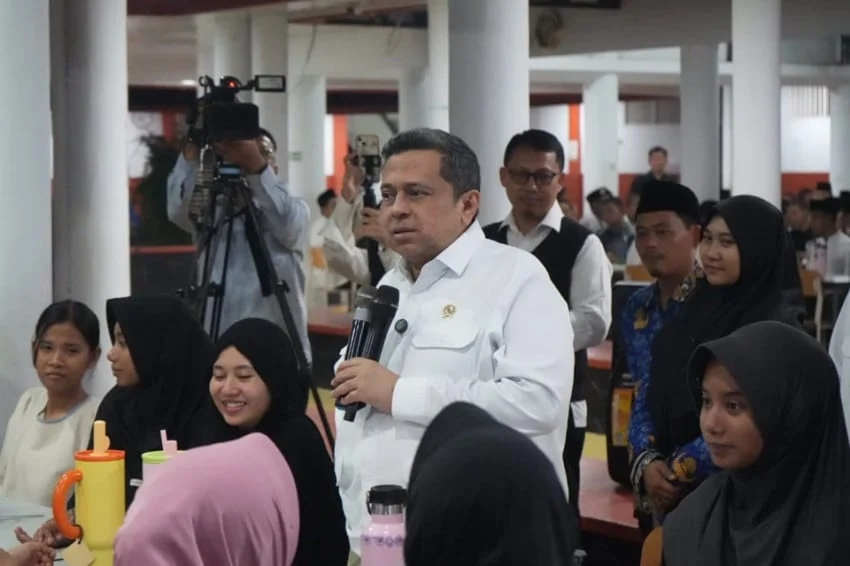
The Head of the Halal Product Assurance Organizing Agency (BPJPH), Ahmad Haikal Hasan, commonly known as Babe Haikal, conducted an official visit to Sekolah Rakyat Menengah Atas (SRMA) 13 located in Bekasi City. This strategic visit served as a strong manifestation of governmental support for national initiatives aimed at expanding access to inclusive, high-quality education, while simultaneously striving to cultivate a resilient, character-driven generation of young citizens equipped with a
clear vision for the nation’s future. The engagement underscored the intersection of youth development, state-supported education, and the fundamental empowerment of marginalized or underprivileged students within the Indonesian public school framework.
During the visit, Babe Haikal engaged in direct dialogues and shared an evening meal with 190 students enrolled at the institution. The interaction was designed to provide moral support, encouragement, and practical life motivation, urging the adolescent learners to cultivate bold ambitions, establish concrete professional and personal goals, and diligently prepare themselves to assume leadership roles in the future socio-economic landscape of Indonesia.
Main Facts of the Visit
The visit to SRMA 13 Bekasi City highlights the ongoing commitment of high-ranking Indonesian officials to connect directly with educational institutions that cater to communities requiring targeted developmental assistance. The primary focal points of the visit included direct mentorship, motivational storytelling, and an assessment of the educational environment provided by the Sekolah Rakyat initiative.
A total of 190 students participated in the interactive sessions and the communal dinner. The primary message delivered by the BPJPH Head centered on the necessity of visionary thinking. By encouraging students to articulate their future aspirations, the visit sought to reinforce the psychological foundation required to overcome socioeconomic barriers.
Among the standout moments of the visit was an interaction with a student named Julianto, who openly expressed his ambition to become a government minister. Babe Haikal publicly praised this ambition, emphasizing that the clear visualization of personal goals—facilitated by modern educational tools such as artificial intelligence (AI)—plays a critical role in strengthening self-belief and driving academic perseverance.
Chronology and Background of the Sekolah Rakyat Initiative
The establishment and expansion of institutions like Sekolah Rakyat Menengah Atas 13 are part of a broader, multi-sectoral national strategy by the Indonesian government to bridge educational disparities. The conceptualization and physical development of these schools have progressed through carefully planned phases involving various ministries, including the Ministry of Public Works, which has incorporated advanced infrastructural methodologies such as Building Information Modeling (BIM) in subsequent construction phases to ensure structural integrity and efficiency.
Over the past few years, the Indonesian government has prioritized educational equity as a cornerstone of human capital development. The Sekolah Rakyat framework was specifically engineered to accommodate students from diverse socioeconomic backgrounds who might otherwise face systemic hurdles in accessing standard, high-quality secondary education.
The timeline of the visit on Tuesday, November 10, 2026, aligns with ongoing governmental evaluations of institutional readiness across various regions. Following the initial phases of infrastructure development, administrative focus has shifted toward student mentorship, curriculum optimization, and the integration of emerging technologies into the learning environment. The presence of senior officials like the Head of BPJPH signals a coordinated, cross-departmental interest in the holistic development of students within these specialized public institutions.
Supporting Data and Educational Context
Access to inclusive education remains a critical metric in Indonesia’s national development agenda. According to various educational benchmarks, the integration of underprivileged youth into structured secondary education significantly reduces dropout rates and enhances long-term economic mobility.
The demographic composition of SRMA 13 Bekasi reflects a targeted effort to serve regional communities where educational infrastructure requires reinforcement. By focusing on 190 students in a single setting, the institution maintains a localized approach to student engagement, allowing for personalized mentorship that is often absent in overcrowded urban classrooms.
Furthermore, the integration of technological tools, such as artificial intelligence, into vocational and academic goal-setting represents a modern shift in Indonesian pedagogy. Educational analysts note that visual and digital aids significantly enhance cognitive mapping for adolescents, enabling them to map out academic majors, university prerequisites, and career trajectories from an early age.
Official Responses and Institutional Perspectives
The visit elicited positive responses from both the student body and the academic staff at SRMA 13 Bekasi. Educators noted that high-level visits from national figures provide a profound psychological boost to students, helping them realize that their educational journey is monitored and valued at the highest levels of government.
While direct policy announcements regarding halal certification or regulatory frameworks were not the primary focus of this specific institutional visit, the presence of the BPJPH Head highlights the broader governmental mandate of public service and community outreach. Officials within the agency emphasized that leadership development is universally applicable, and that instilling integrity, discipline, and high aspirations among students aligns with the broader national goals of bureaucratic and societal reform.
Statements from the event highlighted the psychological impact of mentorship. "If we want our children to become the hopeful generation of the future, as we witnessed firsthand today, they must possess a clear vision. We have seen with our own eyes that these young individuals harbor very distinct and admirable aspirations," stated Babe Haikal during his address. The emphasis on clear visualization—exemplified by the student Julianto’s ministerial ambition—reinforces a pedagogical philosophy that combines optimism with pragmatic digital literacy.
Broader Impact and Implications for Indonesian Education
The implications of such ministerial and agency-level engagements extend far beyond immediate motivational speeches. They serve as a barometer for the success of decentralized and targeted educational policies in Indonesia.
- Human Capital Enhancement: By focusing on character building and visionary goal-setting, initiatives within Sekolah Rakyat institutions directly support the national vision of producing a demographic dividend characterized by high productivity and moral integrity.
- Cross-Sectoral Synergy: The involvement of various governmental bodies—ranging from infrastructure ministries to regulatory agencies like BPJPH—demonstrates a whole-of-government approach to human development. When officials step outside their strict regulatory silos to engage with educational institutions, it fosters a more cohesive public administration framework.
- Technological Adaptation: The acknowledgment of artificial intelligence as a tool for visual goal-setting underscores the necessity of digital literacy in modern Indonesian schools. Bridging the digital divide in institutions catering to underprivileged youth ensures that technological advancements benefit all segments of society equitably.
- Social Inclusion: Sustained investment and high-level attention directed toward schools in regions like Bekasi City send a clear message regarding the democratization of opportunity. It reassures marginalized communities that state resources and moral encouragement are accessible regardless of socioeconomic background.
Conclusion
The visit by BPJPH Head Ahmad Haikal Hasan to Sekolah Rakyat Menengah Atas 13 Kota Bekasi stands as a meaningful event within the broader narrative of Indonesian educational reform. By combining direct mentorship, communal engagement, and a forward-looking perspective on technology and career planning, the visit reinforced the foundational goals of the Sekolah Rakyat initiative. As Indonesia continues to navigate the complexities of human capital development and inclusive growth, the convergence of governmental support, institutional resilience, and student ambition remains a vital catalyst for long-term national progress.