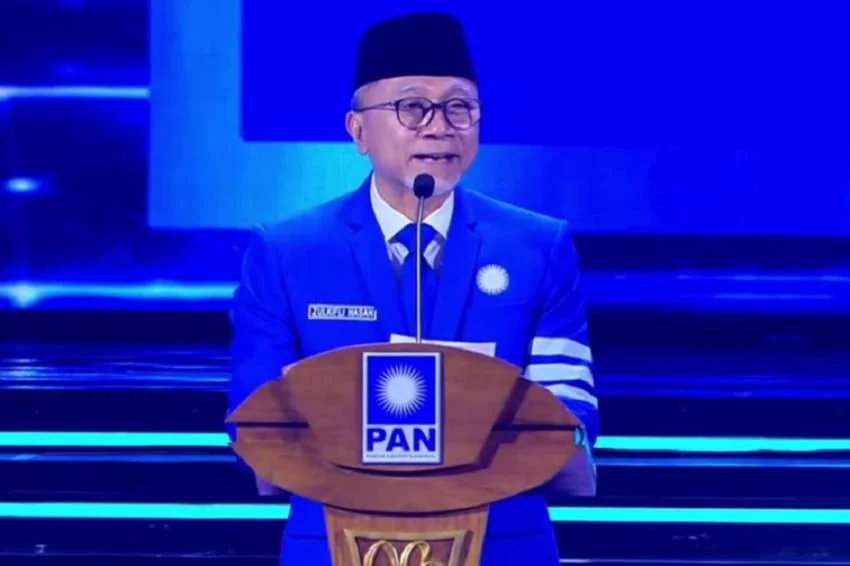
The atmosphere at the Jakarta International Convention Center (JICC) in Senayan reached a peak of political camaraderie on Friday, September 18, 2026, as the National Mandate Party (PAN) celebrated its 28th anniversary. Amidst a room filled with the nation’s political elite, the Chairman of PAN, Zulkifli Hasan—widely known as Zulhas—delivered a speech that masterfully blended serious party posturing with lighthearted political banter. While the event was intended to commemorate nearly three decades of PAN’s existence, it also served as a strategic platform to reinforce the party’s alignment within the current governing coalition, specifically signaling unwavering support for President Prabowo Subianto.
The Dynamics of Political Banter at the 28th Anniversary
Zulhas, who currently serves as a prominent figure in the cabinet, utilized his keynote address to engage with fellow party leaders in attendance. The highlight of his address occurred when he directly addressed Bahlil Lahadalia, the Chairman of the Golkar Party. In a moment that drew laughter and applause from the audience, Zulhas touched upon the perceived burdens of leadership.
"Mr. Bahlil, being a party chairman is quite a heavy task. Leading a party is demanding, and the presidency is even more so. I believe Mr. Bahlil and I are in agreement that we should leave the presidency to Mr. Prabowo, right? Does that sound appropriate?" Zulhas remarked, prompting an immediate nod and verbal confirmation from Bahlil.
The interaction was not merely a comedic interlude; it served as a symbolic public reaffirmation of the coalition’s unity. By explicitly stating that neither he nor Bahlil—both leaders of influential parties—had ambitions for the upcoming presidential cycle, Zulhas effectively neutralized rumors of internal competition within the coalition. The inclusion of Muhaimin Iskandar, the Chairman of the National Awakening Party (PKB), into the jest added a layer of political theater. Zulhas lightheartedly suggested that while he and Bahlil had opted out of the presidential race, Muhaimin appeared to be "still pondering" his options. This remark, while playful, underscores the complex and often fluid nature of coalition politics in Indonesia, where leadership ambitions are carefully managed to maintain stability.
Historical Context: PAN’s Evolution and Strategic Alliances
The 28th anniversary of PAN is a significant milestone for a party that has navigated various shifts in Indonesia’s democratic landscape since its formation in the late 1990s. Born out of the Reformasi movement, PAN has evolved from a grassroots reformist vehicle into a pragmatic political entity capable of securing key ministerial positions and maintaining influence across multiple administrations.
Throughout its 28-year history, the party has learned that longevity in Indonesian politics often requires strategic alignment. The current era, characterized by the leadership of President Prabowo Subianto, has seen PAN position itself as a core pillar of support. By emphasizing that the party remains "firmly with Prabowo," Zulhas is reinforcing a narrative of continuity. This strategy is essential for a party that relies on its presence within the executive branch to drive its policy agenda, particularly in areas like trade and economic development, which have historically been the party’s focus.
Political Stability and the Coalition Framework
The current Indonesian political landscape is defined by a "big tent" coalition model. The presence of leaders from diverse parties at the PAN anniversary celebration highlights the consolidation of power around the administration. Analysts suggest that such public displays of unity—even those framed as jokes—are calculated to prevent market uncertainty and internal political friction.

The declaration by Zulhas regarding his lack of presidential ambition is a strategic signal to the party base and the public. In a country where presidential contenders often begin campaigning years in advance, publicly withdrawing from the race helps to stabilize expectations and allows the party to focus its resources on legislative goals and provincial elections. This approach minimizes the "lame duck" effect and allows for a more cohesive legislative environment in the House of Representatives (DPR).
Broader Implications for the 2029 Political Cycle
While the 2026 event was focused on the present, the underlying themes pointed toward the future of the 2029 electoral cycle. The mention of Muhaimin Iskandar’s "pondering" reflects the reality that for parties like PKB, which possess a strong and loyal constituency, the decision to commit to a presidential path is a complex calculation involving electoral thresholds and coalition bargaining power.
Data from recent political surveys indicate that public sentiment remains sensitive to the economic performance of the current administration. For PAN, the priority is to ensure that the economic reforms initiated under the current term bear fruit. By aligning closely with the incumbent president, the party ties its electoral success to the performance of the government. If the administration succeeds, the party benefits from the "coattail effect"; if it falters, the party risks being associated with the disappointment.
The Role of Party Chairmen in Modern Indonesian Governance
The prominence of party chairmen like Zulkifli Hasan and Bahlil Lahadalia highlights a unique aspect of Indonesian politics: the "Ketum" (General Chairman) model. Unlike in some parliamentary systems where party leadership is subject to frequent internal elections, Indonesian political parties often revolve around the strong personalities and long-term control of their chairmen. This concentration of power allows for rapid decision-making within the coalition but also makes the party’s direction heavily dependent on the personal relationships between these leaders.
The camaraderie displayed in Senayan is a testament to the effectiveness of these personal ties. When leaders can manage disagreements or conflicting ambitions through humor and public displays of solidarity, the risk of volatile political shifts is significantly reduced. However, this also raises questions about the depth of ideological differences within the coalition. Critics often argue that such cohesion comes at the expense of a robust, critical opposition, which is vital for a healthy democratic system.
Looking Ahead: The Path Toward 2029
As the anniversary celebrations conclude, the focus for PAN shifts back to its legislative and administrative duties. The "joke" regarding the presidential race has successfully set a tone of stability. Moving forward, the political class will be watching to see how the "still pondering" candidates eventually align themselves.
The political environment in Indonesia is known for its late-stage maneuvers. While current rhetoric suggests a consolidated support for the status quo, the history of Indonesian elections suggests that alliances can shift rapidly once the formal nomination process approaches. For now, PAN’s strategy remains clear: provide consistent support to the current administration, leverage its position in the cabinet to deliver tangible results for its constituents, and maintain open, friendly, yet guarded relationships with other political power brokers.
The event at JICC serves as a microcosm of the current state of Indonesian politics—a blend of serious institutional governance and the nuanced, often indirect communication style that keeps the machinery of the nation’s political elite functioning. By navigating these waters with a mix of humor and strategic clarity, Zulkifli Hasan continues to cement PAN’s role as an indispensable actor in the ongoing narrative of Indonesia’s democratic journey. Whether these lighthearted comments will indeed translate into a long-term, stable political roadmap remains to be seen, but for the moment, the message of unity has been clearly received by the political audience.