
The release of Christopher Nolan’s epic adaptation of The Odyssey has reignited global interest in the foundational myths of Western civilization, specifically focusing on a recurring theme mentioned by characters such as Telemachus, played by Tom Holland, and Odysseus, portrayed by Matt Damon: Zeus’ Law. While the film is a masterclass in visual storytelling and non-linear narrative, its moral backbone rests upon the ancient Greek concept of xenia, or the Law of Hospitality. In Nolan’s interpretation, this is not merely a polite social custom but a cosmic mandate that dictates the rise and fall of kings, the fate of sailors, and the very survival of the moral order. Since its premiere on July 15, 2026, audiences and scholars alike have been dissecting how this ancient code serves as the primary driver for the film’s tension and tragedy.
The Foundation of Xenia: The Sacred Bond Between Host and Guest
At its core, Zeus’ Law of Hospitality—historically known as xenia—is the ancient Greek concept of ritualized friendship. In a world where travel was treacherous and strangers were often viewed with suspicion, xenia established a set of rules that ensured the safety and dignity of the traveler. The law was overseen by Zeus Xenios, the aspect of the king of the gods specifically tasked with protecting strangers and suppliants. To mistreat a guest was not just a social faux pas; it was a direct affront to the gods, punishable by divine wrath.
The traditional practice of xenia involved two main components: the obligations of the host and the obligations of the guest. The host was expected to provide food, drink, and shelter before even asking for the guest’s name or business. Upon the guest’s departure, the host was often expected to provide a "guest-gift" (xenion) to cement the bond. Conversely, the guest was expected to be respectful, not to be a burden on the host’s resources, and to provide news or stories from the outside world. This reciprocal relationship created a "guest-friendship" that could last for generations, often passed down from father to son.
In Nolan’s The Odyssey, this concept is introduced early through Telemachus. As he navigates the halls of his father’s palace in Ithaca, he is surrounded by suitors who have spent years consuming his family’s wealth. Their presence is a constant, agonizing violation of Zeus’ Law, setting the stage for the violent climax of the film.
The Trojan Horse: Nolan’s Interpretation of the Ultimate Betrayal
One of the most striking narrative shifts in Nolan’s adaptation is his framing of the Trojan Horse. While historically celebrated as a stroke of tactical genius that ended the ten-year Trojan War, Nolan’s screenplay—as noted by critics and scholars—treats the event as the original sin of Odysseus’ journey. By disguising an army inside a structure presented as a religious offering and a gift to the city of Troy, Odysseus effectively weaponized the concept of the "guest-gift."
In the film, this act is portrayed as the ultimate violation of xenia. By using the guise of a peaceful gesture to bring about total slaughter, Odysseus broke the fundamental trust upon which human civilization was built. Nolan suggests that the ten-year struggle Odysseus faces to return home is not merely a series of unfortunate events, but a karmic penance for this moral transgression. The "Zeus’ Law" frequently cited by the characters serves as a reminder that the gods—or perhaps the universe itself—demand balance for the subversion of sacred trust. This perspective adds a layer of psychological depth to Matt Damon’s Odysseus, portraying him as a man haunted by his own cleverness.
A Chronology of Hospitality: Key Violations in the Narrative
The Odyssey is structured as a series of encounters that test the boundaries of Zeus’ Law. Each "stop" on Odysseus’ journey can be viewed as a case study in the success or failure of xenia.
- The Lotus-Eaters: A passive violation where the "hospitality" offered (the lotus fruit) strips the guests of their identity and desire to return home, effectively destroying the guest’s soul through kindness.
- Polyphemus the Cyclops: The most famous violation of xenia in the epic. Polyphemus ignores the laws of the gods entirely, asking Odysseus for his name immediately and then proceeding to eat his guests. Odysseus’ retaliation—blinding the giant—is justified by the law, yet it incurs the wrath of Poseidon, the giant’s father.
- The Island of Aeolus: The God of the Winds provides perfect xenia, giving Odysseus a bag of winds to help him home. However, Odysseus’ men violate the trust of their "host" by opening the bag, leading to their expulsion from Aeolus’ favor.
- Circe’s Palace: Played by Samantha Morton, Circe represents the danger of a host who uses their power to dominate their guests. In a pivotal scene highlighted in the film, Odysseus’ men greedily consume Circe’s banquet without showing the proper restraint expected of a guest. Their transformation into swine is a literal manifestation of their "piggish" behavior and lack of respect for the boundaries of hospitality.
- The Suitors of Ithaca: Back at home, the suitors represent the perversion of xenia. They are guests who refuse to leave, who consume without giving, and who disrespect the wife and son of their "host."
Cinematic Execution and the Cast’s Perspective
The film’s portrayal of these themes is bolstered by its high-profile cast and Nolan’s signature directorial style. Tom Holland’s Telemachus serves as the moral compass of the film, often the one to vocalize the growing dread as he watches the suitors dismantle the sacred traditions of his home. Holland has noted in interviews that his character’s journey is one of "preserving a dying culture" in the face of lawlessness.
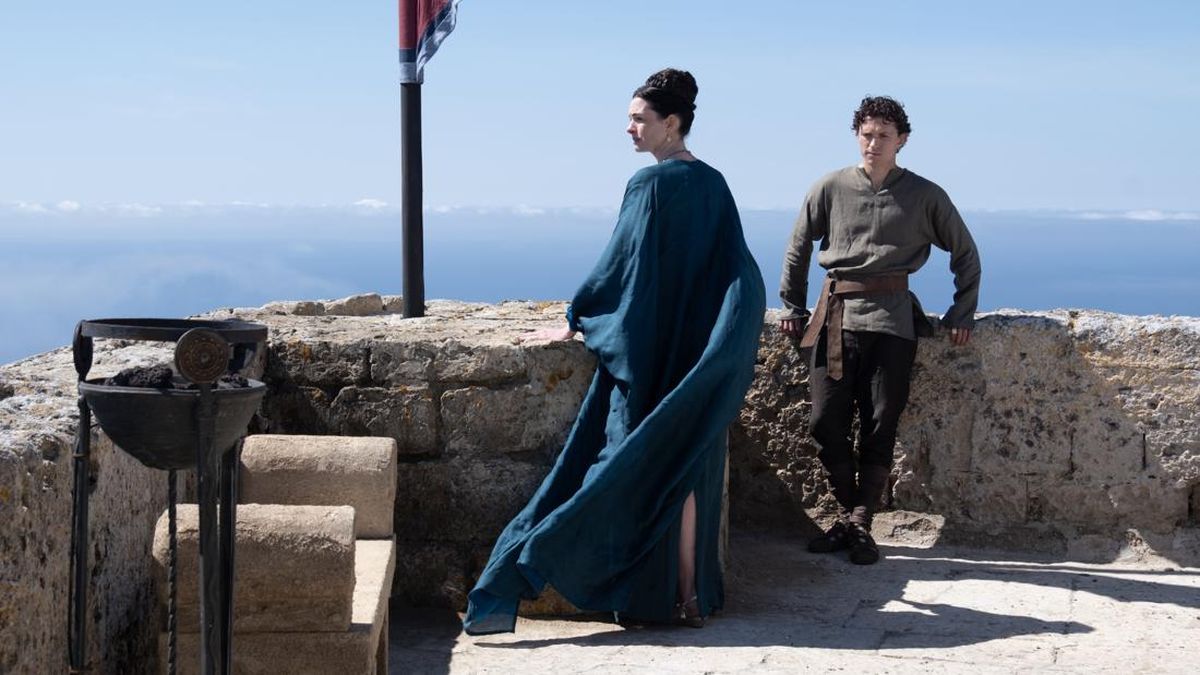
Anne Hathaway, portraying Penelope, offers a more nuanced look at the burden of the host. For twenty years, she has been forced to uphold the outward appearance of xenia while her home is occupied by men who wish to usurp her husband’s throne. Her struggle is a testament to the endurance required to maintain moral standards when the world around you has abandoned them.
Universal Pictures and Melinda Sue Gordon’s photography capture the scale of this moral drama. From the claustrophobic, tension-filled halls of Ithaca to the surreal, sprawling landscapes of Circe’s island, the cinematography emphasizes the isolation of characters who find themselves on the wrong side of Zeus’ Law. Nolan’s decision to use IMAX cameras for the more intimate "domestic" scenes in Ithaca highlights the idea that the violation of hospitality is just as "epic" and consequential as a battle at sea.
Broader Impact: Why Xenia Matters in 2026
The decision to focus on Zeus’ Law in a 2026 blockbuster is not without its social implications. Analysts suggest that Nolan is using the Trojan Horse and the breakdown of xenia as a metaphor for the modern era’s erosion of social trust. In an age of digital misinformation and the breakdown of international norms, the concept of a "sacred bond" between strangers feels both archaic and desperately necessary.
Scholars interviewed by Entertainment Weekly have pointed out that Nolan’s The Odyssey moves away from the "adventure of the week" format and toward a cohesive moral philosophy. By centering the narrative on xenia, the film asks the audience to consider the consequences of "winning at any cost." If victory is achieved through the destruction of trust—as in the case of the Trojan Horse—is it truly a victory, or the beginning of a long, arduous journey through the wilderness?
The film also explores the "victim-blaming" aspect of ancient laws. When Odysseus’ men are turned into pigs, the narrative suggests they deserved it for their greed. In a modern context, this explores the idea of personal responsibility and the consequences of overconsumption.
Conclusion: The Enduring Power of the Odyssey
The Odyssey, as reimagined by Christopher Nolan, is more than a tale of monsters and gods; it is a rigorous examination of the rules that keep human society from collapsing into chaos. Zeus’ Law, or xenia, acts as the glue holding these disparate worlds together. Whether it is the tragedy of a gift turned into a weapon or the horror of a host who consumes her guests, the film reminds us that the way we treat the "other"—the stranger, the traveler, the outsider—is the ultimate measure of our humanity.
As the film continues its successful run in Indonesian theaters and globally, it serves as a bridge between the ancient past and a precarious future. By grounding the fantastical elements of Homer’s epic in the very real, very human struggle to maintain trust and integrity, Nolan has created a version of The Odyssey that is as intellectually demanding as it is visually spectacular. In 2026, Zeus’ Law remains as relevant as it was in the eighth century BCE, proving that while technology and empires change, the fundamental laws of human connection remain eternal.