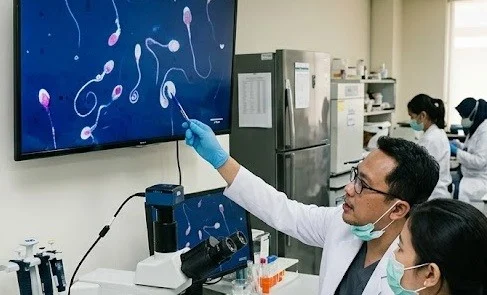
In the complex landscape of reproductive health, male fertility is a cornerstone that often receives less public discourse than female fertility, yet it remains a primary factor in the ability of couples to conceive. Among the various metrics used to assess male reproductive potential—such as sperm count and motility—sperm morphology, or the physical shape and structure of sperm cells, has emerged as a critical determinant of success. Recent insights from medical experts, including Dr. Jefry Tribowo, a specialist in andrology, highlight how even subtle deviations in the shape of a sperm cell can significantly diminish the likelihood of natural conception and may necessitate advanced medical intervention.
The biological design of a sperm cell is highly specialized, evolved over millennia for a singular purpose: to navigate the female reproductive tract and penetrate the protective layers of an oocyte (egg). When this design is compromised through morphological abnormalities, the sperm’s functional capacity is often lost. Dr. Jefry Tribowo recently clarified these distinctions, noting that a healthy sperm cell is characterized by a specific structural blueprint. "The shape of a normal sperm head is approximately oval or slightly elongated," Dr. Tribowo explained in a recent educational briefing shared via social media on July 21, 2026. This oval structure is not merely an aesthetic trait; it is a functional requirement for the acrosomal reaction, the process by which the sperm releases enzymes to dissolve the egg’s outer shell.
The Biological Significance of Sperm Shape
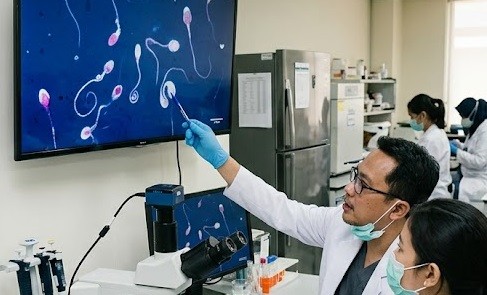
Sperm morphology is evaluated under a microscope, typically as part of a comprehensive semen analysis. A "normal" sperm cell consists of three primary parts: a smooth, oval-shaped head; a robust midpiece that houses the mitochondria (the cell’s power plant); and a long, straight tail that provides the necessary propulsion. According to Dr. Tribowo, deviations from this oval head shape are clear indicators of morphological defects. He noted that heads that are perfectly round or excessively pointed—sometimes appearing thin or "needle-like"—are classified as abnormal.
"If the sperm head is round, that is a disorder. Or sometimes we find sperm with heads that are sharp, straight, and very thin, looking almost emaciated. These are also abnormalities," Dr. Tribowo stated. These structural defects are more than just physical quirks; they often correlate with underlying issues such as DNA fragmentation or the absence of the acrosome, a cap-like structure on the head containing the enzymes necessary for fertilization. For instance, a condition known as globozoospermia is characterized by sperm with round heads that lack an acrosome, rendering them entirely unable to fertilize an egg naturally.
Global Standards and the Evolution of Fertility Metrics
The assessment of sperm morphology has undergone significant refinement over the last several decades. The World Health Organization (WHO) provides the global benchmark for what constitutes a "normal" semen sample. Interestingly, the criteria for "normal" morphology have become increasingly stringent. Under the "Kruger Strict Criteria," which is the gold standard in modern andrology, a man is considered to have "normal" fertility even if only 4% to 14% of his sperm possess a perfect shape.
This low threshold highlights the reality of human reproduction: even healthy men produce a vast majority of "abnormal" sperm. However, when the percentage of normally shaped sperm falls below 4%, a diagnosis of teratozoospermia is made. This condition is a leading cause of male-factor infertility. Data from global health organizations suggest that male-factor issues contribute to approximately 50% of all infertility cases worldwide, with morphological defects being a primary culprit in cases of "unexplained" infertility where sperm counts appear otherwise normal.
The Timeline of Sperm Development: Why Morphology Matters
To understand why morphology can fluctuate, one must look at the timeline of spermatogenesis—the process of sperm production. It takes approximately 74 to 90 days for a sperm cell to be fully formed and matured. During this three-month window, the developing cells are highly sensitive to external and internal stressors.
- Days 1–60 (Spermatogenesis): Cells divide and begin to take on the basic structure of sperm in the seminiferous tubules of the testes.
- Days 60–75 (Spermiogenesis): The cells undergo a transformation, shedding excess cytoplasm and forming the head, tail, and acrosome. This is the stage where morphological defects usually manifest.
- Days 75–90 (Maturation): Sperm move to the epididymis to gain motility.
Because of this 90-day cycle, any lifestyle change or medical treatment intended to improve sperm morphology will not show results in a semen analysis for at least three months. This chronological reality is a vital piece of context for couples struggling to conceive, as it sets the pace for treatment and expectations.
Root Causes of Morphological Abnormalities
The reasons why a man might produce a high percentage of abnormally shaped sperm are multifaceted, ranging from genetic predispositions to environmental influences. Medical researchers have identified several key factors:

- Oxidative Stress: This is perhaps the most common cause. Reactive oxygen species (ROS) can damage the membranes of developing sperm, leading to structural deformities. Factors that increase oxidative stress include smoking, excessive alcohol consumption, and exposure to environmental toxins like heavy metals or pesticides.
- Varicocele: An enlargement of the veins within the scrotum, similar to a varicose vein in the leg. This condition can raise the temperature of the testes, which is detrimental to sperm development. Heat is a known enemy of morphology; even frequent use of hot tubs or laptops placed directly on the lap can negatively impact sperm shape.
- Genetic Factors: Certain chromosomal abnormalities can lead to consistent morphological defects, such as the aforementioned globozoospermia.
- Hormonal Imbalances: Deficiencies in testosterone or imbalances in the follicle-stimulating hormone (FSH) can disrupt the delicate process of spermiogenesis.
Clinical Implications and the Path to Conception
When a couple faces a diagnosis of poor sperm morphology, the path forward often involves a shift from natural conception to assisted reproductive technology (ART). While low sperm count can sometimes be overcome by sheer volume, and low motility can be addressed through intrauterine insemination (IUI), poor morphology often requires more advanced techniques.
In cases of severe teratozoospermia, doctors frequently recommend Intracytoplasmic Sperm Injection (ICSI). Unlike traditional IVF, where sperm are placed in a dish with an egg and left to fertilize naturally, ICSI involves a laboratory specialist selecting a single, morphologically "perfect" sperm and injecting it directly into the egg. This bypasses the need for the sperm to swim or use its acrosome to penetrate the egg, effectively neutralizing the impact of poor morphology.
Official Responses and Public Health Context
Health departments and reproductive specialists globally have begun to emphasize the importance of male reproductive screenings. In Indonesia, the statements by Dr. Jefry Tribowo reflect a growing movement among medical professionals to use digital platforms to educate the public on andrology—a field that has historically been overshadowed by gynecology.
The Indonesian Ministry of Health and various regional health offices have recently increased their focus on "Pre-conception Screening" for both partners. Traditionally, the burden of fertility testing fell on women. However, the modern medical consensus, supported by experts like Dr. Tribowo, advocates for simultaneous testing. By identifying morphological issues early, couples can avoid years of frustration and move directly toward effective treatments.
Broader Societal and Psychological Impact
The implications of male infertility extending from morphological defects are not purely biological; they are deeply psychological. In many cultures, virility is closely tied to masculinity, and a diagnosis of "abnormal sperm" can lead to significant emotional distress, anxiety, and strain on a relationship.

The analytical perspective on this issue suggests that as environmental factors—such as microplastics, endocrine-disrupting chemicals, and sedentary lifestyles—continue to impact global sperm quality, the medical community must prepare for a rise in morphological disorders. Recent studies published in journals like Human Reproduction Update indicate a steady decline in sperm quality over the last four decades, suggesting that morphology may become an even more critical metric in the years to come.
Conclusion: The Necessity of Awareness
Dr. Jefry Tribowo’s insights serve as a vital reminder that fertility is a nuanced science. The "oval" shape of a sperm head is not just a biological detail; it is the key to the beginning of human life. As diagnostic tools become more sophisticated, the ability to identify and treat morphological defects will improve, offering hope to millions of couples.
For men, the message is clear: sperm health is a reflection of overall physiological well-being. Maintaining a lifestyle that minimizes oxidative stress, avoiding excessive heat, and seeking early consultations with andrologists are essential steps in preserving reproductive health. In the broader context of public health, the shift toward recognizing male-factor infertility through parameters like morphology is a necessary evolution in the quest to improve global reproductive success rates. Understanding that the shape of a cell can dictate the future of a family is the first step in addressing the quiet crisis of male infertility.