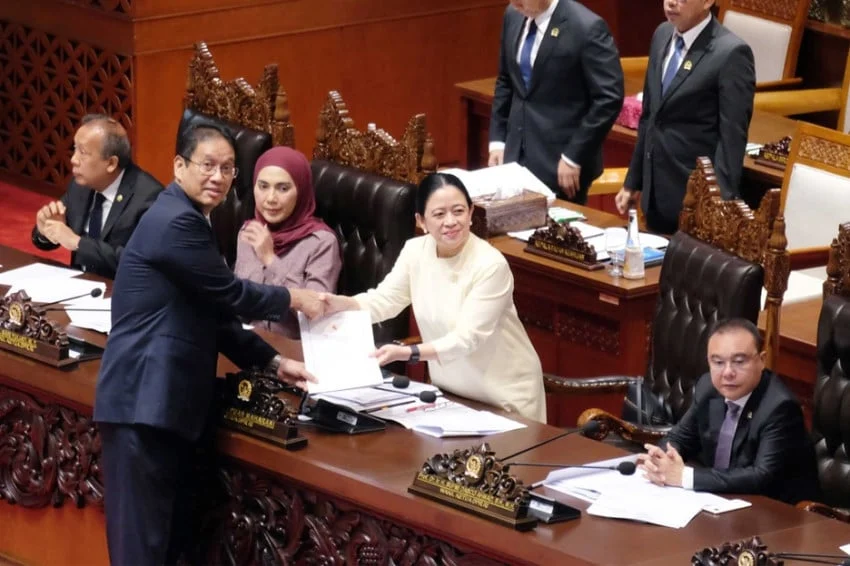
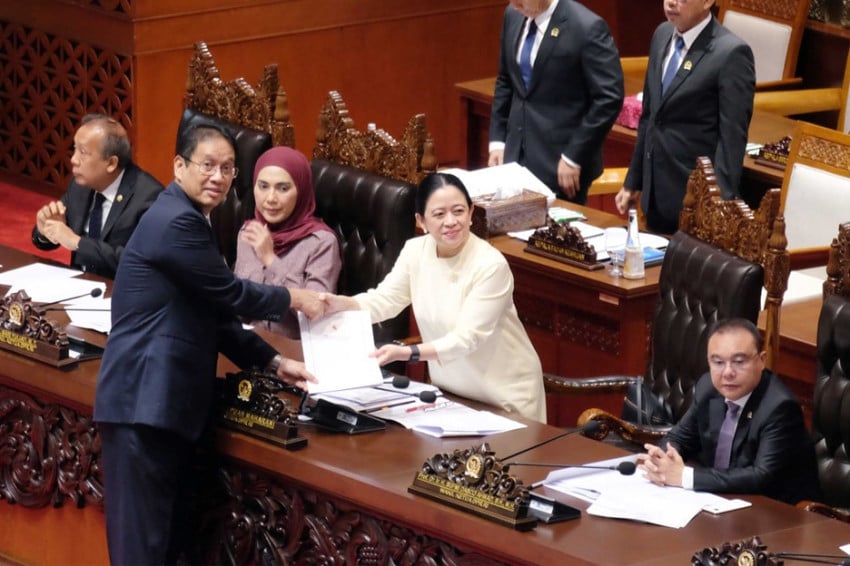
The House of Representatives of the Republic of Indonesia (DPR RI) officially ratified the Indonesian International Financial Center (PFII) Law during the 26th Plenary Session of the V Sittings Period for the 2025-2026 Legislative Year. Held at the Parliament Complex in Senayan, Jakarta, on Tuesday, July 21, 2026, the session marked a historic turning point for the nation’s financial architecture. The event was highlighted by the formal handover of the government’s response and the final draft of the legislation from the Minister of Finance, Purbaya Yudhi Sadewa, to the Speaker of the DPR, Puan Maharani. This legislative milestone is viewed by economists and policymakers as the definitive foundation for Indonesia’s transition into a top-tier global economic power, providing the legal and regulatory framework necessary to establish a world-class financial hub within Southeast Asia.
The passage of the UU PFII (Pusat Finansial Internasional Indonesia) comes at a critical juncture as Indonesia seeks to diversify its economy away from a heavy reliance on commodities and toward high-value services and capital market depth. The law is designed to create a specialized ecosystem where international financial institutions can operate with a degree of regulatory flexibility, tax incentives, and legal certainty that matches global standards found in hubs like Singapore, Dubai, and Hong Kong. By establishing a dedicated legal umbrella, the government aims to attract trillions of rupiah in foreign direct investment (FDI) and position Jakarta—or potentially the new capital city, Nusantara (IKN)—as a primary destination for global capital flows.
A Strategic Vision for National Economic Fortification
Iwan Setiawan, the Executive Director of Indonesia Political Review (IPR), emphasized that the ratification of the PFII Law is a testament to the synergy between the executive and legislative branches in anticipating the complexities of the future global economy. According to Setiawan, this law should not be viewed merely as the creation of a new physical district or a bureaucratic entity, but rather as a comprehensive policy instrument designed to shield the national economy from external shocks while maximizing growth opportunities.
"The UU PFII proves that there is a serious commitment from both the government and the DPR to present regulations that support the strengthening of the national financial ecosystem," Setiawan stated in a press release following the plenary session. "This is not just about building a group of skyscrapers or a localized zone; it is about how the state prepares policy instruments to face future economic challenges. In the context of national development, regulatory certainty is the single most important factor in building the trust of international stakeholders in the government’s long-term vision."
Setiawan further noted that the presence of a clear legal framework provides a roadmap for how Indonesia will engage with global markets. By balancing international competitiveness with national interests, the law ensures that while the country opens its doors to global finance, it maintains the integrity of its domestic monetary system and protects its sovereign economic goals.
Chronology and Legislative Journey of the PFII Law
The journey toward the ratification of the UU PFII was a multi-year endeavor that began with the identification of gaps in Indonesia’s financial services sector. Historically, Indonesia has struggled with a "shallow" financial market compared to its regional peers. As of the mid-2020s, the ratio of stock market capitalization to GDP and the penetration of insurance and pension fund assets remained lower than those of Singapore or Malaysia.
The formal process began in early 2024 with the drafting of the Academic Paper (Naskah Akademik) by a task force comprising officials from the Ministry of Finance, Bank Indonesia (BI), the Financial Services Authority (OJK), and the Deposit Insurance Corporation (LPS). Throughout 2025, the draft underwent rigorous public consultation, involving domestic banks, international chambers of commerce, and legal experts to ensure that the proposed "Special Financial Zone" would be attractive to global investors.
In early 2026, the Bill was included in the National Legislation Program (Prolegnas) Priority List. Over the course of several months of debate in Commission XI of the DPR, lawmakers focused on ensuring that the law included robust anti-money laundering (AML) and countering the financing of terrorism (CFT) provisions to prevent the center from becoming a tax haven that could jeopardize Indonesia’s standing with the Financial Action Task Force (FATF). The final consensus reached in July 2026 reflects a balanced approach that offers competitive tax rates—such as exemptions on certain capital gains and reduced corporate income tax for offshore activities—while maintaining strict transparency and reporting standards.
Supporting Data: The Economic Imperative for a Financial Hub
The necessity for the PFII is backed by compelling economic data. Projections from the Ministry of Finance suggest that a fully operational international financial center could contribute an additional 1.5% to 2% to Indonesia’s annual GDP growth over the next decade. By 2030, the government targets the financial sector to contribute at least 10% of the total GDP, up from approximately 4.5% in the early 2020s.
Furthermore, Indonesia’s "Golden Indonesia 2045" vision requires an estimated investment of over USD 6 trillion to reach high-income status. Domestic savings alone are insufficient to fund the massive infrastructure and technology projects required. The PFII is intended to act as a "capital magnet," narrowing the investment-to-savings gap. By providing a platform for "offshore" financial activities—where transactions occur in foreign currencies between non-residents or specifically licensed residents—Indonesia can capture the fee-based income and professional service jobs that are currently outsourced to other regional hubs.
Comparative analysis shows that the Dubai International Financial Centre (DIFC) contributes significantly to Dubai’s non-oil GDP. Indonesia aims to replicate this success by leveraging its position as the largest economy in Southeast Asia and a member of the G20. With a population of over 280 million and a rapidly expanding middle class, the "buy-side" potential for wealth management and insurance products within the PFII framework is immense.
Official Responses and Stakeholder Reactions
Following the handover of the documents, Minister of Finance Purbaya Yudhi Sadewa expressed his gratitude to the DPR for their swift yet thorough deliberation. He noted that the law is a "gift to the future generations of Indonesia," ensuring that the country is not merely a consumer of global financial products but a producer and a hub for financial innovation.
"The government is committed to ensuring that the implementation of the PFII Law will be transparent and inclusive," Minister Purbaya said during a brief doorstop interview. "We are currently preparing the derivative regulations, including Government Regulations (PP), to detail the specific incentives and the governance structure of the PFII authority. Our goal is to have the first phase of the center operational by early 2027."
Market participants have also reacted positively to the news. The Indonesian Stock Exchange (IDX) saw a modest uptick in financial sector stocks following the announcement, as investors anticipated increased liquidity and the entry of new institutional players. The Indonesian Chamber of Commerce and Industry (Kadin) released a statement praising the move, noting that a localized international financial center would lower the cost of capital for domestic companies seeking to expand globally.
Broader Implications: Geopolitics and Regulatory Evolution
The implications of the UU PFII extend beyond simple economics; they are deeply geopolitical. As the global world order shifts toward a multipolar system, Indonesia is positioning itself as a neutral, stable, and lucrative bridge between Western capital markets and the burgeoning economies of the Global South. The PFII will likely feature a "dual-court" system, similar to the DIFC or Singapore, where commercial disputes within the zone can be adjudicated by international judges under common law principles or specialized arbitration rules, thereby bypassing the perceived complexities of the standard domestic judicial process.
This regulatory evolution is expected to spur innovation in Fintech and Islamic Finance (Sharia Finance). Given that Indonesia has the world’s largest Muslim population, the PFII Law includes specific provisions to foster a Global Sharia Financial Hub. This could involve the issuance of international Sukuk (Islamic bonds) and the development of Sharia-compliant wealth management products that could attract capital from the Gulf Cooperation Council (GCC) countries.
However, the road to success is not without hurdles. Analysts warn that the government must remain vigilant against potential risks, such as asset bubbles or the use of the center for illicit financial flows. The integration of the PFII with the existing domestic financial system must be managed carefully to prevent "regulatory arbitrage," where firms move activities to the special zone solely to avoid domestic taxes without providing real economic value.
Conclusion: Setting the Stage for 2045
The ratification of the UU PFII on July 21, 2026, will likely be remembered as the moment Indonesia decided to stop playing catch-up and started leading in the regional financial landscape. By providing the "legal bedrock" that Iwan Setiawan described, the government has sent a clear signal to the world: Indonesia is open for business, and it has the sophisticated regulatory machinery to back it up.
As the Ministry of Finance and the DPR move forward with the implementation phase, the focus will shift to the appointment of the PFII Authority’s leadership and the selection of the physical site. Whether it thrives in the heart of Jakarta’s Sudirman Central Business District or becomes the crown jewel of the new capital in East Kalimantan, the Indonesian International Financial Center is now a legal reality. It stands as a bold declaration of intent—a commitment to building a resilient, modern, and globally integrated economy that can sustain Indonesia’s ambitions for the next two decades and beyond.