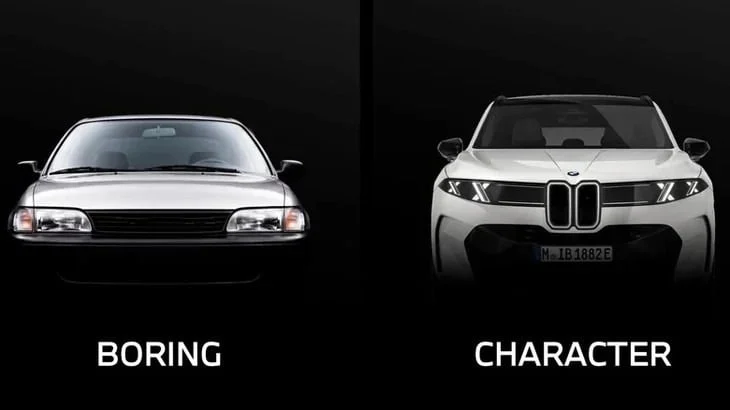
German luxury automaker BMW recently found itself at the center of an unexpected online debate after its official social media channels published promotional content contrasting the forthcoming BMW X5 with what it characterized as a "boring" design from the past. The campaign, which was intended to highlight the dramatic evolution of automotive styling and showcase the brand’s upcoming design language, quickly went viral. Rather than serving as a straightforward showcase for the next-generation sport utility vehicle, the post triggered a wave of nostalgia and passionate defense from automotive enthusiasts worldwide, many of whom rallied around the classic Japanese sedan featured in the advertisement.
The controversy highlights the complex dynamics of modern digital marketing within the automotive sector, where brand rivalry, internet culture, and consumer sentiment intersect. As legacy automakers transition toward electrification and radically modernized aesthetics, marketing strategies have increasingly leaned into bold, provocative statements. However, this particular gambit by BMW demonstrated how easily playful brand positioning can inadvertently alienate purists and celebrate the very vehicles that laid the foundation for modern global mobility.
Chronology of the Digital Marketing Campaign and Immediate Backlash
The sequence of events began when BMW’s regional social media team published a carousel post on Instagram designed to draw attention to the visual transformation of personal transport over the decades. The first slide featured an artificial intelligence-generated image depicting a sedan bearing unmistakable similarities to a 1990s compact car. Accompanying the visual was a minimalist caption labeling the aesthetic as "boring."
The swipe-through mechanism of the post immediately revealed the contrast: the second slide showcased the front fascia of the anticipated 2027 BMW X5, rendered in the brand’s futuristic Neue Klasse design philosophy. The clear narrative intent was to position the upcoming luxury vehicle as a bold leap forward from the mundane, utilitarian styling of past decades.
Within hours of publication, however, the digital engagement took an unexpected turn. Rather than focusing on the high-tech styling of the upcoming BMW X5, automotive enthusiasts, design historians, and internet commentators quickly identified the vehicle in the first slide. Despite the removal of physical badges and minor digital alterations—such as the omission of bumper-mounted turn signals—users recognized the unmistakable silhouette of a seventh-generation Toyota Corolla, specifically the E100 series produced globally between 1991 and 1997.
The comments section was rapidly flooded with opposing viewpoints. While some followers appreciated the provocative nature of the advertisement, a significantly vocal contingent rushed to the defense of the classic Toyota. Commenters pointed out the legendary reliability, timeless mechanical integrity, and utilitarian charm of the E100 Corolla, arguing that labeling such an iconic, dependable mass-market vehicle as "boring" missed the point of what made the car a historic global success.
Anatomy of the Visuals: AI Generation Meets Automotive History
According to automotive industry publication Carscoops, the image utilized in the controversial advertisement was not a photograph of an actual vintage vehicle preserved in a museum, but rather a synthetic asset generated using artificial intelligence tools. Nevertheless, the AI model successfully replicated the defining characteristics of the early-to-mid-1990s automotive design era.
The generated vehicle prominently featured the quintessential design tropes of the period: angular yet softened body lines, traditional halogen headlamps encased in glass housings, unpainted black plastic bumpers designed to absorb minor parking impacts without sustaining costly damage, and matching unpainted side mirrors. These elements formed the visual shorthand for an accessible, no-frills commuter car of the late 20th century.
In stark contrast, the second slide presented the forthcoming G65-generation BMW X5. Based on visual analysis of the rendered front fascia, the vehicle incorporates aggressive aerodynamic styling cues, including an M Sport aerodynamic package characterized by sharp air intakes, sculpted bumper geometry, and advanced lighting signatures associated with BMW’s upcoming electric and hybrid vehicle architecture. The juxtaposition was designed to emphasize the vast technological gulf between analog transportation of the past and software-defined luxury of the future.
Background Context: The Evolution of BMW Design and the Neue Klasse Era
To understand the context behind BMW’s marketing strategy, one must examine the brand’s current transitional phase. The Munich-based manufacturer is undergoing one of the most comprehensive design and platform overhauls in its corporate history. At the core of this transformation is the Neue Klasse architecture, a dedicated platform engineered primarily for battery-electric vehicles that will gradually underpin a vast array of future BMW models.
Over the past several years, BMW’s production designs—particularly large luxury SUVs and high-performance sedans—have polarized consumers and critics alike. The scaling of kidney grilles, complex surface treatments, and polarizing lighting arrangements have frequently dominated automotive forums and design discussions. By playfully contrasting its future direction against a symbol of hyper-utilitarian design, BMW’s marketing division appeared to be engaging in self-aware provocation, acknowledging that its designs evoke strong reactions while framing the alternative as dull and unimaginative.
Conversely, the Toyota Corolla E100 represents an entirely different era of automotive philosophy. Introduced globally in the early 1990s, the seventh-generation Corolla was engineered with a focus on manufacturing efficiency, space optimization, fuel economy, and bulletproof mechanical durability. It was never intended to be an emotional lifestyle object or a status symbol; rather, it was conceived as reliable infrastructure for millions of drivers worldwide. Devoid of complex electronics, large touchscreens, or aggressive styling lines, the Corolla prioritized functional longevity over ephemeral aesthetic trends.
Market Data and Historical Significance of the Toyota Corolla
To contextualize why the public defense of the 1990s Corolla was so fierce, one must examine the vehicle’s monumental sales data and cultural footprint. The Toyota Corolla is recognized as the best-selling nameplate in automotive history, with cumulative global sales surpassing 50 million units across multiple generations.
During the production run of the E100 generation in the 1990s, Toyota perfected the art of global mass production, establishing manufacturing facilities across Asia, North America, Europe, and Australia. The vehicle’s enduring popularity stems from statistical reliability metrics that consistently placed it at the top of long-term ownership satisfaction surveys. Unlike luxury vehicles that experience rapid depreciation and high maintenance costs as they age, millions of 1990s Corollas remain operational today in developing and developed nations alike, serving as a testament to conservative, over-engineered mechanical simplicity.
This legacy explains the emotional resonance the car holds among everyday motorists. For many consumers, a 1990s Corolla is not merely a "boring" appliance, but a nostalgic symbol of accessible mobility, financial independence, and dependable transportation that never let its owner down.
Industry Implications and the Power of Consumer Sentiment on Social Media
The incident serves as a modern case study in the risks and rewards of digital-first automotive marketing. In the age of social media algorithms, driving engagement often requires taking bold stances, provoking debate, or courting minor controversy. By deliberately targeting a universally recognized symbol of unpretentious motoring, BMW successfully generated high impression counts, comment volume, and cross-platform sharing.
However, the episode also underscores the changing nature of consumer-brand relationships. Modern car buyers are highly articulate, deeply knowledgeable about automotive history, and quick to challenge corporate narratives. When a luxury brand with a high-profile pricing structure disparages an affordable, beloved classic, it risks alienating a broad base of consumers who view automotive history with affection rather than disdain.
Furthermore, the reaction highlights a broader philosophical divide in contemporary automotive culture. On one side stands the push toward high-technology, digital integration, complex styling, and premium positioning—typified by vehicles like the upcoming BMW X5 Neue Klasse. On the other side persists a growing appreciation for analog purity, mechanical simplicity, and longevity—qualities embodied by vintage commuter cars that were built to last decades without requiring software updates or specialized diagnostic tools.
As automakers continue to navigate the transition toward fully digital, electrified portfolios, marketing departments will likely continue experimenting with provocative messaging to capture attention in an increasingly crowded media landscape. Whether future campaigns will strike a balance between forward-looking innovation and respect for automotive heritage remains to be seen. For now, BMW’s playful jab at a 1990s Japanese sedan has inadvertently underscored the enduring cultural power of cars that were once dismissed as ordinary, proving that in the digital age, even the humblest vehicles possess fierce and loyal defenders.