The landscape of Indonesia’s creative economy is undergoing a profound structural transformation, shifting from urban-centric artistic hubs to decentralized digital ecosystems deeply rooted in regional communities. This dynamic paradigm was underscored recently when Minister of Creative Economy, Teuku Riefky Harsya, undertook a strategic working visit to the Taman Reptil Adiluhur located in Kebumen, Central Java. The primary objective of the ministerial visit was to observe firsthand and actively engage with local participants attending an intensive digital content creation workshop. This initiative represents a cornerstone of the broader national strategy designed to equip grassroots entrepreneurs, local educators, and regional content creators with the essential technical proficiencies needed to monetize digital platforms effectively.
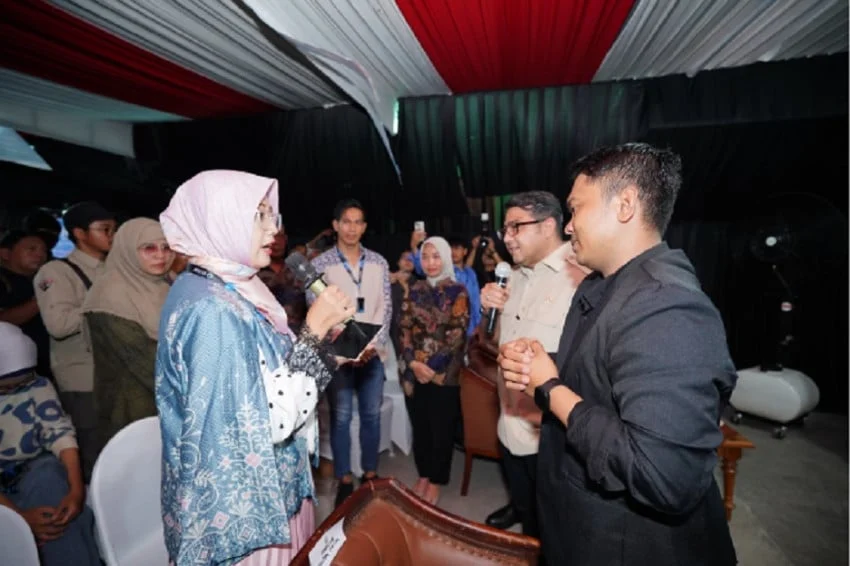
As Minister Riefky arrived at the scenic venue, he was met by Rytha Sariedova, a local primary school teacher turned passionate regional digital creator. Brandishing a microphone and demonstrating the quintessential adaptability required in the modern creator economy, Rytha immediately stepped forward to welcome the Minister and provide a comprehensive briefing on the workshop’s objectives. The interaction quickly evolved into an insightful dialogue concerning the democratization of digital media, the structural mechanics of audience engagement, and the tangible economic pathways through which social media content creation translates into sustainable household revenue and localized commercial growth.
Chronology of the Ministerial Engagement and Workshop Dynamics
The sequence of events during Minister Riefky’s visit to Kebumen reflects a meticulously structured itinerary aimed at bridging the gap between national policy formulation and ground-level execution. The day commenced with an inspection of the training facilities at Taman Reptil Adiluhur, where dozens of local residents—ranging from traditional culinary artisans and micro-entrepreneurs to vocational students and educators—were gathered to participate in hands-on modules covering smartphone videography, narrative structuring, algorithm optimization, and digital branding.
Following the initial facility tour, Minister Riefky engaged in an extended, interactive dialogue with the workshop attendees. Rytha Sariedova served as an informal liaison, introducing several local participants who have successfully leveraged digital platforms to commercialize their traditional crafts, culinary products, and small-scale services. The Minister meticulously listened to individual testimonials, occasionally interjecting with targeted inquiries regarding the technical hurdles encountered during the content development phase, the strategies employed to scale audience reach, and the monetization frameworks utilized across various social media ecosystems.
The chronology of the visit emphasized participatory learning rather than formal, top-down lecturing. By inviting attendees to share their personal triumphs and operational bottlenecks, the Ministry of Creative Economy gathered invaluable qualitative data regarding the infrastructural realities faced by content creators operating outside Indonesia’s major metropolitan centers. This grassroots feedback loop is deemed vital for the continuous refinement of national digital literacy programs and targeted financial inclusion initiatives tailored specifically for regional creative workers.
The Genesis of Regional Advocacy: Rytha Sariedova and Kebumsky
At the heart of the Kebumen digital ecosystem lies the inspiring journey of Rytha Sariedova, whose transition from conventional primary school education to influential regional content curation exemplifies the transformative power of digital democratization. Operating under the digital moniker kebumsky on TikTok, Rytha initially carved out her digital footprint driven by a profound sense of local advocacy rather than immediate commercial gain. Observing that numerous small-scale micro, small, and medium-sized enterprises (MSMEs) in Kebumen lacked the financial resources and technical expertise required to execute professional marketing campaigns, she took it upon herself to bridge this visibility gap.
Utilizing her personal smartphone, Rytha began independently visiting traditional food stalls, roadside vendors, local coffee shops, and home-industry workshops. She meticulously documented the preparation of regional delicacies, mapped out exact geographical locations, and produced engaging, authentic video content designed to spotlight these hidden economic gems. In the early stages of her digital crusade, these promotional efforts were conducted entirely pro bono. Her primary motivation derived from the intrinsic satisfaction of witnessing traditional family-run businesses experience a sudden influx of curious patrons following the viral dissemination of her review videos.
During her briefing with Minister Riefky, Rytha candidly articulated the economic evolution of her digital endeavors. Reflecting on the financial sustainability of her content creation career, she noted that what began purely as altruistic community promotion has gradually matured into a viable supplementary income stream. In her own words to the Minister, she emphasized that initial efforts were purely voluntary for the sake of MSME promotion, but current developments provide significant financial relief amid contemporary economic fluctuations. This narrative perfectly encapsulates the dual nature of modern content creation: serving simultaneously as a powerful instrument for social good and a pragmatic engine for personal economic resilience.
Broader Context and National Strategic Alignment
The visit to Kebumen does not occur in a vacuum; it is part of a synchronized nationwide campaign by the Ministry of Creative Economy to elevate regional creative industries to global standards. As Indonesia positions itself as a dominant economic force in Southeast Asia’s digital economy, strategic initiatives such as the World Conference on Creative Economy (WCCE) and specialized regional workshops serve to interconnect local cultural phenomena with international market opportunities. Recent high-profile engagements, such as the collaborative cultural demonstrations involving Cabinet ministers learning traditional instruments like the Bundengan in Wonosobo, further underscore a unified governmental approach toward cultural preservation fused with modern economic modernization.
The economic significance of the creative sector within Indonesia’s broader macroeconomic framework cannot be overstated. According to official data from the Central Statistics Agency (BPS) and the Ministry of Creative Economy, the creative sector consistently contributes significantly to the national Gross Domestic Product (GDP), absorbing millions of workers across sub-sectors ranging from culinary arts and fashion to digital applications, publishing, and content creation. However, a persistent structural challenge has been the disparity in digital readiness between Tier-1 cities like Jakarta, Surabaya, and Bandung, and Tier-2 or Tier-3 regions such as Kebumen.
To rectify this imbalance, the Ministry has intensified its deployment of localized training modules. These workshops are specifically engineered to address the three primary pillars of digital economic success: infrastructure access, digital literacy, and financial monetization. By teaching regional creators how to transform everyday cultural nuances, local culinary heritage, and traditional craftsmanship into compelling digital narratives, the government is effectively decentralizing the creative economy. This ensures that economic windfalls derived from platform monetization algorithms flow directly back into regional communities.
Economic Implications and the Future of Regional Content Creation
The long-term implications of grassroots digital empowerment, as witnessed during Minister Riefky’s visit to Kebumen, extend far beyond individual social media metrics. When educators like Rytha Sariedova and local culinary vendors harness digital tools, a powerful multiplier effect is triggered throughout the regional economy. Increased digital visibility directly correlates with higher foot traffic, expanded consumer bases, enhanced product standardization, and improved access to digital banking and micro-credit facilities.
Furthermore, the professionalization of content creation offers a viable employment alternative for the younger demographic in regional Indonesia. Rather than migrating exclusively to major urban centers in search of employment, digitally literate youth can now remain in their hometowns while operating globally accessible digital enterprises. This trend not only mitigates regional brain drain but also preserves local cultural heritage by packaging indigenous traditions in modern, digestible multimedia formats that resonate with younger generations.
Analysts suggest that the success of such ministerial interventions will ultimately depend on sustained institutional support, improved broadband infrastructure penetration in rural Java and outer islands, and continuous regulatory frameworks that protect digital intellectual property. As platforms continue to evolve, initiatives that bridge the gap between traditional entrepreneurship and digital fluency will remain indispensable.
In conclusion, Minister Teuku Riefky Harsya’s inspection of the digital workshop in Kebumen serves as a vital barometer for the current state and future trajectory of Indonesia’s creative economy. By celebrating local trailblazers like Rytha Sariedova and directly engaging with the creators driving regional economic transformation, the Ministry of Creative Economy demonstrates a proactive commitment to inclusive growth. As these regional digital ecosystems mature, they promise to fortify national economic resilience from the ground up, proving that creative innovation knows no geographical boundaries.