State-owned electricity enterprise PT PLN (Persero) is aggressively scaling up its efforts to fortify the electric vehicle (EV) ecosystem across North Sumatra. This strategic push comes in direct response to a significant surge in regional EV adoption, which has recently reached approximately 9,800 registered units. By prioritizing the expansion, reliability, and accessibility of Public Electric Vehicle Charging Stations (SPKLU), PLN aims to eliminate range anxiety and cement consumer confidence in sustainable transportation technologies.
The acceleration of infrastructure development is viewed by company executives as a critical prerequisite for achieving Indonesia’s broader net-zero emissions targets. As adoption rates climb in urban centers and along major intercity corridors, the utility provider is recalibrating its deployment strategies to ensure that charging capacity outpaces or perfectly mirrors consumer demand.
On-Site Inspection and Consumer Engagement in Medan
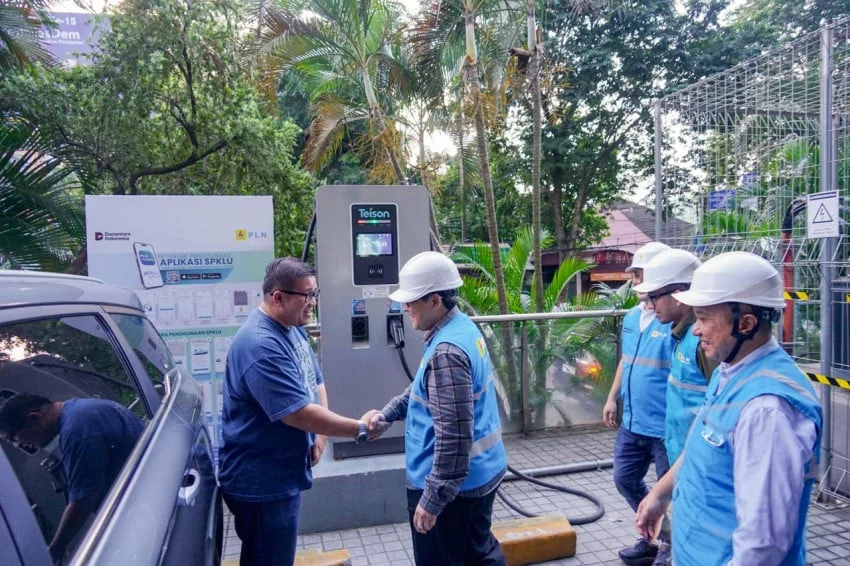
The urgency of this infrastructural expansion was underscored during a recent high-level executive visit to North Sumatra. Ali Masykur Musa, Independent Commissioner of PT PLN (Persero), conducted an on-site inspection of the SPKLU facility located at Cambridge City Square in Medan. The visit served as a firsthand evaluation of operational readiness, service quality, and user experience at one of the city’s prominent charging hubs.
During the inspection, Commissioner Ali Masykur actively engaged with EV owners who were utilizing the charging bays. Among them was Indrawan, a local electric car user who shared practical insights regarding his daily driving experience. Indrawan noted that transitioning to an electric vehicle has yielded substantial benefits, specifically highlighting enhanced driving comfort, a quieter cabin experience, and markedly lower operational and maintenance costs compared to conventional internal combustion engine (ICE) vehicles.
Direct feedback from motorists such as Indrawan plays a pivotal role in shaping PLN’s service evaluation framework. By listening to end-users, the company can pinpoint operational bottlenecks, optimize charging speed, and refine user interface systems across its digital applications used for payment and station location tracking.
Chronology of North Sumatra’s EV Infrastructure Growth
The rapid expansion of North Sumatra’s EV network is the result of a deliberate, multi-year strategic roadmap implemented by PLN’s Unit Induk Distribusi (UID) Sumatera Utara.
The developmental timeline highlights a steady progression from nascent pilot projects to a comprehensive regional network:
- Phase 1 (2021–2022): Introduction and Initial Mapping. Following national mandates to reduce fossil fuel dependency, PLN introduced the first wave of ultra-fast and standard charging stations in key metropolitan areas like Medan, targeting early adopters and corporate fleets.
- Phase 2 (2023–2024): Corridor Connectivity. As public interest grew, infrastructure development shifted toward intercity connectivity. Charging stations were strategically installed along major toll roads and arterial routes connecting Medan to Lake Toba and other prominent tourism destinations.
- Phase 3 (2025–Present): Density and Reliability Optimization. With regional adoption nearing the 10,000-unit threshold, current efforts focus on increasing the density of SPKLU units within urban centers, upgrading hardware to support faster charging protocols, and integrating smart-grid technologies to manage peak load demands efficiently.
Strategic Alignment and Official Statements
Addressing the media following his inspection tour, Commissioner Ali Masykur emphasized that infrastructure development must remain agile and responsive to technological shifts.
"PLN must continue to provide comfort, convenience, and security to electric vehicle users. The growth of electric vehicles must be continuously monitored and calculated thoroughly so that the development of SPKLU can be prepared in a balanced manner with the community’s needs," Ali Masykur stated in a formal written release. He reiterated that regulatory frameworks and corporate strategies must remain adaptive to ensure that the general public feels secure in making the permanent switch to environmentally friendly transportation modes.
Echoing these sentiments, Rizky Mochamad, General Manager of PLN UID Sumatera Utara, provided operational context regarding how deployment decisions are executed on the ground. According to Rizky, the scaling of SPKLU networks is not arbitrary; rather, it is dictated by comprehensive traffic flow studies and demographic analyses.
"The growth of electric vehicles in our region must be balanced with the provision of charging facilities that are easily accessible, reliable, safe, and comfortable," Rizky explained. He noted that the placement of new charging stations factors in localized vehicle distribution patterns, long-distance travel requirements, and forecasted adoption spikes in high-density commercial districts and tourist hotspots.
Broader Economic and Environmental Implications
The systematic reinforcement of North Sumatra’s EV infrastructure carries far-reaching implications for both the regional economy and the environment.
From an environmental standpoint, the transition from petroleum-fueled automobiles to electric mobility directly contributes to the reduction of carbon dioxide emissions and urban air pollution. As Indonesia moves closer to its nationally determined contributions (NDCs) under the Paris Agreement, regional green-energy initiatives are vital. Furthermore, because PLN continues to integrate renewable energy sources into its generation mix, the lifecycle emissions profile of EVs in Indonesia will continue to improve over time.
Economically, the localized EV boom stimulates secondary markets, including domestic battery maintenance, specialized automotive servicing, and smart-charging hardware manufacturing. By ensuring robust charging infrastructure, PLN reduces the psychological barrier to entry for prospective buyers, thereby accelerating local automotive market turnover.
Moreover, the reliable expansion of SPKLUs aligns with broader national accolades received by the utility provider. Notably, achievements such as those recognized in the Subroto Energy Awards underscore PLN’s institutional commitment to transitioning Indonesia toward a sustainable energy future.
Looking Ahead: The Future of Electric Mobility in Sumatra
As the number of electric vehicles in North Sumatra steadily approaches the milestone of 10,000 units, the demands placed upon public infrastructure will only intensify. PLN’s proactive approach—combining executive oversight, direct consumer engagement, and data-driven infrastructure placement—positions the enterprise to handle the anticipated surge in green mobility.
Moving forward, sustained collaboration between state enterprises, regional governments, and private sector stakeholders will be essential. By maintaining a steady pipeline of investment in power grid resilience and fast-charging technology, PLN aims to ensure that North Sumatra remains at the forefront of Indonesia’s green transportation revolution, paving the way for a cleaner, quieter, and more sustainable automotive landscape.