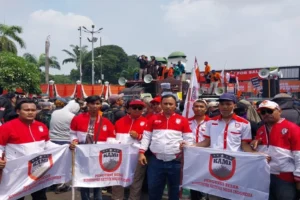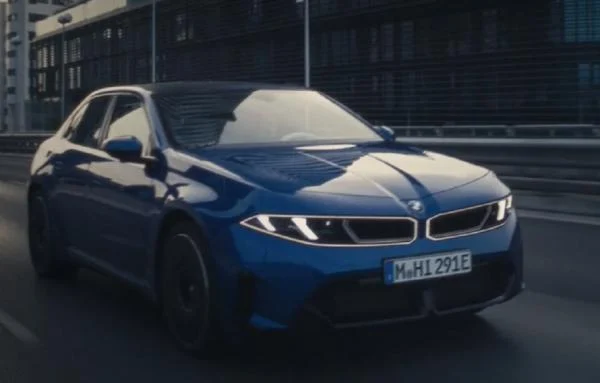
BMW China has officially commenced a significant restructuring initiative, confirming the termination of approximately 1,800 employees within its joint venture, BMW Brilliance Automotive (BBA). This workforce reduction, which accounts for roughly 10 percent of the total staff, was set in motion on November 2, 2026. The decision underscores the growing volatility in the Chinese automotive sector, as traditional premium automakers grapple with intense competition, shifting consumer preferences toward domestic electric vehicle (EV) brands, and a cooling domestic economy.
The layoffs primarily impact personnel stationed at the company’s administrative and production facilities in Shenyang, the capital of Liaoning Province, which serves as a critical manufacturing hub for BMW’s global operations. While the company has not issued an extensive public statement regarding the granular details of the restructuring, internal reports from staff members indicate that the cuts encompass a broad cross-section of the workforce, ranging from assembly line operators to mid-level management and administrative support staff.
The Context of Market Contraction
The automotive landscape in China has undergone a seismic shift over the past 36 months. Historically, the Chinese market represented the primary engine of growth for the BMW Group, consistently delivering double-digit revenue increases. However, the rise of domestic "new energy vehicle" (NEV) manufacturers, such as BYD, Li Auto, and NIO, has eroded the market share once dominated by German legacy brands.
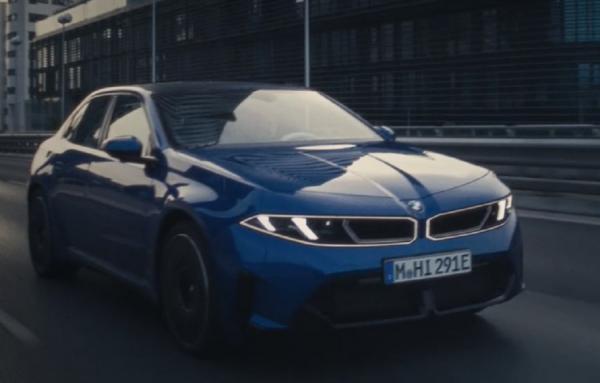
These domestic manufacturers have successfully leveraged aggressive pricing strategies, advanced software integration, and a deep understanding of local digital infrastructure to capture the loyalty of the younger, tech-savvy Chinese consumer demographic. As a result, premium marques like BMW have faced the dual challenge of declining sales volumes and the necessity to lower prices to remain competitive, which has significantly compressed profit margins. The decision to reduce headcount is a direct response to this "new normal," reflecting a strategic shift to stabilize the balance sheet amidst waning demand for internal combustion engine vehicles and the high costs associated with transitioning to full-electric manufacturing.
Financial Compensation and Severance Packages
In an effort to mitigate the social and economic impact of the layoffs, BMW Brilliance Automotive has reportedly introduced a severance package structured around an "N+5" formula. In this context, "N" represents the number of years an employee has served with the company, multiplied by their gross monthly salary. The additional "5" signifies an extra five months of base salary provided as a buffer.
Industry analysts observe that while this package is generally perceived as being above the standard legal requirements in China, the exclusion of performance-based bonuses from the calculation has drawn some criticism from the affected workforce. The implementation of this package is designed to facilitate a smoother transition for employees, some of whom have served the organization for three to five years, while others represent senior staff who have contributed to the brand’s expansion in the region over the past decade.
A Chronology of Declining Fortunes
The trajectory leading to this workforce reduction has been evident for some time. Throughout 2025 and the first three quarters of 2026, BMW Group reported several consecutive quarters of lower-than-anticipated sales in China.

- Early 2025: BMW began adjusting its production targets in Shenyang to better align with the cooling retail demand, signaling the first signs of inventory buildup.
- Mid-2025: Price wars intensified across the premium segment. BMW was forced to offer substantial discounts on its core internal combustion models to prevent a further erosion of market share.
- Q1 2026: Financial disclosures highlighted the rising cost of R&D in China as the company attempted to localize software and autonomous driving features to match local competitors.
- Q3 2026: The company signaled a "strategic re-evaluation" of its operational costs, citing the need for greater efficiency in a hyper-competitive environment.
- November 2, 2026: The official start date for the workforce reduction program.
Operational Implications for the Shenyang Hub
The Shenyang production base is arguably the most vital manufacturing facility for BMW outside of Germany. It consists of multiple plants, including the Dadong and Tiexi facilities, which have been pivotal in producing both high-end gasoline vehicles and the electric iX3 and i3 models.
By targeting this hub, the company is effectively acknowledging that its current operational capacity exceeds its current sales reality. Reducing the workforce by 10 percent will inevitably lead to a recalibration of production schedules. Experts suggest that BMW may shift toward a more "flexible manufacturing" model, which allows the company to pivot between electric and conventional drivetrains more rapidly based on real-time market signals, rather than maintaining the high-volume, fixed-schedule production that characterized the previous decade of growth.
Broader Implications for the Global Automotive Industry
The move by BMW China is symptomatic of a broader malaise affecting legacy automakers in the world’s largest car market. Volkswagen, Mercedes-Benz, and Audi have all faced similar pressures, with each company exploring various cost-cutting measures, including closing older factories and consolidating research operations.
The situation in China acts as a litmus test for the global industry. As Chinese manufacturers begin to export their vehicles to Europe and Southeast Asia, the competitive pressure that forced BMW to cut jobs in Shenyang may soon manifest in domestic European markets. The transition to electric mobility is not merely a technological challenge but a structural one that requires a smaller, more specialized workforce. The reduction at BBA serves as a stark reminder that even the most established global brands are not immune to the rapid disruption fueled by the electrification and digitalization of transportation.

Reactions and Future Outlook
While BMW has yet to provide a detailed roadmap for its future workforce strategy, the sentiment among local industry observers is one of cautious pessimism. Labor unions and government agencies in the Liaoning region are expected to closely monitor the implementation of these layoffs to ensure that the process adheres to local labor laws and that the local economy remains insulated from the shock.
For the employees, the layoff marks the end of an era of unprecedented growth in the Chinese automotive sector. For BMW, the move is a defensive posture—a necessary step to preserve capital for the "Neue Klasse" electric vehicle platform, which the company views as its primary weapon to regain market leadership.
In the coming quarters, the success of this restructuring will be measured by two metrics: the stabilization of profit margins and the ability of the remaining workforce to execute the transition to next-generation electric vehicle manufacturing. The company remains committed to the Chinese market, as evidenced by its long-term joint venture agreements, but the scale of this reduction signals that the "golden age" of unfettered expansion has transitioned into an era of ruthless efficiency and survival of the most agile.
As the automotive industry continues to evolve, the case of BMW China serves as a critical case study on how legacy giants must shed their traditional structures to compete with agile, software-first entrants. The 1,800 employees affected by this decision represent more than just a headcount reduction; they are a manifestation of the painful, inevitable pivot that all traditional automotive manufacturers must navigate to survive in the age of intelligent, electric mobility. The company’s ability to navigate this transition while maintaining its premium brand integrity remains the central challenge for BMW’s leadership in the months ahead.