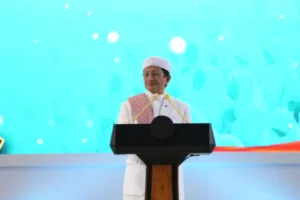
The Indonesian Ministry of Religious Affairs (MoRA) has traditionally been viewed through the lens of ritual administration, educational oversight, and the maintenance of interfaith harmony. However, as the administration of President Prabowo Subianto and Vice President Gibran Rakabuming Raka enters its foundational phase, the Ministry is undergoing a strategic recalibration. Under the current policy framework, the institution is positioning religious infrastructure—ranging from Islamic boarding schools (pesantren) to the diverse houses of worship of various faiths—as pivotal hubs for grassroots economic development. This shift represents a broader national effort to align Indonesia’s immense demographic potential with the tangible goals of the Asta Cita, the eight-point vision of the current administration.
The Asta Cita Framework and Economic Integration
At the core of this policy pivot is the third point of the Asta Cita, which mandates the creation of high-quality employment, the development of entrepreneurship, and the growth of the creative industries. For the Ministry of Religious Affairs, led by the pragmatic integration of spiritual guidance and socioeconomic development, the mandate is clear: religion must act as a catalyst for productivity.
Sigit Kamseno, a Junior Expert Public Relations Officer at the Ministry, has highlighted that the perception of the Ministry as merely a ritual-centric body is outdated. Instead, the Ministry is now actively exploring how religious communities can move from being passive consumers in the national market to becoming active producers and asset holders. This transformation is not merely a bureaucratic shift but a socioeconomic necessity aimed at addressing the persistent challenges of poverty and unemployment within faith-based communities.
Contextualizing the Economic Empowerment Agenda
Historically, Indonesia’s economic growth has often been measured by macro-indicators, such as GDP growth and foreign direct investment. However, these metrics frequently fail to capture the economic reality of the "grassroots"—the millions of individuals affiliated with religious institutions who remain outside the formal industrial sector.
The rationale for this initiative is rooted in four strategic pillars:
- Productivity vs. Population Size: While Indonesia enjoys a significant demographic dividend, the sheer number of religious adherents does not inherently translate into economic muscle. The Ministry recognizes that without targeted capacity-building, large populations can become a burden on state resources rather than a driver of growth.
- Social Dignity through Self-Reliance: The Ministry advocates for a transition from a "handout culture"—characterized by short-term, consumption-based social assistance—to a "productive capacity" model. The goal is to equip individuals with the skills to generate sustainable income, thereby reducing dependency on government aid.
- Local Economic Multipliers: By fostering entrepreneurship within the vicinity of pesantren, mosques, churches, temples, and viharas, the government aims to create localized economic ecosystems. These centers serve as hubs where supply chains can be localized, local labor can be employed, and capital can circulate within regional economies.
- Ethics-Driven Development: A unique aspect of this policy is the integration of spiritual values into economic activity. In the view of policymakers, unchecked economic growth can lead to social inequality and ethical erosion. By grounding economic development in spiritual principles, the government hopes to foster a model of prosperity that emphasizes social responsibility and equitable wealth distribution.
Chronology of the Policy Shift
The current emphasis on economic empowerment is not an isolated event but the culmination of a decade-long maturation of the "Halal Value Chain" and the formalization of the Islamic economy.
- 2019-2023: The previous administration laid the groundwork by focusing heavily on the development of the Halal Product Assurance Agency (BPJPH). This established a regulatory environment for the certification of goods, which is a prerequisite for entering global markets.
- Late 2024: Upon taking office, the Prabowo-Gibran administration integrated these existing regulatory structures with a broader mandate for economic outreach. The Ministry of Religious Affairs shifted its focus from merely regulating halal certification to active mentorship of micro, small, and medium enterprises (MSMEs).
- 2025 and Beyond: The Ministry is now implementing a series of workshops and funding accessibility programs aimed at empowering local religious community leaders to serve as economic facilitators.
Supporting Data and Economic Realities
The potential for this initiative is supported by the sheer density of religious infrastructure in Indonesia. According to official data from the Ministry of Religious Affairs, there are over 39,000 Islamic boarding schools (pesantren) across the archipelago, alongside hundreds of thousands of mosques, churches, and other religious community centers.
If even 10% of these institutions were transformed into functional economic cooperatives, the impact on national employment would be substantial. Statistics from the Ministry of Cooperatives and SMEs indicate that the MSME sector contributes approximately 61% of Indonesia’s GDP. However, access to capital and formal business training remains a barrier. By leveraging the existing social capital within religious communities, the Ministry of Religious Affairs provides a "trust network" that can facilitate micro-lending and cooperative business models, which traditional financial institutions often struggle to penetrate.
Official Response and Stakeholder Engagement
The Ministry’s approach has received cautious optimism from economic analysts. Experts suggest that while the intent is noble, the success of the initiative hinges on the Ministry’s ability to remain professional and avoid the "politicization of aid."
"The institutionalization of economic empowerment through religious bodies is a clever way to bypass traditional bureaucratic bottlenecks," says a policy researcher at a Jakarta-based think tank. "However, the key will be professional management. These religious centers need to be run as businesses, not as charities, if they are to survive in a competitive market."
In response to these concerns, the Ministry has emphasized that the current programs focus on capacity building—teaching technical skills such as financial management, digital marketing, and quality control—rather than simply distributing cash. The government is also coordinating with the Ministry of Cooperatives and the Ministry of Trade to ensure that these local initiatives can tap into national supply chains.
Broader Implications for National Stability
The shift toward economic empowerment within religious institutions has profound implications for Indonesia’s social stability. Economic disenfranchisement is frequently cited as a root cause of extremism and social unrest. By providing tangible pathways to financial independence, the government is effectively addressing the economic grievances that can be exploited by radical elements.
Furthermore, the emphasis on a "spirituality-led economy" provides a unique Indonesian branding. In a global market increasingly concerned with ESG (Environmental, Social, and Governance) standards, the integration of ethics and sustainable, community-focused development aligns well with international trends.
Challenges Ahead
Despite the promising framework, significant challenges remain. The primary obstacle is the digital divide. Many rural religious communities lack the technological infrastructure required to participate in the digital economy, such as e-commerce platforms and digital payment systems. Additionally, the cultural shift from a community that focuses solely on ritual worship to one that integrates business management requires a significant change in mindset for both local leaders and their congregations.
The Ministry of Religious Affairs acknowledges these hurdles. Future phases of the program are expected to include partnerships with the Ministry of Communication and Digital to provide the necessary technical training to bridge this gap.
Conclusion
The transformation of the Ministry of Religious Affairs from a purely administrative body to an economic empowerment facilitator is one of the most significant, yet overlooked, shifts in the early months of the Prabowo-Gibran administration. By framing economic independence as a spiritual virtue and leveraging the immense social capital of Indonesia’s religious landscape, the government is attempting to build a bottom-up economic recovery that is both inclusive and ethically grounded.
While the results will take years to materialize, the structural changes being implemented now suggest a long-term commitment to a model of development that views the mosque, the church, and the pesantren not just as places of prayer, but as the cornerstones of a modern, prosperous, and self-reliant Indonesian nation. As the administration continues to refine its Asta Cita implementation, the role of religious institutions in the national economy will likely become a critical indicator of the country’s success in achieving its 2045 "Golden Indonesia" vision.