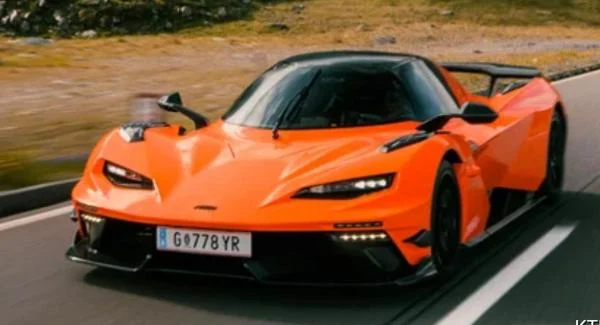
The automotive landscape in the United States is set to welcome a rare and uncompromising guest as KTM, the Austrian manufacturer renowned for its dominance in off-road motorcycling and precision engineering, officially announces the return of its X-Bow sports car to North American soil. After an absence of nearly 20 years, the brand is re-entering the world’s most competitive automotive market with the KTM X-Bow GT-XA, a bespoke, road-legal iteration designed specifically to satisfy the rigorous regulatory framework of the U.S. Department of Transportation and the Environmental Protection Agency.
This reentry is not merely a product launch; it is a strategic maneuver by KTM and its exclusive American partner, Carbon Yard, to capture the attention of high-net-worth enthusiasts who demand a driving experience that bridges the gap between professional-grade circuit racing and weekend road performance.
A Legacy Reborn: The Evolution of the X-Bow
The KTM X-Bow (pronounced "crossbow") first gained international acclaim in 2008 when the company, primarily known for its "Ready to Race" philosophy in the motorcycle sector, ventured into the four-wheeled world. The original X-Bow was a radical departure from traditional sports cars, featuring a carbon fiber monocoque chassis—a technology typically reserved for Formula 1 cars—and a design that eschewed traditional creature comforts in favor of raw mechanical connection.
For two decades, the X-Bow remained largely an overseas phenomenon, relegated to European circuits and niche markets. The challenges of homologation—the process of certifying a vehicle for road use in the U.S.—historically proved too costly and complex for a low-volume manufacturer to navigate. However, the introduction of the GT-XA represents a culmination of years of engineering adaptation. By working closely with Carbon Yard, KTM has successfully navigated the complexities of U.S. vehicle safety standards while ensuring that the vehicle’s DNA remains untarnished by excessive compromises.
Engineering the GT-XA: From Track to Boulevard
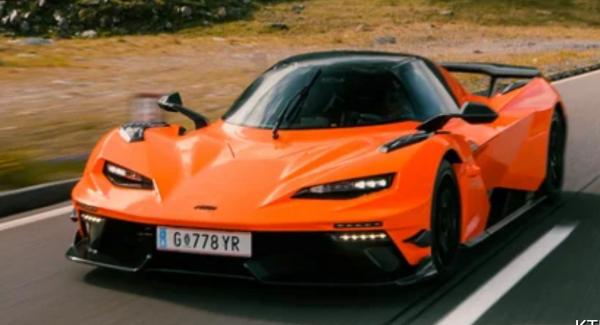
The KTM X-Bow GT-XA is heavily inspired by the European-market X-Bow GT-XR, a vehicle that has set benchmarks for power-to-weight ratios in the lightweight sports car category. The GT-XA retains the core technical architecture of its predecessor: a carbon fiber monocoque that provides immense structural rigidity and a lightweight footprint that allows the vehicle to defy conventional physics in cornering and acceleration.
Unlike the earliest versions of the X-Bow, which were largely open-cockpit affairs requiring helmets, the GT-XA features a sophisticated canopy system and a full windshield. This design choice serves a dual purpose: it significantly improves aerodynamics, reducing drag at high speeds, and provides a level of comfort that makes long-distance driving—or even spirited daily commutes—a viable prospect for owners. The interior, while driver-focused, incorporates modern ergonomics and interface systems that comply with U.S. automotive regulations, marking a significant evolution from the stripped-back track toys of the past.
Market Strategy and Scarcity
The decision to limit production to just 30 units for the U.S. market is a calculated move that serves both brand exclusivity and regulatory management. By keeping volume low, KTM can manage the complexities of importing and servicing these vehicles without the need for a massive, traditional dealership network.
The financial commitment for potential owners is substantial. With a base price starting at approximately 490,000 U.S. dollars—equivalent to roughly 8 billion Indonesian Rupiah—the GT-XA occupies the hypercar segment, competing against established heavyweights from brands like Porsche, McLaren, and Ferrari. Prospective buyers are required to place a 50,000-dollar deposit, a figure that reflects the bespoke nature of the production process. According to industry analysts, this high barrier to entry is expected to be met with strong demand from collectors who prioritize exclusivity and the unique engineering pedigree that KTM brings to the table.
Chronology of the Reentry
- 2008: KTM debuts the original X-Bow, sparking global interest but failing to establish a foothold in the U.S. due to federal homologation hurdles.
- 2015-2020: KTM continues to refine the X-Bow platform in Europe, introducing the GT and GT2 race variants.
- 2022: KTM unveils the GT-XR, which serves as the technical foundation for the future U.S. model.
- 2024: Formal partnership discussions begin with Carbon Yard to localize the platform for American regulatory compliance.
- Late 2026: Official announcement of the GT-XA and commencement of the deposit-taking phase.
- 2027 (Projected): First customer deliveries of the U.S.-spec KTM X-Bow GT-XA.
The Broader Impact on the American Sports Car Market
The arrival of the GT-XA signifies a growing trend in the U.S. automotive sector: the rise of "ultra-lightweight" performance vehicles. As major manufacturers lean heavily into electrification and heavy battery-powered performance vehicles, a segment of the enthusiast market is increasingly looking for mechanical purity, manual steering feedback, and the visceral experience of an internal combustion engine mounted in a featherweight chassis.

KTM is effectively tapping into the same market demographic that has fueled the success of brands like Lotus and Ariel. However, by positioning the GT-XA at a higher price point and with a more "refined" design language, KTM is aiming to attract buyers who want the track performance of a GT car but with the aesthetic appeal and build quality of a luxury grand tourer.
From an economic standpoint, the success of the GT-XA could pave the way for a more permanent KTM presence in the U.S. automotive market. If the 30-unit run is sold out rapidly, it would provide the necessary capital and market validation for the company to consider future, larger-volume projects.
Challenges and Regulatory Realities
Despite the excitement surrounding the launch, the path to the showroom is not without friction. Federal motor vehicle safety standards (FMVSS) in the U.S. are among the strictest in the world. The requirement for specific airbag deployments, crash-test survivability, and emissions compliance for limited-run vehicles remains a significant hurdle.
Industry experts note that the collaboration with Carbon Yard is the "secret sauce" for this project. Carbon Yard’s experience in the American regulatory environment allows KTM to outsource the "paperwork" of road legality, leaving the Austrian engineers to focus on the performance metrics that have made the brand a legend in the world of motorcycling.
Future Outlook
As the automotive industry pivots toward an electric future, the KTM X-Bow GT-XA serves as a defiant tribute to the internal combustion era. With a power-to-weight ratio that rivals top-tier hypercars, it offers a driving experience that is increasingly rare in the modern age of digital driver aids and heavy curb weights.

For KTM, the U.S. is the final frontier. Having conquered the dirt tracks of the world and the winding roads of the Alps, the company is now positioning its four-wheeled machines to take on the vast, open highways of America. Should the delivery schedule remain on track for next year, the sight of a KTM X-Bow navigating a canyon road in California or a track day at Laguna Seca will soon transition from a pipe dream to a reality for thirty lucky individuals.
In the final analysis, the X-Bow GT-XA is more than just a car; it is a statement of intent. It proves that despite the global push for standardization and electrification, there remains a vibrant, well-funded, and passionate market for pure, unadulterated automotive engineering. Whether this model succeeds as a long-term commercial venture or remains a boutique curiosity, it has already achieved its primary goal: re-establishing KTM as a serious player in the world of high-performance automobiles.