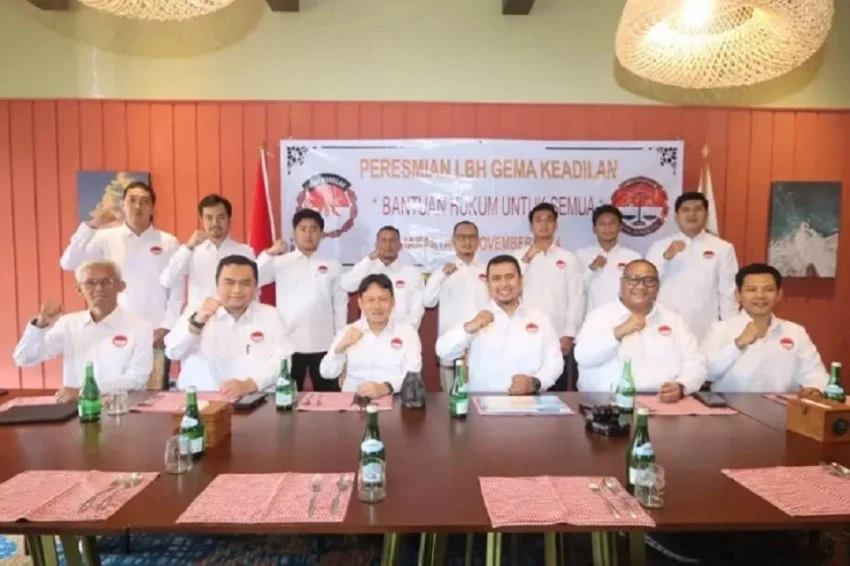
The Lembaga Bantuan Hukum (LBH) Gema Keadilan has formally requested that the Indonesian National Police Chief, General Suyudi Ario Seto, initiate a comprehensive independent investigation into the controversial police raid conducted at the Ma’had Hamalatul Qur’an women’s Islamic boarding school. The incident, which occurred in the early hours of October 29, 2026, has ignited a significant debate regarding the limits of police power, the protection of minors in religious institutions, and the adherence to established procedural laws in Indonesia.
The raid, which took place at approximately 3:20 AM at the facility located in Laban Wetan Hamlet, Laban Village, Mojolaban, Sukoharjo, involved a significant law enforcement presence. The boarding school, which serves as a residence and educational facility for 12 female students aged 10 to 16, as well as four female instructors, was allegedly breached while the occupants were asleep. This incident has prompted intense scrutiny from legal experts and human rights advocates who argue that the methodology employed during the operation was both disproportionate and legally flawed.
Chronology of the Raid and Immediate Allegations
According to testimonies provided by representatives of the boarding school, the police operation commenced in the pre-dawn hours of October 29. The sudden entry of security personnel into a residence housing young female students has been described by local observers as highly traumatic.
LBH Gema Keadilan, acting as legal counsel for the affected parties, has highlighted several critical procedural discrepancies. Among the primary contentions is the absence of a search warrant presented to the boarding school authorities at the time of the operation. In Indonesian law, specifically under the Criminal Procedure Code (KUHAP), search and seizure procedures are strictly regulated to protect the rights of citizens. The legal team asserts that the failure to produce a valid warrant—or to notify local officials of the raid—constitutes a clear violation of standard police procedures.
Syam Fharis, spokesperson for LBH Gema Keadilan, emphasized that the raid was reportedly linked to an investigation regarding the burning of a local stall, a relatively minor criminal matter that, according to legal critics, did not necessitate such an aggressive tactical response. The involvement of specialized units has raised further questions regarding the proportionality of force used in the investigation.
Concerns Regarding Procedural Compliance and Human Rights
The legal basis for the protest against the raid is grounded in several key pieces of Indonesian legislation. LBH Gema Keadilan has cited the Child Protection Law (UU No. 35 of 2014) as a primary concern, noting that the psychological well-being of the 12 minors residing at the facility was not adequately considered during the operation. Furthermore, the organization points to the National Police Regulation (Perkap) No. 6 of 2019, which dictates the strict protocols for investigative activities, including search and seizure.
The core of the legal argument is that the police operation failed to distinguish between the gravity of the alleged offense and the rights of the individuals subjected to the raid. By treating the boarding school with the intensity typically reserved for high-stakes criminal syndicates, the police have been accused of infringing upon the principles of human rights and the protection of vulnerable groups, specifically women and children.
The Question of Densus 88 Involvement
A significant portion of the public outcry centers on the alleged involvement of Densus 88 Antiteror, the elite counter-terrorism unit of the Indonesian National Police. While the authorities have not officially confirmed the specific composition of the raiding party, reports from the scene suggest the presence of tactical units that caused alarm among the local community.
"If indeed there was an involvement of Densus 88 for a case related to the burning of a small stall, then this represents a massive misuse of mandate," Syam Fharis stated. He argued that the unit’s mandate is strictly defined by law to address terrorism-related offenses. The deployment of counter-terrorism assets in a local civil dispute creates a dangerous precedent and, according to critics, fosters a narrative of "terrorization" toward Islamic educational institutions. This perception is particularly sensitive in Indonesia, where the government has been working to improve relations between the state and religious boarding schools (pesantren).
Institutional Demands and Call for Transparency
In their formal petition to the National Police Chief, LBH Gema Keadilan has outlined a series of demands aimed at ensuring accountability and preventing future incidents:
- Independent Investigation: The establishment of an independent team, separate from the local police apparatus, to conduct a thorough review of the operation’s planning and execution.
- Propam Evaluation: An internal audit by the Division of Profession and Security (Propam) to assess whether officers involved in the raid violated the police code of ethics.
- Transparency of Evidence: A formal request for the Central Java Regional Police (Polda Jateng) to disclose the legal documents, specifically the search warrants signed by the local court, that justified the raid.
- Restoration of Property: The immediate return of all items seized from the students and instructors that were taken without a clear inventory or legal justification.
- Psychological Support: A request for the National Commission on Human Rights (Komnas HAM) and the National Commission on Violence Against Women (Komnas Perempuan) to conduct trauma assessments for the 12 students impacted by the raid.
The legal team has also established a free legal aid post in the Solo Raya area to provide ongoing support for the families of the students, signaling that they are prepared for a protracted legal battle to ensure the police remain within the boundaries of the law.
Broader Implications for Law Enforcement and Society
The incident in Sukoharjo has broader implications for the governance of security in Indonesia. As the government, under President Prabowo, moves toward closer institutional cooperation with pesantren—including the potential establishment of a dedicated Directorate General for Islamic Boarding Schools—the perception of state overreach in these institutions becomes a critical political issue.
Critics argue that if the police are perceived as treating religious schools with hostility or suspicion, it could undermine ongoing efforts to bridge the gap between religious education and state oversight. The "terrorization" of the boarding school environment—a term used by activists to describe the intimidation tactics felt by the students—could alienate communities that the state relies on for social and educational stability.
Furthermore, the case serves as a litmus test for the accountability mechanisms within the Indonesian National Police. With the rise of public access to information and the growing influence of social media in monitoring state actions, the police are under increasing pressure to justify their tactical decisions in real-time. The failure to address these grievances transparently could lead to a decline in public trust, which is essential for effective community policing.
Analysis of the Legal Landscape
Under the Indonesian criminal justice framework, police are granted broad powers to investigate crimes. However, these powers are tempered by the duty to protect citizens’ privacy and safety. The raid on Ma’had Hamalatul Qur’an brings to the forefront the necessity for a "proportionality test" in police operations.
Legal analysts suggest that the court-issued search warrant is not merely a formality but a safeguard against abuse. If the police acted without such a warrant, they have effectively circumvented the judiciary’s role in overseeing law enforcement activities. The insistence by the boarding school authorities that no such document was produced places the burden of proof squarely on the shoulders of the Central Java Police.
As the situation develops, the focus will likely shift to the responses from oversight bodies like the National Police Commission (Kompolnas). If the official inquiry confirms that the operation was indeed excessive or conducted without proper authorization, the resulting disciplinary actions could serve as a deterrent against similar future incidents. Conversely, a failure to address the allegations could lead to increased calls for structural reform within the police force, particularly regarding the deployment of elite units in standard criminal investigations.
Conclusion
The raid on the Ma’had Hamalatul Qur’an boarding school stands as a pivotal case of civil rights advocacy in Indonesia. While the police maintain that their duties involve enforcing the law, the methods employed in this instance have raised profound questions about the limits of that enforcement. The demand by LBH Gema Keadilan for an independent investigation is a call for the restoration of the rule of law, ensuring that in the pursuit of justice, the rights of the most vulnerable—in this case, young students—are not sacrificed for the sake of tactical convenience.
The coming weeks will be crucial as the National Police leadership decides how to respond to the demands for transparency. Whether the situation leads to systemic policy changes or remains a localized controversy will depend on the willingness of the police to subject their own operations to the same level of scrutiny that they apply to the public. For the students and families involved, the primary objective remains the restoration of their sense of security and the accountability of those who breached the sanctity of their home.