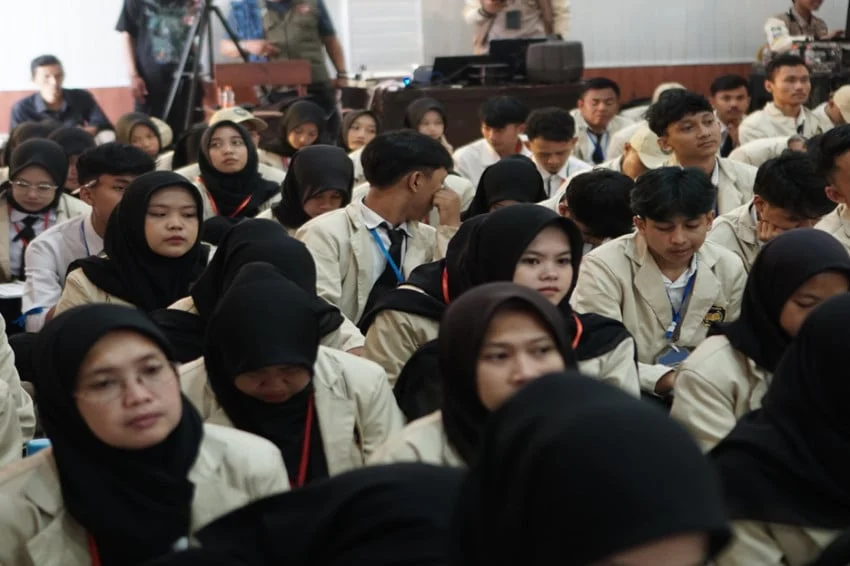
Politeknik Bhakti Kencana, located in Cianjur, West Java, officially inaugurated its new Lembaga Pelatihan Kerja (LPK) or Vocational Training Center alongside a suite of professional care services on Monday, September 14, 2026. The high-profile inauguration event, which marks a significant milestone for regional education and employment standards, was formally inaugurated by the Ministry of Manpower’s Director General of Manpower Placement Development and Expansion of Employment Opportunities (Binapenta and PKK), Prof. Sugeng Heri Suseno.
The newly established vocational facility integrates several specialized community and institutional care divisions, namely Politeknik Bhakti Kencana Caregiver, Politeknik Bhakti Kencana Homecare, Politeknik Bhakti Kencana Day Care, and Politeknik Bhakti Kencana Baby Care. Designed to bridge the historical gap between academic theories taught in classrooms and the dynamic demands of modern industries, the initiative underscores a robust institutional commitment to enhancing graduate employability. By aligning higher education curricula with practical workforce requirements, Politeknik Bhakti Kencana aims to ensure that its students graduate not only with academic degrees but also with recognized competencies, practical field experience, and verifiable readiness for domestic and international job markets.
Bridging Academia and Industry Needs through Strategic Vocational Expansion
The inauguration ceremony on September 14, 2026, represents a culmination of months of meticulous planning and regulatory alignment between educational authorities and labor ministries. In an official statement released on Wednesday, September 16, 2026, the management of LPK Politeknik Bhakti Kencana emphasized that the institution is intentionally structured to serve a dual purpose. Beyond serving as a professional training ground for enrolled students, the LPK is mandated to open broader training access and competency enhancement programs for the general public.
This strategic expansion addresses long-standing challenges within Indonesia’s labor market, particularly the mismatch between the output of higher education institutions and the specific skill sets sought by employers. In the healthcare, domestic assistance, and eldercare sectors, demand has surged exponentially due to demographic shifts, an aging population, and the rapid professionalization of caregiving services. By establishing dedicated centers for caregiver, homecare, day care, and baby care training, Politeknik Bhakti Kencana is positioning itself at the forefront of a specialized vocational revolution.
The establishment of the LPK directly supports the national "link and match" agenda championed by the Indonesian government. This framework seeks to harmonize educational outputs with the practical needs of the business world, industrial sectors, healthcare facilities, governmental bodies, and broader community expectations. Through these multifaceted collaborations, the institution is actively constructing a comprehensive vocational education ecosystem. This ecosystem extends far beyond traditional classroom instruction, encompassing rigorous hands-on training, structured internships, field experience, entrepreneurial mentorship, and proactive employment creation.
Chronology of Development and Institutional Roadmap
The journey toward the establishment of the LPK and its integrated care services began well before the official ribbon-cutting ceremony in September 2026. Recognizing the shifting paradigms in healthcare support and human resource development, the leadership of Politeknik Bhakti Kencana initiated curriculum reviews in late 2024. These reviews identified critical gaps in the practical training of health sciences and community service students.
By mid-2025, institutional blueprints for the LPK were drafted, focusing heavily on standardizing caregiving curricula to meet both national and international accreditation standards. This phase involved intensive consultations with the Ministry of Manpower to ensure that the proposed training modules complied with the latest Manpower Ministerial Regulations regarding vocational training centers.
Entering early 2026, infrastructural preparations were finalized on the Cianjur campus. Facilities were retrofitted with modern simulation rooms replicating homecare environments, infant care stations, and eldercare residential setups. Concurrently, faculty members and trainers underwent specialized certification programs to become accredited instructors under national competency frameworks. The culmination of these preparatory phases led to the formal government inspection in August 2026, resulting in the official licensing and the subsequent inauguration by Prof. Sugeng Heri Suseno on September 14, 2026.
According to the institutional roadmap, the remainder of 2026 will focus on stabilizing operations and enrolling the first official cohorts of trainees from both the student body and the external public. By 2027, Politeknik Bhakti Kencana plans to establish formal placement pipelines with domestic healthcare networks as well as international partners, particularly in countries facing severe demographic deficits in caregiving workforces, such as Japan and several European nations.
Official Perspectives and Ministerial Endorsement
During the inauguration ceremony, Prof. Sugeng Heri Suseno delivered a keynote address highlighting the critical role that independent vocational training centers play in alleviating national unemployment and underemployment. He noted that traditional academic pathways must increasingly integrate practical skill acquisition to remain relevant in a rapidly transforming global economy.
"The establishment of this LPK by Politeknik Bhakti Kencana exemplifies the proactive synergy required between higher education and government labor policies," Prof. Sugeng stated during the event. "We are moving past an era where a diploma alone guarantees career success. Today’s labor market demands verified competency, adaptability, and professional certification. Initiatives like these directly contribute to expanding productive employment opportunities across Indonesia."
Local government representatives and academic leaders from Politeknik Bhakti Kencana echoed these sentiments, emphasizing that Cianjur holds significant potential as a talent incubation hub. By equipping local youth and students with internationally benchmarked caregiving skills, the institution is not only addressing local community needs but also preparing a globally competitive workforce.
The leadership of Politeknik Bhakti Kencana reiterated their vision to transform the LPK into a sustainable regional hub for career development. "Our goal is to ensure that every individual who passes through our training programs acquires marketable skills that elevate their socioeconomic standing, whether they choose to enter formal corporate employment or launch independent care services," the institution’s management noted in their post-inauguration briefing.
Comprehensive Overview of the Four Strategic Services
The four newly launched service units—Caregiver, Homecare, Day Care, and Baby Care—are designed to operate simultaneously as training laboratories for students and professional service providers for the public. Each unit addresses a distinct sector of the growing care economy.
- Politeknik Bhakti Kencana Caregiver Service: Focused primarily on the specialized care of elderly individuals and patients recovering from chronic illnesses or surgeries. Trainees learn vital signs monitoring, physical therapy assistance, palliative care, nutritional management, and psychological support techniques.
- Politeknik Bhakti Kencana Homecare Service: Designed to dispatch trained medical and nursing personnel directly to private residences. This service provides continuous health monitoring, wound care, administration of prescribed treatments, and professional nursing interventions for patients who prefer or require home-based recovery.
- Politeknik Bhakti Kencana Day Care Service: Catering to working parents, this facility provides a safe, educational, and nurturing environment for young children. Concurrently, it serves as a practical training ground for early childhood education and developmental psychology students.
- Politeknik Bhakti Kencana Baby Care Service: Specializing in infant health, postnatal care for mothers, lactation consulting, and early developmental monitoring. This unit addresses the high demand for certified infant specialists in urban and semi-urban households.
Broader Economic Implications and Labor Market Impact
The launch of the LPK and its associated care services carries profound implications for regional and national economic development. As Indonesia navigates its demographic dividend, optimizing the productivity of its workforce is paramount. The care economy, in particular, represents a rapidly expanding sector with immense potential for formal job creation.
Data from labor market analysts indicate that aging populations globally, alongside changing family structures in urban centers across Indonesia, have driven unprecedented demand for professional care services. By formalizing and professionalizing these roles through structured vocational training, Politeknik Bhakti Kencana is helping to professionalize an industry that has historically relied on informal, uncertified labor.
Furthermore, the integration of entrepreneurship modules within the LPK curriculum encourages graduates to transition from job seekers to job creators. Trainees are equipped with basic business management, client communication, and service marketing skills, enabling them to establish independent homecare agencies or community-based day care centers. This entrepreneurial focus aligns closely with national policies aimed at fostering micro, small, and medium enterprises (MSMEs) within the service sector.
From an international perspective, the standardization of caregiving training according to recognized competency frameworks opens up lucrative overseas employment pathways. Countries with aging demographics face severe shortages of qualified caregivers. By ensuring that its trainees possess both technical competence and cross-cultural communication skills, Politeknik Bhakti Kencana is positioning its graduates to tap into high-value international labor markets, thereby boosting foreign remittance inflows and enhancing Indonesia’s reputation as a provider of skilled professional labor.
Challenges and Future Outlook
Despite the promising trajectory of the newly inaugurated LPK, institutional stakeholders acknowledge that sustained success will require continuous adaptation and rigorous quality control. Maintaining alignment with rapidly evolving industry standards demands ongoing faculty development, continuous curriculum updates, and sustained investment in simulation infrastructure.
Additionally, public awareness campaigns will be essential to shift cultural perceptions regarding the formalization of domestic and caregiving roles. Educating the public on the value proposition of certified care professionals—as opposed to informal alternatives—will be critical in driving sustainable demand for the services offered by Politeknik Bhakti Kencana’s new divisions.
Looking ahead, the institution plans to forge deeper partnerships with regional hospitals, nursing homes, and international placement agencies to streamline the transition from training to employment. Regular tracer studies and employer feedback loops will be implemented to evaluate the performance of graduates in the field, ensuring that the curriculum remains responsive to shifting market realities.
Through its decisive action on September 14, 2026, Politeknik Bhakti Kencana has established a compelling benchmark for vocational education in Indonesia. By combining academic rigor with practical, industry-aligned training and community-focused services, the institution is actively shaping a more competent, resilient, and globally competitive workforce capable of meeting the complex demands of the modern care economy.