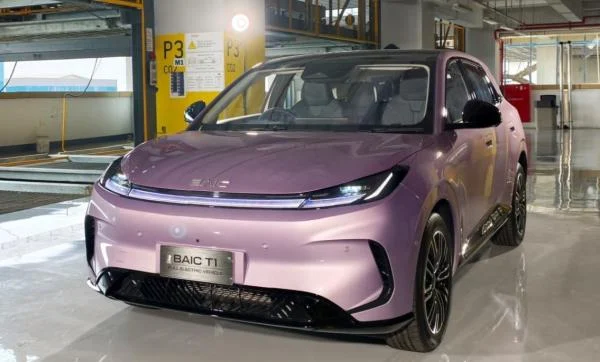
JAKARTA, Indonesia – BAIC Indonesia has equipped its latest electric vehicle, the BAIC T1, with a suite of modern technologies designed to simplify the driving experience. Among its standout features is the "Intelligent Parking Assist" system, which allows the vehicle to autonomously park itself without requiring driver intervention on the steering wheel or pedals. This advanced capability is poised to redefine urban driving and parking in congested environments.
Revolutionizing Parking in Urban Landscapes
The Intelligent Parking Assist feature on the BAIC T1 has been meticulously engineered to assist drivers, particularly in challenging situations such as navigating crowded parking lots or maneuvering into tight spaces. This sophisticated system is capable of executing both parallel and perpendicular parking maneuvers by taking complete control of the steering, accelerator, and braking systems automatically. The introduction of such technology underscores a growing trend in the automotive industry towards enhancing driver comfort and safety through automation.
The operational simplicity of this feature is a key selling point. Drivers initiate the process by simply driving at a low speed while searching for an available parking slot. Integrated sensors within the BAIC T1 continuously scan the vehicle’s surroundings, automatically identifying suitable and safe parking spaces. Once a compatible spot is detected, the driver activates the system by tapping the "Parking Assistance" icon on the vehicle’s head unit display and confirming the selection. From this point, the BAIC T1 autonomously executes the entire parking sequence with remarkable precision.
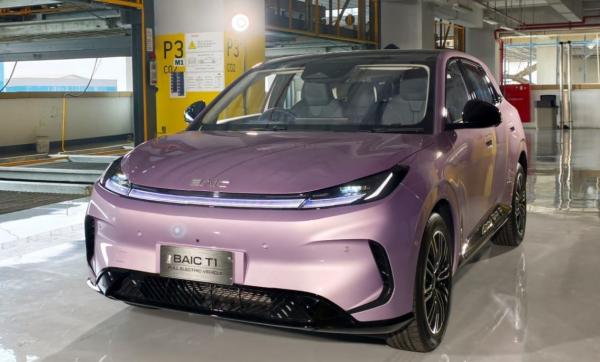
Upon successful completion of the parking maneuver, the system automatically shifts the vehicle’s transmission into Park (P) mode, ensuring the vehicle is securely stationary. Furthermore, this intelligent system is not limited to assisting with parking entry; it can also be utilized to expertly extract the vehicle from confined parking spots, alleviating driver concerns about limited clearance and potential damage. This comprehensive approach to parking assistance highlights BAIC’s commitment to providing practical and user-friendly technological solutions.
The Growing Demand for Advanced Driver-Assistance Systems (ADAS)
The integration of Intelligent Parking Assist into the BAIC T1 reflects a broader industry shift towards the widespread adoption of Advanced Driver-Assistance Systems (ADAS). Globally, consumer demand for vehicles equipped with ADAS features is on a steady rise, driven by increased awareness of safety benefits, convenience, and the evolving perception of autonomous driving capabilities. According to market research firm Statista, the global ADAS market is projected to reach USD 120.20 billion by 2027, with a compound annual growth rate (CAGR) of 15.4% from 2020 to 2027. This growth is fueled by government regulations mandating certain safety features, as well as manufacturers’ efforts to differentiate their offerings in a competitive market.
Electric vehicles (EVs), in particular, are often at the forefront of technological innovation, with manufacturers leveraging the integrated nature of EV powertrains to incorporate sophisticated electronic systems. The BAIC T1, as an electric offering, benefits from this synergy, allowing for seamless integration of features like autonomous parking. This aligns with Indonesia’s own ambitions to promote EV adoption and position itself as a key player in the regional EV market. The Indonesian government has set targets to increase the market share of electric vehicles, supported by incentives and the development of charging infrastructure. Features like advanced parking assistance can serve as a significant draw for consumers considering the transition to electric mobility.
A Timeline of Technological Advancement in Automotive Parking
The evolution of parking assistance technology has been a gradual but impactful journey. Early iterations included simple parking sensors that emitted audible beeps to alert drivers to obstacles. This was followed by rearview cameras, which provided a visual guide. The next significant leap was the introduction of basic parking assist systems that could guide the driver’s steering inputs, requiring the driver to manage the pedals.

The BAIC T1’s Intelligent Parking Assist represents a more advanced stage, where the system assumes full control of the vehicle’s movement. This level of automation is a direct descendant of research and development in areas like sensor fusion, artificial intelligence, and precise actuator control. The progression can be broadly outlined:
- Early 2000s: Introduction of ultrasonic parking sensors.
- Mid-2000s: Rearview cameras become more common.
- Late 2000s – Early 2010s: Semi-automatic parking systems emerge, assisting with steering.
- Mid-2010s onwards: Fully automatic parking systems, capable of controlling steering, acceleration, and braking, begin to appear in luxury vehicles and are gradually trickling down to more mainstream models.
The BAIC T1’s implementation places it firmly within this latest generation of parking technology, offering a level of convenience previously associated with high-end automotive brands.
The BAIC Brand and its Indonesian Market Strategy
BAIC Indonesia, a subsidiary of the Chinese automotive giant Beijing Automotive Industry Holding Co., Ltd., has been actively working to establish its presence in the Indonesian market. The introduction of the BAIC T1, particularly with its advanced technological features, signals a strategic move to capture a segment of the growing demand for innovative and eco-friendly vehicles. BAIC’s broader global strategy often involves leveraging its partnerships and technological capabilities to offer competitive products.
While specific sales figures or market penetration data for BAIC Indonesia were not immediately available at the time of this report, the focus on electric vehicles and advanced features like autonomous parking suggests a forward-looking approach. The company likely aims to differentiate itself from established players by offering cutting-edge technology at competitive price points, a common strategy for emerging automotive brands in developing markets.

Expert and Consumer Perspectives (Inferred)
Automotive industry analysts have noted the increasing importance of ADAS features as key differentiators in the modern car market. "The ability for a vehicle to handle the often-stressful task of parking autonomously is no longer a niche luxury; it’s becoming an expected convenience, especially in dense urban areas," commented a hypothetical industry expert. "For electric vehicles, which are often positioned as technologically advanced, features like intelligent parking are crucial for appealing to a tech-savvy consumer base."
From a consumer standpoint, the appeal of such a system is clear. Drivers who struggle with parallel parking, have limited mobility, or simply wish to save time and reduce the risk of minor collisions will find significant value in the BAIC T1’s Intelligent Parking Assist. The promise of a stress-free parking experience, particularly in busy Indonesian cities like Jakarta, is likely to be a strong selling point.
Implications for the Indonesian Automotive Sector
The introduction of vehicles like the BAIC T1 with advanced ADAS capabilities has several implications for the Indonesian automotive sector:
- Accelerated Technology Adoption: It encourages other manufacturers to expedite the integration of similar technologies into their offerings to remain competitive.
- Consumer Education: It necessitates increased consumer education regarding the functionality, benefits, and limitations of ADAS features.
- Infrastructure Considerations: While not directly related to parking, the broader adoption of EVs and advanced vehicle technology raises questions about the readiness of supporting infrastructure, such as charging stations and robust digital networks.
- Skilled Workforce Development: The increasing complexity of vehicles requires a skilled workforce for maintenance and repair, prompting potential investment in training programs for automotive technicians.
The BAIC T1’s Intelligent Parking Assist is more than just a convenience feature; it represents a tangible step towards a more automated and user-friendly automotive future in Indonesia. As the nation continues to embrace electric mobility, such technological advancements will play a pivotal role in shaping consumer choices and driving the evolution of the local automotive industry. The ease of use and the assurance of precise, automated parking maneuvers are set to make the BAIC T1 an intriguing proposition for discerning drivers.