Sunday, July 19, 2026 – 5:06 PM WIB
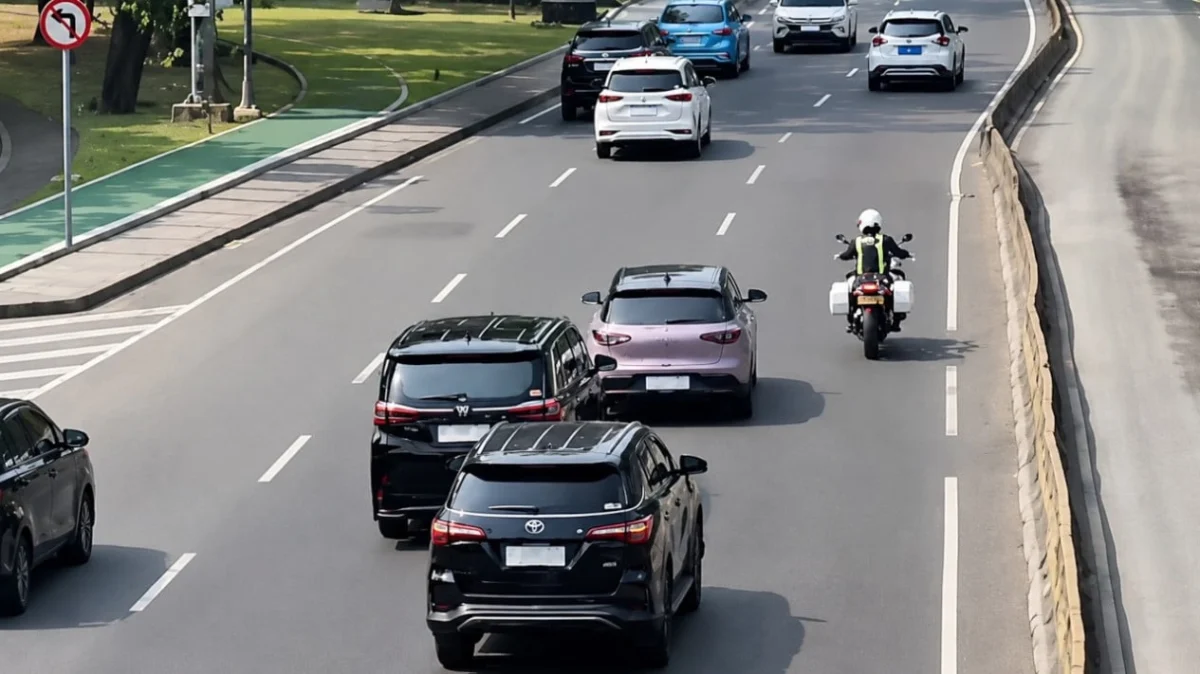
Jakarta, VIVA – A viral video circulating across social media platforms has ignited a fervent public discussion regarding the regulations governing the use of emergency lights, specifically strobes and sirens, on public roads in Indonesia. The footage captures a striking pink Geely EX2 electric vehicle seemingly unperturbed, maintaining its lane as a procession of vehicles, accompanied by an official escort, passes by. This visual anomaly has not only prompted a torrent of varied opinions but has also compelled many citizens to re-examine the established legal framework surrounding the deployment of such auditory and visual signaling devices.
The legal landscape governing the use of emergency lights and sirens in Indonesia is clearly delineated by national legislation. The cornerstone of these regulations is Law Number 22 of 2009 concerning Road Traffic and Transportation, further elaborated and clarified by Government Regulation Number 55 of 2012 on Vehicles. These legal instruments are designed to ensure the orderly flow of traffic and to grant necessary privileges to vehicles engaged in critical public service functions.
Decoding the Colors of Authority: Understanding Emergency Light Regulations
Within the framework of Law Number 22 of 2009, specifically Article 59, the law stipulates that certain vehicles may be equipped with emergency lights and sirens, contingent upon their designated functions and purposes. The legislation categorizes these emergency lights by color, each carrying distinct meanings and operational parameters: blue, red, and yellow.
The blue emergency lights, when paired with a siren, are exclusively reserved for vehicles belonging to the Indonesian National Police (Kepolisian Negara Republik Indonesia). This color signifies law enforcement operations and the authority vested in police personnel to enforce traffic laws and maintain public order. The distinctive siren accompanying these lights serves as an audible alert, signaling an urgent police presence and the need for other road users to yield.
Red emergency lights, also typically accompanied by a siren, are designated for a different set of critical vehicles. This category includes vehicles transporting prisoners, those providing escort services for the Indonesian National Armed Forces (Tentara Nasional Indonesia), fire trucks actively responding to emergencies, ambulances conveying patients, and vehicles involved in providing immediate assistance at traffic accident scenes. The red light serves as a potent visual warning, indicating an urgent and life-saving mission is underway, demanding immediate priority on the road.

The yellow emergency lights, on the other hand, function primarily as a warning signal for a broader range of vehicles. This classification encompasses vehicles such as highway patrol units, traffic infrastructure monitoring vehicles, public facility maintenance and cleaning vehicles, tow trucks, and vehicles transporting special or oversized cargo that requires an escort for safety and security during transit. Unlike the blue and red lights, the use of yellow lights is generally not accompanied by a siren, emphasizing their role as a cautionary indicator rather than an urgent command to yield.
Defining Priority: Which Vehicles Command the Road?
Beyond the specific regulations on emergency lights, Law Number 22 of 2009, in Article 134, further defines the categories of vehicles that are granted paramount priority on the road. This esteemed status is bestowed upon:
- Fire trucks actively engaged in responding to a fire or other emergency.
- Ambulances transporting individuals requiring urgent medical attention.
- Vehicles dispatched to provide assistance at traffic accidents.
- Vehicles carrying the leaders of the Republic of Indonesia’s state institutions.
- Vehicles transporting foreign state guests.
- Motorcades accompanying funeral processions.
- And other specific vehicles that are officially escorted by officers of the Indonesian National Police.
This hierarchical structure ensures that vehicles performing essential public services and those representing the highest echelons of government or international diplomacy are afforded the necessary passage to fulfill their duties without undue delay.
Background Context: The Viral Incident and its Ramifications
The incident involving the pink Geely EX2, as captured in the viral video, occurred on Sunday, July 19, 2026. While the video itself has become a focal point, the exact nature of the motorcade and the specific circumstances under which the Geely EX2 remained in its lane remain subjects of public speculation. However, the visual evidence has undeniably amplified existing concerns about adherence to and understanding of emergency vehicle protocols among the general populace.
The fact that the Geely EX2, a civilian electric vehicle, was present in a motorcade that appeared to be granted official escort status, has raised questions about the composition of such escorts and the potential for misuse or misinterpretation of the privileges associated with them. While the article does not specify if the Geely EX2 was part of the official procession or an independent vehicle attempting to navigate the same route, its presence and action in the video have become a symbol for a broader discussion on traffic etiquette and the sanctity of emergency routes.
Official Response and Guidelines for Escorts
In light of such public discourse and to ensure the effective and responsible implementation of traffic escort procedures, the National Police Traffic Corps (Korps Lalu Lintas or Korlantas Polri) issued a technical guideline for traffic escorts in 2026. This directive, observed by VIVA Otomotif on Sunday, July 19, 2026, places a significant emphasis on several key operational aspects.
One of the paramount points underscored in these guidelines is the principle of proportionality in the use of strobes and sirens. This means that emergency signals should be activated only when genuinely necessary and in a manner that is commensurate with the urgency of the situation. The guidelines explicitly caution against maneuvers that could endanger other road users. This implies a directive for escorting officers to prioritize the safety of all individuals on the road, even while facilitating the movement of the escorted vehicles.

Furthermore, the Korlantas Polri’s 2026 guidelines advocate for a more humanistic approach when requesting priority on the road. This suggests a shift towards communication and courtesy, rather than an outright assertion of authority, when navigating through traffic. The aim is to foster a more cooperative environment between escorting units and other motorists, thereby minimizing potential conflicts and enhancing overall road safety.
Data and Analysis: The Importance of Adherence
The adherence to these regulations is not merely a matter of legal compliance; it has profound implications for public safety and the efficiency of emergency services. Studies on traffic flow and accident response times consistently highlight the critical role of unimpeded passage for emergency vehicles. Delays caused by non-compliance or confusion on the road can have life-threatening consequences.
For instance, a hypothetical scenario illustrating the impact of delays: if an ambulance carrying a critically ill patient is delayed by an average of just five minutes due to traffic congestion or drivers failing to yield, the patient’s chances of survival or recovery can be significantly diminished, particularly in cases of stroke, heart attack, or severe trauma. Similarly, fire trucks arriving late to a blaze can lead to increased property damage and a greater risk to human life.
The prevalence of such incidents, amplified by social media, also underscores a potential gap in public awareness and education regarding these vital traffic laws. While the legal framework exists, its effective implementation relies on the understanding and cooperation of every road user. The viral video of the pink Geely EX2, while focusing on a specific vehicle, serves as a powerful catalyst for a broader educational campaign.
Broader Implications and Future Outlook
The incident and the subsequent public outcry highlight several key areas for consideration:
- Enforcement and Accountability: While the laws are in place, consistent and visible enforcement is crucial. This includes addressing instances where emergency lights and sirens may be misused or used by unauthorized vehicles. The accountability of both those operating emergency vehicles and those potentially impeding them needs to be clear.
- Public Education Campaigns: A sustained and multi-platform public education campaign is essential to ensure that all citizens are aware of the rules governing emergency vehicles, their colors, and the rights and responsibilities of all road users. This could involve collaborations with schools, community groups, and media outlets.
- Review of Escort Protocols: The incident may prompt a review of existing protocols for official motorcades, particularly concerning the types of vehicles that can be included and the procedures for granting official escorts. Clarity on who is authorized to use these signals and under what specific conditions is paramount.
- Technological Solutions: In the future, advanced traffic management systems could potentially integrate with emergency vehicle signaling, providing real-time traffic light adjustments and route optimization to minimize delays.
The presence of the pink Geely EX2 in the viral video, while seemingly a minor detail, has inadvertently brought to the forefront a complex issue of public safety, legal compliance, and civic responsibility on Indonesian roads. The ongoing discussion is a testament to the public’s engagement with these critical matters, and it is hoped that this heightened awareness will lead to improved practices and a safer transportation environment for all. The legal framework provides the necessary structure, but it is the collective commitment of drivers, authorities, and the public that will ultimately ensure its effective and humane application.