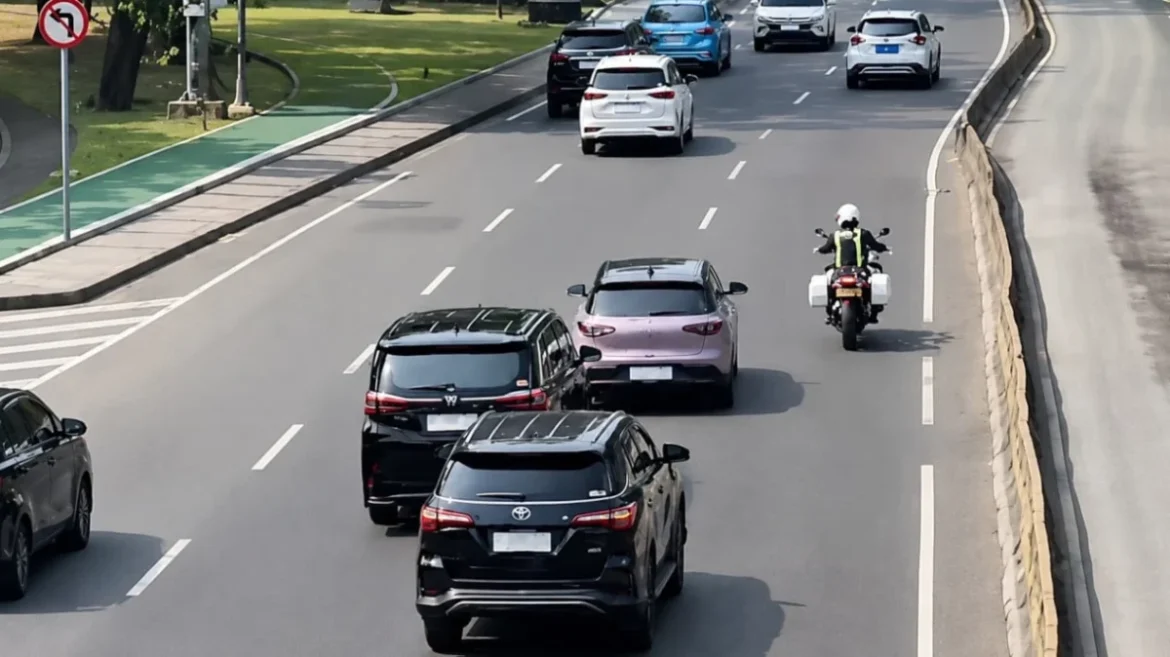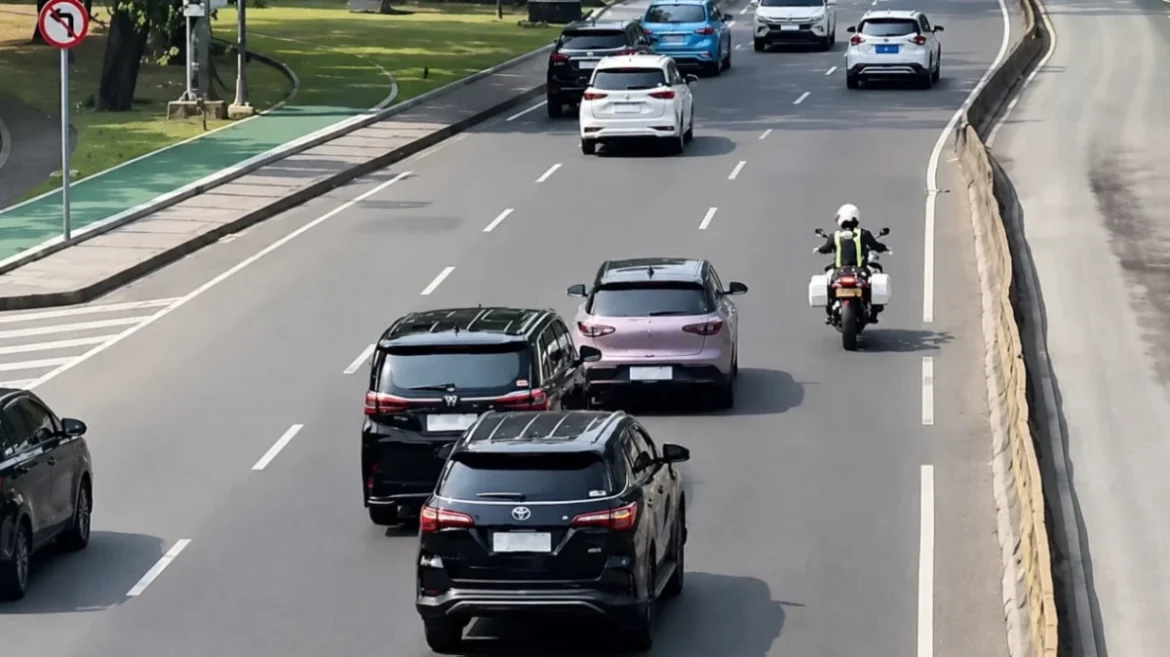
On Sunday, July 19, 2026, at 5:06 PM WIB, a video began circulating widely across Indonesian social media platforms, capturing a striking scene that has ignited a nationwide conversation about the proper and legal use of emergency lights and sirens on public roads. The footage depicts a vibrant pink Geely EX2 electric vehicle, seemingly unfazed, maintaining its course within its designated lane as a significant convoy, complete with official escorts, passes by. This seemingly minor act of defiance has unexpectedly thrust the complex regulations governing the use of strobes and sirens into the public spotlight, prompting widespread questions and discussions.
The incident, though centered around a visually distinctive car, has amplified existing public concerns regarding the perceived misuse or misunderstanding of emergency vehicle privileges in Indonesia. Social media reactions ranged from amusement at the car’s boldness to serious inquiries about the boundaries of vehicular priority on the road. This viral moment serves as a catalyst, pushing for greater public awareness and adherence to established traffic laws.
Legal Framework Governing Emergency Lights and Sirens in Indonesia
The use of flashing lights and sirens by vehicles in Indonesia is not a matter of arbitrary discretion but is strictly regulated by national legislation. The primary legal framework is established in Law Number 22 of 2009 concerning Road Traffic and Transportation, with further elaboration provided by Government Regulation Number 55 of 2012 concerning Vehicles.
Article 59 of Law Number 22 of 2009 delineates the specific conditions under which certain vehicles may be equipped with and utilize emergency lights and sirens, emphasizing that their deployment is tied directly to their designated functions and purposes. The law categorizes these visual and auditory signals by color, each carrying distinct implications and entitlements.
-
Blue Lights and Sirens: These are exclusively designated for vehicles belonging to the Indonesian National Police (Polri). Their use signifies the presence of law enforcement operations, traffic control, or pursuit activities. The siren’s potent sound is intended to clear the path and alert other road users to the immediate presence and urgency of the police vehicle.
-
Red Lights and Sirens: This combination is reserved for vehicles actively engaged in critical public service and emergency response. This category includes:
- Prisoner Transport Vehicles: Essential for the secure movement of detainees.
- Indonesian National Armed Forces (TNI) Escort Vehicles: Used for official military movements requiring priority passage.
- Firefighting Vehicles: Critical for responding to fires and other emergencies, where time is of the essence.
- Ambulances: Transporting patients requiring urgent medical attention, where delays can have life-threatening consequences.
- Vehicles providing assistance at traffic accidents: Enabling swift response to aid victims and manage accident scenes.
-
Yellow Lights: These are intended as warning signals for a broader range of vehicles that may require temporary or situational priority, or whose presence on the road necessitates caution from other users. This category includes:

- Toll Road Patrol Vehicles: Ensuring the safety and smooth flow of traffic on highways.
- Traffic and Road Infrastructure Surveillance Vehicles: Monitoring and maintaining the condition of roads and related facilities.
- Public Facility Maintenance and Cleaning Vehicles: Performing essential services that may temporarily impact traffic.
- Towing Vehicles: Responding to disabled vehicles, often requiring a presence on active traffic lanes.
- Vehicles transporting special goods requiring security: This covers oversized or hazardous cargo that necessitates safe passage and potentially traffic management.
Crucially, while blue and red lights are typically accompanied by sirens, the use of yellow lights is generally not associated with sirens. This distinction underscores the varying levels of urgency and the intended impact on other road users. Yellow lights serve as a caution, while red and blue lights, coupled with sirens, demand immediate yielding.
Defining Priority on the Road: Beyond Lights and Sirens
Law Number 22 of 2009 further elaborates on the concept of priority vehicles in Article 134. This article enumerates the types of vehicles that are granted the right of way, regardless of whether they are utilizing emergency signals. This list complements the regulations on lights and sirens and provides a comprehensive understanding of road user hierarchy:
- Firefighting vehicles when actively performing their duties.
- Ambulances transporting individuals requiring urgent medical care.
- Vehicles dedicated to providing assistance at traffic accidents.
- Vehicles belonging to leaders of Indonesian state institutions.
- Vehicles carrying state guests.
- Convoys escorting deceased individuals (funeral processions).
- Certain vehicles that have received official escort from Indonesian National Police officers.
This article highlights that the right of way is not solely determined by the presence of flashing lights but also by the inherent nature of the vehicle’s function and the specific circumstances of its operation.
The 2026 Korlantas Polri Convoy Guidelines: A Call for Proportionality and Humanism
In response to evolving traffic dynamics and to ensure consistent application of the law, the Korps Lalu Lintas (Korlantas) of the Indonesian National Police issued technical guidelines for traffic escorts in 2026. These guidelines aim to professionalize and standardize the practice of convoy management.
VIVA Otomotif, in its review on Sunday, July 19, 2026, noted that a significant emphasis within these 2026 guidelines is placed on the proportional use of strobes and sirens. This directive aims to prevent their overuse or misuse, which can lead to confusion, annoyance, and potentially unsafe situations for other road users.
Furthermore, the guidelines strongly advocate for avoiding maneuvers that could endanger other road users. This implies that even when a convoy has the right of way, its movement must be conducted with a heightened sense of responsibility and caution. The overarching principle is to ensure that the pursuit of priority passage does not come at the expense of general road safety.
Perhaps most notably, the Korlantas Polri’s 2026 guidelines emphasize the importance of a more humanistic approach when requesting priority on the road. This suggests a shift towards communication and de-escalation, rather than solely relying on the imposing nature of emergency signals. It encourages escorts to engage with other drivers in a manner that fosters understanding and cooperation, thereby minimizing potential friction and promoting a more positive road user experience.
Background Context: The Viral Pink Geely EX2 Incident
The specific incident that triggered this renewed public discourse involved a pink Geely EX2, an electric vehicle known for its compact size and modern design. The video’s virality stems from the visual contrast: a brightly colored, presumably civilian vehicle, holding its ground as a significant, officially sanctioned convoy proceeded. The convoy itself, while not explicitly detailed in the initial reports, likely consisted of multiple vehicles requiring priority passage, possibly for official government business, diplomatic transport, or a high-profile event.

The precise actions of the pink Geely EX2 driver remain a subject of interpretation. However, the visual narrative presented in the widely shared video suggests a deliberate decision not to yield immediately, prompting questions about whether the driver was unaware of the approaching convoy, intentionally disregarding it, or perhaps even testing the boundaries of traffic etiquette.
Broader Implications and Public Analysis
The public’s engagement with this video extends beyond mere curiosity. It reflects a deeper societal concern about fairness, adherence to rules, and the perceived abuse of power or privilege on public roads. The consistent use of emergency lights and sirens by unauthorized vehicles, or their deployment in non-emergency situations, has been a recurring issue in Indonesia, leading to public frustration.
This incident, by highlighting the stark contrast between a civilian vehicle and an official convoy, indirectly prompts a re-evaluation of the protocols and enforcement mechanisms surrounding emergency vehicle usage. The public’s questions are valid:
- Are the current laws and regulations sufficiently clear and disseminated?
- Is enforcement of these regulations consistent and effective?
- What constitutes a legitimate emergency requiring priority passage?
- How can the public be better educated about their rights and responsibilities when encountering emergency vehicles or official convoys?
The fact that a pink Geely EX2, a vehicle not typically associated with official duties, became the focal point underscores the democratic nature of social media and its power to amplify everyday occurrences into national dialogues. It suggests that the public is paying closer attention to the conduct of all road users, from the everyday citizen to those operating under official authority.
The Role of Technology and Public Awareness
In the digital age, videos like the one featuring the pink Geely EX2 can travel globally within minutes. This rapid dissemination of information provides an unprecedented opportunity for public education and accountability. It allows citizens to witness and discuss instances that might otherwise go unnoticed.
The continued emphasis by Korlantas Polri on proportionality and humanism in convoy operations, as outlined in their 2026 guidelines, signals a recognition of the need for a more nuanced approach. This includes:
- Improved Training for Escort Personnel: Ensuring that officers and personnel involved in convoys are not only skilled in traffic management but also in public interaction and communication.
- Clearer Communication Protocols: Developing standardized methods for convoys to signal their approach and intent to other road users, potentially beyond just lights and sirens.
- Public Awareness Campaigns: Actively informing the public about the laws and etiquette surrounding emergency vehicle usage and priority passage.
The pink Geely EX2 incident, therefore, serves as more than just a viral video; it is a potent reminder of the ongoing need for clear regulations, consistent enforcement, and a shared commitment to safe and respectful road usage by all Indonesian citizens. The conversation it has sparked is crucial for fostering a more orderly and understanding traffic environment for everyone.