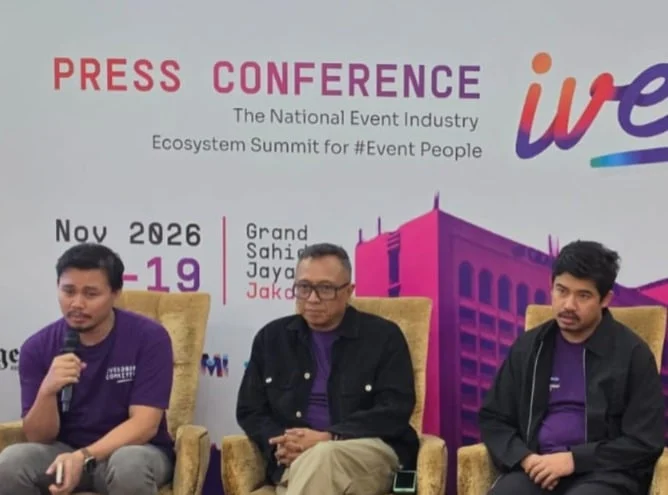
JAKARTA — The Indonesian event management industry is undergoing a paradigm shift toward structured economic accountability, aiming to maximize long-term commercial opportunities and secure sustainable financial contributions to the national economy. This strategic transition forms the core agenda of the upcoming Indonesia Event Management Summit (IVES) 2026, which has emerged as Southeast Asia’s premier knowledge-sharing and networking platform for MICE (Meetings, Incentives, Conferences, and Exhibitions) professionals, festival organizers, production houses, and creative economy stakeholders.
At the heart of the IVES 2026 discussions is the integration of the Experience/Event Economic Calculator (EEC), an analytical framework designed to evaluate the multifaceted value generated by live experiences. As the domestic creative economy continues to rebound and expand following years of post-pandemic structural transformation, industry leaders are increasingly recognizing that traditional performance metrics—such as ticket sales volumes and gate receipts—are no longer sufficient to capture the true footprint of modern events.
The Evolution of IVES: Background and Context
Launched as a response to the fragmented nature of the archipelago’s event sector, the Indonesia Event Management Summit has grown into an indispensable annual milestone for professionals navigating the complexities of large-scale production. Over the successive editions, IVES has evolved from a basic networking forum into a rigorous policy and operational think tank. The initiative brings together government bodies, tourism boards, corporate sponsors, technical suppliers, and independent promoters to address systemic challenges ranging from regulatory bottlenecks and licensing standardization to safety compliance and talent development.
The timing of IVES 2026 aligns with a critical juncture for Indonesia’s creative economy, which contributes significantly to the national Gross Domestic Product (GDP). With government agencies increasingly emphasizing the role of tourism and creative events as primary drivers of regional growth, the demand for empirical data proving return on investment (ROI) and return on objective (ROO) has never been higher. Industry players are under mounting pressure to demonstrate that public funds, corporate sponsorships, and municipal resources allocated to festivals, concerts, sporting spectacles, and corporate exhibitions yield measurable socioeconomic dividends.
Implementing the Experience/Event Economic Calculator
The introduction of the Experience/Event Economic Calculator (EEC) at IVES 2026 addresses a long-standing data deficit in event evaluation. Speaking on the strategic significance of the tool, Konect CEO Aryo Febrian Moedanton emphasized that the framework seeks to bridge the gap between subjective audience satisfaction and hard economic metrics.
"Through the EEC, we want to help industry players measure both the economic impact and the experiential value generated by an event," Moedanton stated. "This measurement serves as the foundation for improving the quality of organization and demonstrating the industry’s real contribution."
Unlike conventional accounting metrics that focus narrowly on direct revenues, the EEC provides a comprehensive methodology for assessing the holistic value chain of a gathering. The calculation model accounts for:
- Direct Business Opportunities: Immediate commercial transactions, vendor contracts, and business-to-business collaborations forged during the event lifecycle.
- Multiplier Effects: Economic velocity within host communities, capturing spending across secondary and tertiary sectors.
- Support Ecosystems: Comprehensive analysis of interdependent industries, including hospitality, accommodation, commercial transportation, food and beverage, security, logistics, and technical production services.
- Social and Cultural Capital: Qualitative and quantitative impacts on local community engagement, regional branding, and cultural preservation.
By contextualizing these variables, the EEC enables organizers to present credible impact reports to municipal authorities, investors, and brand partners, transforming events from temporary entertainment expenditures into strategic investments in regional infrastructure and community development.
From Invisible to Indispensable: The IVES 2026 Theme
Under the overarching theme "From Invisible to Indispensable" and reinforced by the tactical tagline "Make It Count," IVES 2026 challenges event creators to move beyond short-term commercial viability and focus on systemic institutional integration. The theme reflects the industry’s collective ambition to transition from a behind-the-scenes service sector into an acknowledged pillar of national economic strategy.
A major focal point within this thematic framework is the cultivation and monetization of Intellectual Property (IP). In the entertainment and music sectors, reliance on one-off ticket sales exposes promoters to high volatility. Musica Head of Marketing & Promotion Chandra Samhari highlighted the necessity of rigorous IP development during discussions leading up to the summit.
"The development of works or intellectual property in the music industry requires a strong identity, consistent strategy, and the ability to build relationships with audiences so that they are not merely popular for a moment," Samhari explained.
This perspective underscores the broader evolution of Indonesian festivals and concert series. Rather than importing foreign concepts or relying on transient viral trends, domestic organizers are increasingly investing in proprietary formats—such as homegrown music festivals, indigenous cultural showcases, and specialized trade exhibitions—that retain value across multiple fiscal cycles and digital platforms.
Production Excellence and Technical Execution
While strategic frameworks and intellectual property provide the conceptual foundation for successful events, operational execution remains the ultimate arbiter of an organization’s credibility. Reza Pamungkas, Chairman of the Presidium of the Indonesian Association of Promoters (API), addressed the operational realities of the sector, warning against the pitfalls of superficial success metrics.
According to Pamungkas, achieving a sold-out status is an incomplete measure of operational triumph. The true test of a professional promoter lies in meticulous technical preparation, robust production standards, and seamless team coordination.
"The success of a performance is not sufficiently measured by tickets sold out," Pamungkas asserted. "Technical readiness, production, and team coordination are important factors to ensure that the quality of the event and the experience promised to the audience can be fulfilled."
This emphasis on technical rigor comes at a time when regulatory scrutiny regarding crowd safety, structural integrity of temporary stages, emergency egress, and sanitary facilities has intensified globally and domestically. By prioritizing professional certifications, standardized safety protocols, and cross-departmental coordination, IVES 2026 aims to elevate baseline operational capabilities across Indonesian production houses, minimizing logistical risks and safeguarding audience welfare.
Economic Implications and Broader Industry Impact
The deliberations and frameworks introduced at IVES 2026 carry profound implications for the trajectory of Indonesia’s event management landscape over the next decade. As the nation targets accelerated growth through tourism and creative industries, the adoption of standardized measurement tools like the EEC will likely influence public policy, municipal permitting processes, and corporate sponsorship allocations.
When event organizers can empirically demonstrate how a three-day music festival or an international trade exhibition stimulates local micro-enterprises, boosts hotel occupancy rates, and generates municipal tax revenues, government agencies can justify more favorable regulatory environments, streamlined licensing procedures, and infrastructure investments tailored to MICE destinations. Furthermore, data transparency reassures corporate brands and institutional investors, unlocking deeper capital pools and fostering international partnerships.
Ultimately, IVES 2026 serves as a catalyst for professional maturation. By marrying empirical economic evaluation with creative IP development and rigorous operational standards, the Indonesian event management industry is positioning itself not only to weather economic uncertainties but to assert its indispensable role in the nation’s ongoing economic development.