YOGYAKARTA — In a strategic shift that redefines the traditional boundaries of religious architecture, the leadership of Muhammadiyah—one of Indonesia’s largest Islamic organizations—is aggressively promoting a new paradigm: mosques must transcend their conventional roles as mere spaces for ritual prayer to become dynamic hubs of community economic development, tourism, and social empowerment.
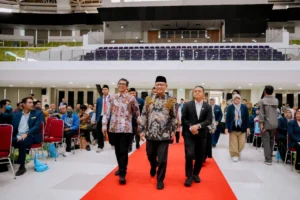
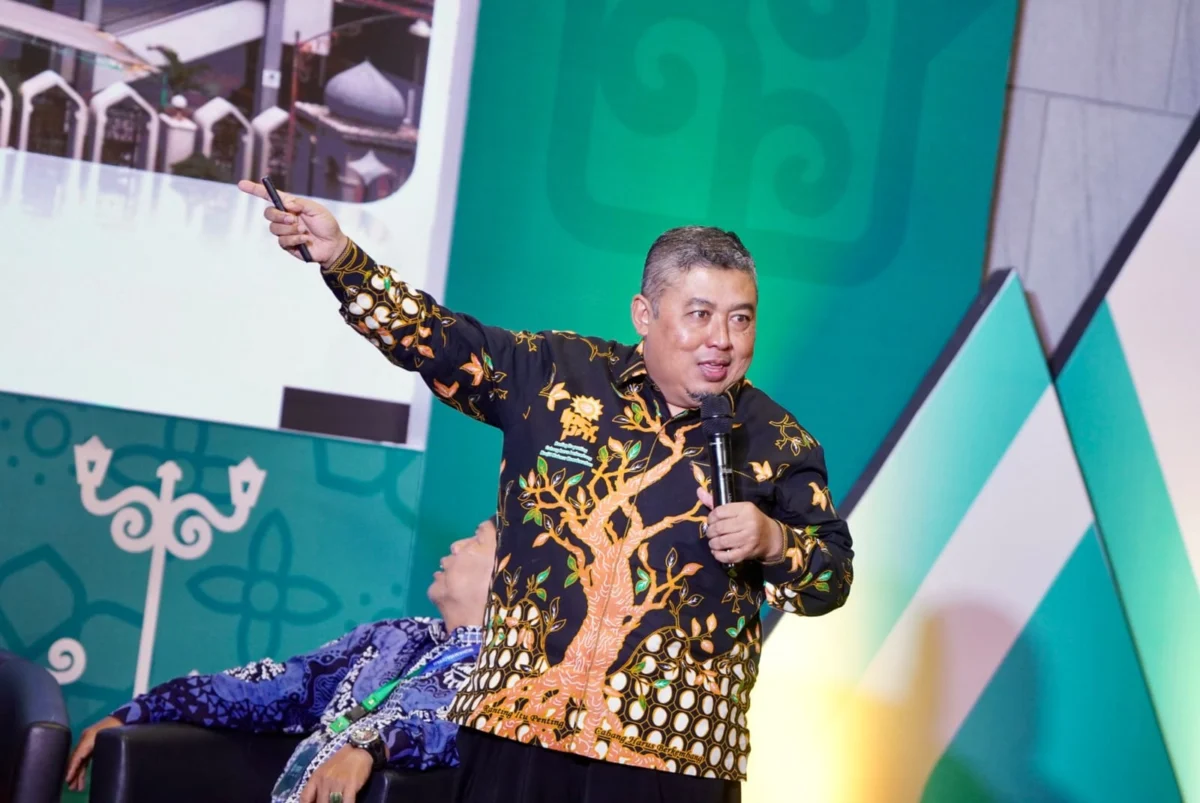
This forward-thinking vision took center stage during a high-profile panel discussion titled "Traveler-Friendly Mosques," held as part of the National Silaturahmi (Silatnas) of Muhammadiyah’s Tourism and Creative Economy (Parekraf) practitioners. The landmark event took place at the Dormitory of Universitas Muhammadiyah Yogyakarta (UMY) and drew religious scholars, economic policymakers, regional tourism officials, and grassroots mosque administrators from across the archipelago.
The dialogue underscored a growing recognition within civil society organizations that religious institutions possess untapped potential to stimulate local economies. By offering comprehensive amenities tailored to travelers—ranging from clean accommodations and culinary ventures to digital connectivity and business enterprises—mosques can serve as catalysts for sustainable community growth.
A Data-Driven Approach to Mosque Development
Addressing the panel, Muhammad Jamaluddin Ahmad, Chairman of the Central Board (PP) of Muhammadiyah’s Institute for Branch, Ranting, and Mosque Development (LPCR-PM), emphasized that modern religious governance must be anchored in empirical data rather than anecdotal assumptions. For decades, the vast network of Muhammadiyah-affiliated mosques operated without a centralized, comprehensive database, making strategic intervention difficult.
To address this structural deficiency, the LPCR-PM developed the Muhammadiyah Mosque Information System (SIMASMU). To date, the system has successfully mapped approximately 4,600 mosques nationwide. However, the initial data revealed a sobering reality: despite their cultural prominence, the average congregation size during regular daily prayers hovers around just 30 people.
"If we work without data, we usually encounter problems," Jamaluddin stated, stressing that these baseline statistics are vital for formulating targeted revitalization programs.
Rather than viewing the modest daily attendance as a failure, Muhammadiyah is leveraging these insights to scale up successful grassroots models. A prime example highlighted during the session is Baitul Mukhlisin Mosque in Ponorogo, East Java. Operating at the neighborhood (ranting) level, this award-winning institution has redefined community financing. The mosque actively distributes financial support to 13 surrounding neighborhood units (RT), allocating funds specifically to incentivize communal prayer attendance while operating a thriving suite of commercial enterprises. These include a professional laundry service, a minimarket franchise under the Suryamart banner that generates between IDR 20 million and IDR 25 million in net monthly profit, and a catering-scale restaurant capable of serving up to 1,000 patrons simultaneously.
Expanding Infrastructure for Travelers and Tourists
Building upon these localized successes, the LPCR-PM is aggressively rolling out the "Traveler-Friendly Mosque" initiative. The blueprint involves outfitting select mosques with large-scale lodging facilities, such as dormitories equipped with up to 100 beds to accommodate traveling delegations, tour groups, and pilgrims.
Demonstrating the practical implementation of this vision, the Regional Board of Muhammadiyah (PDM) in Gunungkidul is currently constructing a specialized traveler-friendly mosque strategically situated along major national highways and regional tourist corridors. Project timelines indicate that construction is slated for completion by January, positioning the facility to capture high volumes of domestic and international travelers visiting Yogyakarta’s renowned southern coastline.
Arif Sulfiantono, a representative of the Yogyakarta Special Region (DIY) Tourism Office and a seasoned practitioner in community-based tourism development—notably through his work with Yogyakarta’s famous Masjid Jogokariyan—outlined the core criteria that define a modern traveler-friendly mosque. According to Arif, contemporary travelers require more than a quiet place to prostrate; they expect comprehensive hospitality infrastructure. Essential standards include high-speed Wi-Fi, accessible electrical power outlets for digital nomads and mobile workers, complimentary bottled drinking water or beverage stations, certified halal culinary options, resident prayer leaders (imam) skilled in melodious Quranic recitation (hafiz), and fully accessible facilities for individuals with disabilities.
Arif anchored his arguments in recent tourism sector projections, which indicate that the vast majority of tourist expenditures are funneled into two primary categories: accommodation, followed closely by food, beverages, and souvenirs.
"This serves as a massive commercial opportunity to develop mosques as viable tourism businesses," Arif explained.
He pointed to the operational model of Masjid Jogokariyan, which features an on-site mosque hotel boasting 11 rooms that routinely maintain an occupancy rate approaching 100 percent. Statistical tracking from January through September revealed that the facility hosted 228 distinct institutional delegations. Educational institutions accounted for the largest share at 80 groups, followed closely by mosque management boards and religious councils (DKM) at 56 groups, with weekend visitor traffic surging to peak capacity.
Institutional Policy and the Entrepreneurial Legacy of KH Ahmad Dahlan
From a macroeconomic and policy perspective, Syauqi Soeratno, Vice Chairman of Muhammadiyah’s Economic and Entrepreneurship Council (MEK), emphasized that national strategic frameworks—specifically the National Tourism Master Plan and the National Creative Economy Master Plan—provide ample legislative space for faith-based economic integration. He urged the forum to synthesize its findings into formal policy recommendations and a comprehensive position paper outlining Muhammadiyah’s official stance on religious tourism and the creative economy, targeted at both internal stakeholders and government bodies.
Syauqi reminded participants that Muhammadiyah possesses a deep-rooted historical and constitutional mandate for commerce. He drew a direct parallel between modern corporate entities structured as limited liability companies under the Muhammadiyah business umbrella and the foundational ethos of the organization’s founder, KH Ahmad Dahlan. Historical accounts recall Dahlan as a pragmatic educator who actively traded batik textiles while simultaneously advancing his reformist religious mission—proving that enterprise and piety are mutually reinforcing.
"Build that spirit of entrepreneurship from within yourselves," Syauqi urged the audience.
Regarding the operational strategy of traveler-friendly mosques, Syauqi advised administrators to clearly define their institutional identity. Management structures must explicitly determine whether a given mosque functions primarily as a transit waypoint for brief stopovers or as a standalone destination, as each model demands distinct logistical approaches, marketing strategies, and spatial designs. Furthermore, he proposed the establishment of 12 strategic creative economy and tourism growth nodes centered around Muhammadiyah assets across Indonesia, stressing that collective, coordinated action (berjamaah) remains the ultimate key to systemic success.
Humanizing Hospitality and Embracing Digital Outreach
Echoing the sentiment of economic stewardship, drh. Zainul Muttaqin, Treasurer of the Muhammadiyah Regional Board (PW) of East Java, reminded attendees that the Prophet Muhammad himself was an accomplished merchant. He stressed that commercial ventures managed under the auspices of an Islamic organization must operate with professional rigor, generating robust financial surpluses that directly benefit the broader community and advance the mission of the organization.
Zainul emphasized that the cornerstone of a successful traveler-friendly mosque lies in the quality of its hospitality, which fundamentally boils down to "humanizing human beings"—treating every visitor, regardless of socioeconomic background, with profound dignity and respect.
In the digital era, visibility is currency. Zainul encouraged mosque administrators to leverage social media platforms to broadcast their operational successes and community impact. Citing a compelling digital case study, he noted that a national champion traveler-friendly mosque managed to expand its TikTok follower base from 19,000 to over 40,000 simply by documenting its daily community services and hospitality initiatives online.
Conclusion and the Road Ahead
As the panel discussions drew to a close, Muhammad Jamaluddin Ahmad reiterated the overarching philosophy that continues to guide Muhammadiyah’s extensive religious and social infrastructure projects. Summarizing the core mission of the LPCR-PM, he encapsulated the movement in a resonant triad: "Prosperous mosques that bring prosperity to others; from the mosque we rise; whatever the problem may be, the mosque is the solution."
With systemic data collection underway, institutional backing from economic councils, and concrete infrastructural blueprints expanding across Java and beyond, Muhammadiyah is successfully pivoting its thousands of houses of worship into vibrant centers of commerce, cultural exchange, and human dignity. This evolution signals a profound maturation in how religious institutions can actively contribute to national economic resilience while remaining anchored in their spiritual foundations.