
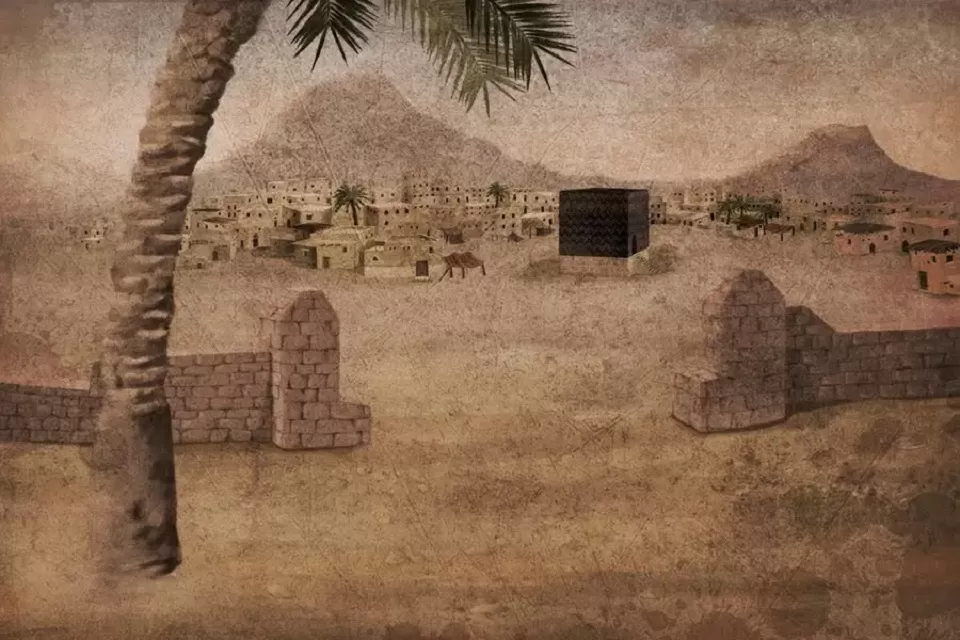
The concept of a mosque, derived from the Arabic word "sajada," meaning to prostrate or submit, holds a profound place in Islamic theology. It signifies more than just a physical structure; it represents a sanctuary dedicated to the worship of the One Creator. Throughout Islamic history, the question of which site served as the first place of worship on Earth has been a subject of significant scholarly inquiry, rooted in both scriptural tradition and historical analysis. The consensus among Islamic scholars, supported by authentic Hadith, identifies Masjid Al-Haram in Makkah as the inaugural site, followed by Masjid Al-Aqsa in Jerusalem, with a temporal gap of forty years between their establishments.
The Scriptural Foundation and the Hadith of Abu Dzar
The historical narrative regarding these two sacred sites is anchored in a well-documented conversation between the Prophet Muhammad (peace be upon him) and his companion, Abu Dzar al-Ghifari. As recorded in the Sahih collections of Imam al-Bukhari (No. 3186) and Imam Muslim (No. 520), Abu Dzar inquired about the first mosque built on the face of the Earth. The Prophet responded unequivocally: "Masjid Al-Haram." When prompted further, the Prophet added, "Masjid Al-Aqsa." Upon further questioning regarding the interval between the construction of these two sites, the Prophet specified, "Forty years."
This dialogue provides the cornerstone for understanding the spiritual geography of the Islamic world. However, this text has historically presented a challenge to scholars, particularly when reconciled with the timelines of the Prophets Ibrahim (Abraham) and Sulaiman (Solomon).
Scholarly Perspectives and the Concept of Foundational Construction
The perceived chronological discrepancy arises from the fact that the Holy Qur’an and historical records attribute the construction—or more accurately, the reconstruction—of the Ka’bah to Prophet Ibrahim and his son Isma’il, while the construction of the First Temple (Baitul Maqdis) in Jerusalem is attributed to Prophet Sulaiman. Given that the historical gap between Ibrahim and Sulaiman spans over a millennium, the literal interpretation of the Hadith—implying the completion of the physical buildings in their recognizable forms within a forty-year span—has been a subject of rigorous debate.
Prominent scholars, such as Imam Ibn al-Jauzi and Al-Hafiz Ibn Hajar al-Asqalani in his monumental commentary Fath al-Bari, addressed this complexity. The prevailing scholarly consensus is that the Hadith refers to the establishment of the foundations or the designation of the sacred sites as places of worship, rather than the completion of the physical structures that exist today. It is widely accepted that the sites were consecrated and utilized for divine worship by earlier prophets, or even by the first human, Adam, long before the structural renovations performed by Ibrahim and Sulaiman.
The Role of Masjid Al-Haram in Pre-Islamic History
Masjid Al-Haram, encompassing the Ka’bah, holds a status that predates the emergence of Islam in the seventh century. Ustaz Farid Nu’man Hasan, a noted scholar of Arabic literature, emphasizes that the site was well-recognized even during the Jahiliyah (pre-Islamic) period. The Ka’bah is regarded as the first house established for humanity, intended as a focal point for monotheistic worship.
The historical continuity of this site suggests that its sanctity was understood by the inhabitants of the Arabian Peninsula long before the formal revelation of the Qur’an. The Ka’bah was the center of religious life in Makkah, and while it was temporarily repurposed for polytheistic practices before the Prophet Muhammad’s mission, its inherent identity as a house of God remained the core of its historical narrative.
Masjid Al-Aqsa: A Legacy of Prophetic Connection
The identification of Masjid Al-Aqsa as the second house of worship underscores its enduring significance in Abrahamic traditions. Located in Jerusalem, the site known as the Al-Aqsa compound (Al-Haram Al-Sharif) has been a focal point of religious devotion for centuries. The forty-year interval mentioned in the Hadith highlights a divine synchronization between the two most significant religious centers in the Middle East.
While historical archaeology often focuses on the physical structures—such as the Herodian expansions or the Umayyad construction of the Dome of the Rock—the theological perspective views these sites as permanent, sanctified spaces. The "foundational" theory allows for a nuanced understanding where the sites were designated as holy ground, preserved by divine providence, and periodically restored or rebuilt by various prophets throughout the ages.
Comparative Chronology and Religious Significance
To understand the scale of these sites, one must look at the religious, architectural, and social implications. The mosque as a social institution serves as a barometer for the health of a community. In Islamic jurisprudence, the mosque is not merely a building but a legal entity that governs the spiritual and communal life of the believers.
The distinction between the "Masjid" as a physical building and the "Masjid" as a space of prostration is vital. By defining the first mosques as foundational markers, the Islamic tradition emphasizes that the act of worship—the sujud—is the defining feature of these sites, rather than the masonry. This distinction reconciles the archaeological reality of ancient construction with the theological assertion of primordial sacredness.
Analytical Implications for Islamic Theology
The scholarly reconciliation of the forty-year gap serves as a testament to the sophistication of Islamic hermeneutics. By analyzing the Hadith through the lens of "foundational establishment," scholars have prevented a potential conflict between scriptural tradition and historical chronology. This approach demonstrates a rigorous commitment to both textual integrity and historical accuracy.
Furthermore, the prominence of these two mosques highlights the connectivity between Makkah and Jerusalem. This relationship is further solidified by the Isra and Mi’raj (the Night Journey), where the Prophet Muhammad was transported from the Sacred Mosque (Al-Haram) to the Furthest Mosque (Al-Aqsa). This event reinforces the interconnectedness of these sites as pillars of divine revelation and the continuity of the monotheistic message across different prophetic missions.
Broader Impact on Modern Religious Discourse
In the contemporary era, the status of Masjid Al-Haram and Masjid Al-Aqsa remains a subject of intense global interest. For the global Muslim population, which exceeds 1.9 billion people, these sites are the most cherished destinations for pilgrimage and reflection. The historical narratives surrounding their establishment are not merely academic; they inform the spiritual identity of believers and underscore the weight of the religious heritage associated with these locations.
The recognition of these sites as the earliest houses of worship serves to unify the global Muslim community, providing a shared history that transcends geographical and cultural boundaries. Whether through the Hajj pilgrimage to Makkah or the reverence held for the Al-Aqsa compound, the legacy of these first mosques continues to shape the geopolitical and religious landscape of the 21st century.
Conclusion
The investigation into the first mosque on Earth is an exploration of the origins of monotheism and the sacred geography of the Abrahamic tradition. While the Hadith of Abu Dzar provides a clear chronological marker—a forty-year span between the establishment of Masjid Al-Haram and Masjid Al-Aqsa—the depth of this tradition is best understood through the scholarly interpretation of foundational establishment.
By moving beyond a literalist reading of physical construction, historians and theologians alike have maintained the integrity of the sacred narratives while respecting the complex, multi-layered history of these sites. As humanity continues to look toward these locations for spiritual guidance, the historical understanding of their origins remains a vital component of religious education and cultural appreciation. The story of these two mosques is not only a story of stones and mortar, but a narrative of the enduring human commitment to prostration, humility, and the search for the divine in the earliest chapters of human existence.
