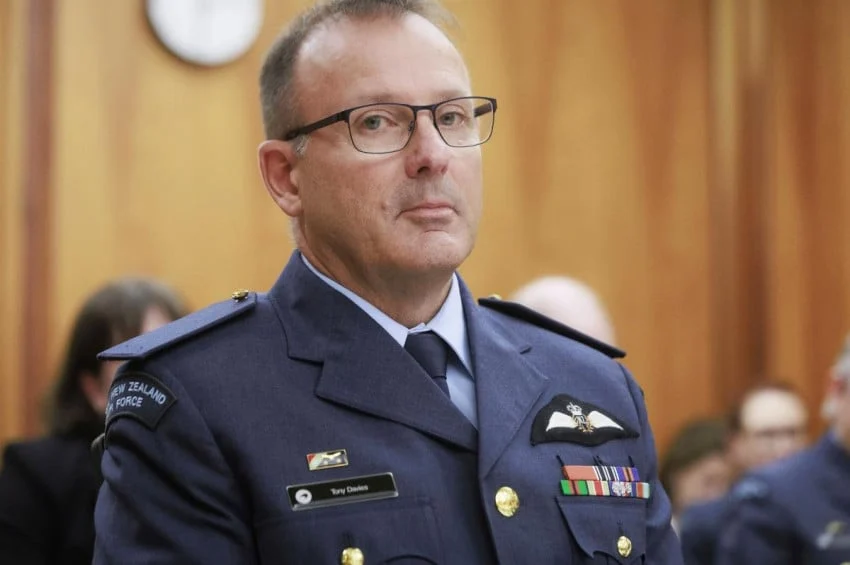
WELLINGTON — In a stunning development that has sent ripples through the upper echelons of the New Zealand military, Chief of Defence Force Air Marshal Tony Davies has formally stepped down from his high-ranking position. The resignation, announced on Friday, came in the wake of mounting pressure after Davies admitted to engaging in an inappropriate personal relationship during his prior tenure as a unit leader.
The abrupt departure of New Zealand’s highest-ranking military official has sparked a significant conversation regarding institutional accountability, ethical standards, and the strict codes of conduct expected of leaders within the nation’s armed forces. While the exact nature of the relationship and the precise timeline of the events remain shielded by privacy considerations, the admission of a severe lapse in judgment has brought a swift end to a distinguished four-decade military career.
As the New Zealand Defence Force (NZDF) navigates this unexpected leadership vacuum, the incident has prompted immediate action from both military oversight bodies and government officials, underscoring the zero-tolerance approach toward ethical breaches within defense leadership.
A Career Cut Short by Historical Misconduct
Air Marshal Tony Davies’ resignation was officially confirmed on Friday following private disclosures regarding his past conduct. In a candid public statement addressing his departure, Davies expressed profound regret over his failure to address the matter transparently when he first had the opportunity.
"I regret not disclosing this when I had the opportunity to do so," Davies stated in his resignation address. He added that the decision to step down was rooted entirely in personal reasons and stemmed directly from a historical error in judgment for which he takes complete and sole accountability.
"That error in judgment was contrary to the values of the Defence Force," Davies acknowledged, signaling an understanding that the integrity of the institution must supersede individual tenure.
Following the announcement, the New Zealand military acted swiftly to ensure operational continuity. Leadership of the NZDF has been temporarily transferred to the Vice Chief of Defence Force, Rear Admiral Mat Williams, who will steer the organization while government and military officials determine a permanent succession plan.
Chronology of a Distinguished Yet Tragic Exit
The trajectory of Tony Davies’ career makes his sudden departure all the more striking for observers of New Zealand’s defense landscape. Born in Whangārei in 1966, Davies dedicated his entire professional life to aviation and military service.
His journey began four decades ago when he enlisted in the Royal New Zealand Air Force (RNZAF) in 1984 at the age of 18. Over the ensuing forty years, Davies steadily climbed through the military ranks, cementing his reputation as an accomplished aviator and a capable administrative leader.
Throughout his extensive flying career, Davies accumulated an impressive 7,000 hours in the cockpit. His piloting credentials spanned a wide variety of aircraft types, serving both as a line pilot and an instructor. His flight log includes extensive experience piloting the Airtrainer, Andover, and C-130 Hercules transport aircraft, as well as commanding long-range strategic transport fleets aboard Boeing 727 and 757 aircraft.
Having proven his capabilities in both operational and command roles, Davies reached the pinnacle of his profession in 2024 when he was appointed Chief of Defence Force, the highest military office in the country. However, his tenure at the helm of the NZDF has been cut short prematurely due to actions that predated his appointment to the top post, catching military analysts and defense personnel entirely off guard.
Official Responses and Independent Investigations
The revelation of misconduct at the highest level of the military has prompted a rigorous and formal institutional response. In alignment with protocols governing senior public service and military accountability, the matter has been referred directly to an independent inspector-general tasked with investigating ethics, culture, and behavioral standards within the New Zealand defense sector.
The military apparatus has maintained a restrained public posture regarding the specific details of the investigation, issuing a brief statement confirming the referral and noting that no further commentary will be provided while the independent review runs its course.
Minister of Defence Paul Goldsmith, an elected member of the government, confirmed that he formally received and accepted Davies’ resignation. In his official remarks, Goldsmith did not shy away from the gravity of the situation, characterizing it strictly as a matter of foundational integrity.
"I recognize his 42 years of service and his contributions to the New Zealand Defence Force, but it must be noted that the circumstances surrounding his resignation will be deeply disappointing for all personnel across the Defence Force," Goldsmith remarked.
The Defense Minister added that he fully agreed with Davies’ assessment that his position had become untenable. Maintaining public trust and internal morale within the military requires absolute adherence to ethical standards, Goldsmith emphasized, making the departure a necessary measure to preserve the credibility of the institution.
Implications for the New Zealand Defence Force
The resignation of an incumbent Chief of Defence Force carries significant institutional ramifications. Beyond the immediate logistical challenge of transitioning leadership to Rear Admiral Mat Williams, the event casts a spotlight on the cultural and behavioral expectations placed upon senior military commanders.
In recent years, defense forces across the globe—including those in the Five Eyes intelligence-sharing network, of which New Zealand is a member—have faced increased scrutiny regarding workplace culture, power dynamics, and the conduct of leadership personnel. Cases involving inappropriate relationships among superiors and subordinates often raise critical questions about abuse of authority, conflicts of interest, and the erosion of trust within military units.
By holding a four-star equivalent leader accountable for historical lapses in judgment, the New Zealand government and defense hierarchy have signaled that no rank is exempt from the core values of the organization. Observers note that while Davies’ departure is a blow to the institution in terms of losing an experienced operational leader, it simultaneously reinforces the enforcement of ethical boundaries.
Looking ahead, the independent inspector-general’s findings will likely be scrutinized for any systemic vulnerabilities that allowed such conduct to go unaddressed for years. The inquiry may also lead to a tightening of disclosure requirements and background screening processes for candidates ascending to the highest echelons of the military.
Conclusion
The sudden resignation of Air Marshal Tony Davies marks a sobering chapter in the history of the New Zealand Defence Force. From his early days as an ambitious pilot in 1984 to his ultimate appointment as Chief of Defence Force in 2024, Davies’ career spanned a remarkable era of military aviation and leadership. Yet, his inability to reconcile past personal actions with the stringent ethical demands of his office ultimately brought his 42-year journey to an abrupt and humbling close.
As Rear Admiral Mat Williams steps into the interim role and independent investigators begin their work, the New Zealand military faces a period of introspection. The swift acceptance of the resignation by Minister Paul Goldsmith underscores a prevailing commitment to integrity and accountability—values that the nation’s defense establishment must fiercely protect to maintain the confidence of both its personnel and the public it serves.