The Communist Party of Indonesia (Partai Komunis Indonesia, or PKI) once stood as one of the most formidable political forces in the archipelago, commanding millions of supporters, building extensive mass organizations, and holding substantial influence within the highest echelons of the state before its catastrophic collapse and ultimate prohibition in 1966. The trajectory of the party—from its underground origins during the Dutch colonial era to its role in national independence, its devastating armed uprisings, its remarkable parliamentary resurgence in the 1950s, and its final, violent undoing in the wake of the 1965 crisis—remains one of the most complex, debated, and pivotal chapters in modern Indonesian history.
More than half a century after the events that sealed its fate, the history of the PKI continues to be scrutinized by historians, archivists, and human rights advocates. While official state narratives, legal documents, and declassified international archives offer extensive documentation, the historiography of the party’s actions and the subsequent violence of 1965–1966 remains a subject of rigorous academic study and ongoing national reflection.
Genesis and Early Roots: From Colonial Subversion to the 1926 Rebellion
The roots of the communist movement in Indonesia can be traced back to the early 20th century, a period marked by rising national consciousness and anti-colonial sentiment against the Dutch East Indies administration. In May 1914, a Dutch social democrat named Henk Sneevliet, alongside other European and indigenous activists, established the Indische Sociaal-Democratische Vereeniging (ISDV). Initially operating as a small intellectual discussion circle, the organization gradually radicalized and sought to embed itself within the local labor movement and anti-colonial networks.
By May 1920, the ISDV transformed into the Perserikatan Komunis di Hindia (PKH), and shortly thereafter, in 1924, it officially adopted the name Partai Komunis Indonesia (PKI), becoming the first communist party established outside of Europe and the Soviet Union in Asia. Operating under the influence of the Communist International (Comintern), the party sought to mobilize the indigenous proletariat and peasantry against Dutch colonial rule.
However, the party’s early militancy met swift and severe repression. In November 1926, and subsequently in early 1927, the PKI spearheaded a series of poorly coordinated uprisings against the colonial administration in West Java and West Sumatra. The revolts lacked widespread tactical synchronization and were swiftly crushed by Dutch security forces. In the aftermath, the colonial government banned the party, arrested thousands of members and sympathizers, and exiled hundreds of cadres to the notorious Boven Digoel detention camp in remote Papua. For the remainder of the Dutch colonial period, the formal communist apparatus was driven deep underground, operating covertly or through nationalist front organizations.
The 1948 Madiun Affair and the Post-Independence Crisis
Following the proclamation of Indonesian independence on August 17, 1945, the political landscape shifted dramatically. Emerging from the underground and colonial detention camps, former PKI figures and various left-wing factions rapidly reorganized, positioning themselves as vocal defenders of the newly born republic against returning Dutch colonial forces.
Despite their participation in the national revolution, deep ideological and strategic fractures soon emerged between the left-wing factions—unified under the Front Demokrasi Rakyat (FDR), which included the PKI, the Socialist Party, and various labor and peasant unions—and the Republican government led by President Sukarno and Vice President Mohammad Hatta. The government’s policy of rationalizing the military, coupled with economic hardships and diplomatic compromises with the Dutch, fueled mounting opposition from the left.
The friction culminated on September 18, 1948, in what is historically known as the Madiun Affair. Left-wing leaders proclaimed the "Soviet Republic of Indonesia" in Madiun, East Java, initiating an armed rebellion against the central government. The uprising posed a severe existential threat to the fragile republic while it was simultaneously fighting a war of independence against the Dutch.
President Sukarno launched a decisive military campaign to quell the rebellion. Within months, Republican forces regained control of Madiun. The uprising resulted in significant casualties, including the execution or death of top PKI leaders such as Musso, while thousands of rank-and-file members were imprisoned. The Madiun Affair left a deep generational scar on the Indonesian military and political elite, cementing a profound distrust of communism within the armed forces.
The Phenomenal Resurgence: The PKI in the 1950s Parliamentary Era
Despite the devastating blow suffered in 1948, the PKI demonstrated remarkable organizational resilience. By the early 1950s, under the dynamic leadership of a new generation of cadres led by Dipa Nusantara (D.N.) Aidit, Njoto, Lukman, and Sudisman, the party underwent a comprehensive internal overhaul.
Instead of pursuing immediate armed revolution, the new leadership adopted a strategy of peaceful, legal political participation within Indonesia’s parliamentary democracy. The party rebranded itself as a national, patriotic champion of the common people—appealing directly to peasants, urban laborers, youth, women, and intellectuals. Through meticulously organized mass organizations such as Berdari (labor), BTI (peasants), Gerwani (women), and Pemuda Rakyat (youth), the PKI successfully built a massive grassroots support base.
This meticulous organizational strategy bore fruit during Indonesia’s first democratic general elections in 1955. According to official data from the General Elections Commission (KPU), the PKI secured an astonishing 6,179,914 votes, translating to 16.36 percent of the national vote and capturing 39 seats in the People’s Representative Council (DPR). The party finished in a strong fourth place, trailing only the Indonesian National Party (PNI), Masyumi, and Nahdlatul Ulama (NU).
Furthermore, in the elections for the Constituent Assembly (Konstituante) tasked with drafting a permanent constitution, the PKI garnered approximately 6.23 million votes, securing 80 seats. By the mid-1950s, the PKI had undeniably transformed from a fractured underground faction into an indispensable pillar of the national political establishment.
Nasakom and the Politics of Guided Democracy
Following President Sukarno’s decree on July 5, 1959, dissolving the Constituent Assembly and returning the country to the 1945 Constitution, Indonesia entered the era of "Guided Democracy." This political architecture concentrated vast executive powers in the hands of President Sukarno, while carefully balancing three major political currents: the military (primarily the Indonesian Army), nationalist groups, and Islamic organizations.
Recognizing the shift in power dynamics, the PKI deftly aligned itself closely with President Sukarno. The party became the staunchest defender of Sukarno’s political concepts, most notably Nasakom—an acronym uniting Nasionalis (Nationalism), Agama (Religion), and Komunis (Communism). By championing Nasakom, the PKI legitimized its ideological standing within the state framework and gained extensive political patronage.
By the early 1960s, the PKI’s influence reached its zenith. Boasting millions of organized members, the party exerted considerable sway over government policies, cultural institutions, and labor unions. However, this rapid expansion exacerbated existing domestic tensions. The party found itself locked in bitter ideological, social, and agrarian rivalries with Islamic organizations (such as the Nahdlatul Ulama and the banned Masyumi party) and, most critically, with the leadership of the Indonesian Army.
Friction intensified over land reform disputes in rural areas, the PKI’s agitation for a "Fifth Force" (arming workers and peasants alongside the four official branches of the military), and diverging geopolitical alignments during the Cold War. By 1965, Indonesia was a political powder keg on the brink of explosion.
The 1965 Turning Point: The G30S Crisis and Its Immediate Aftermath
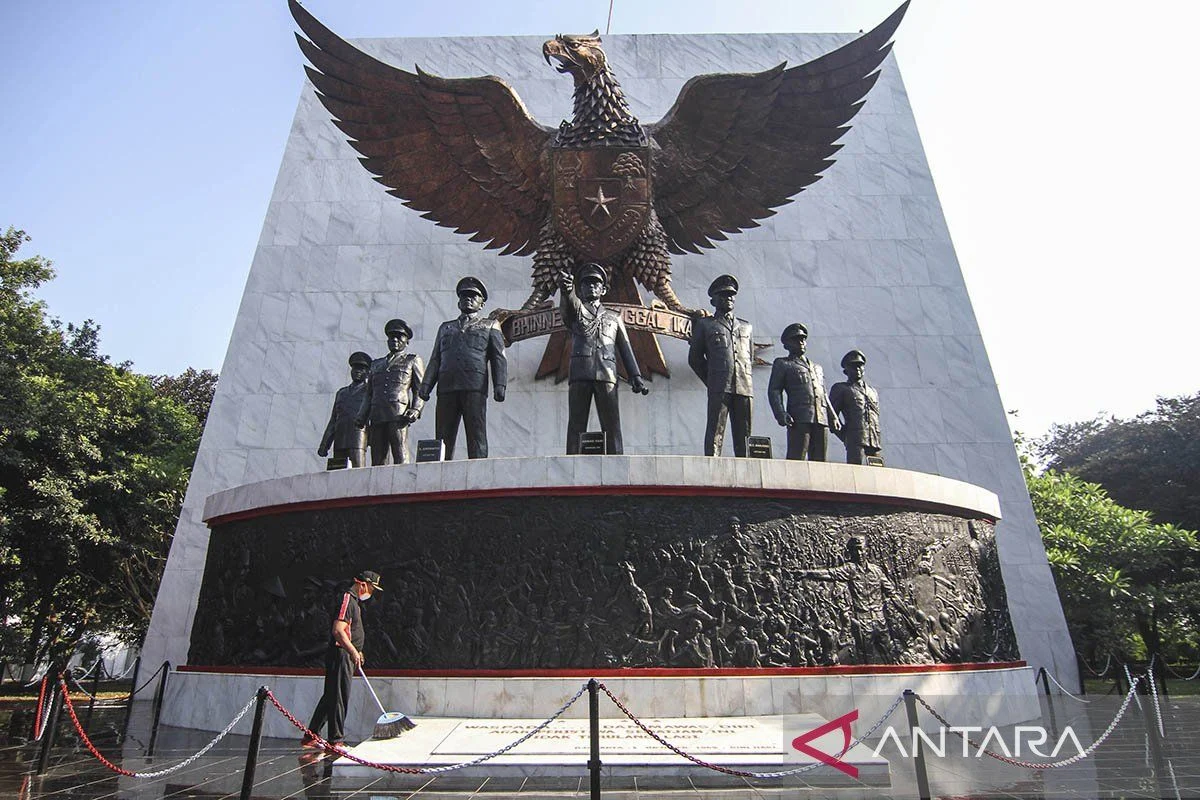
The fragile political equilibrium shattered on the night of September 30 to October 1, 1965. A faction within the military, calling itself the September 30 Movement (G30S) and led by Lieutenant Colonel Untung, carried out a coordinated operation in Jakarta, kidnapping and assassinating six senior Army generals and one officer. Their bodies were dumped in a disused well in the Lubang Buaya area on the outskirts of Jakarta.
The immediate aftermath plunged the nation into chaos. Major General Suharto, commander of the Army Strategic Reserve Command (Kostrad), swiftly took control of the security situation in Jakarta, neutralizing the rebellious units within 48 hours.
The question of who bore ultimate responsibility for the G30S remains one of the most thoroughly debated subjects in modern historiography. While the official narrative promoted during the 32 years of President Suharto’s New Order regime unequivocally blamed the PKI as the sole mastermind behind the coup attempt, subsequent historical research, declassified diplomatic archives from the United States, the United Kingdom, and Japan, and alternative academic studies point to a complex interplay of internal military factions, intelligence agency maneuvers, and opportunistic political alignments.
The National Archives of the Republic of Indonesia (ANRI) and institutions like the National Commission on Human Rights (Komnas HAM) have repeatedly emphasized that understanding the complex tapestry of 1965 requires examining multi-source documentation, separating state-sanctioned political dogmas from verifiable historical facts.
The Fall of the PKI and the 1965–1966 Anti-Communist Purge
Following the collapse of the G30S movement, the political pendulum swung violently. The Indonesian Army, under General Suharto’s leadership, launched a systematic campaign to purge the state apparatus, society, and armed forces of communist influence.
Between late 1965 and 1966, a massive wave of mass violence, arbitrary arrests, and extrajudicial killings swept across the archipelago, particularly targeting Java, Bali, and parts of Sumatra. According to findings compiled by Komnas HAM, these events constituted grave human rights violations, including mass murder, enforced disappearances, torture, rape, forced labor, and arbitrary detention. The violence decimated not only active cadres and leadership figures of the PKI and its affiliated mass organizations (such as BTI and Gerwani) but also caught up thousands of alleged sympathizers, ethnic Chinese minorities, and ordinary citizens swept up in the political hysteria.
The political demolition of the party reached its formal conclusion on March 12, 1966, when General Suharto—operating under the authority of the Supersemar (Presidential Order of March 11)—issued a decree formally banning the PKI and all its subordinate mass organizations, declaring them illegal entities throughout the territory of the Republic of Indonesia.
This executive decision was subsequently codified into law through MPRS Decree No. XXV/MPRS/1966, ratified on July 5, 1966. The decree explicitly prohibited the PKI, banned the dissemination or development of Communist, Marxist, and Leninist teachings across the nation, and laid the legal cornerstone for the domestic security policies of the New Order regime.
The End of an Era and Contemporary Historical Assessment
The dismantling of the PKI marked the absolute termination of the Indonesian left as an organized political force. Domestically, the political vacuum left in the wake of the crisis severely weakened President Sukarno’s authority, paving the way for the ascension of General Suharto, who was officially appointed as acting president in 1967 and full president in 1968, inaugurating the 32-year authoritarian New Order administration.
For decades following 1966, the official state narrative regarding the PKI and the events of 1965 remained tightly controlled, serving as the foundational ideological justification for the New Order state. Commemorations such as "Hari Kesaktian Pancasila" (Pancasila Sanctity Day), observed annually on October 1st, were institutionalized to honor the slain generals and reinforce the state ideology against the perceived threat of communism.
More than six decades after the watershed events of 1965, the legacy of the PKI continues to occupy a sensitive, complex position in Indonesian collective memory. Contemporary historical scholarship approaches the era through a multidisciplinary lens—balancing the necessity of acknowledging the tragic human rights violations of 1965–1966 with rigorous archival research from domestic and international repositories, as advocated by cultural and archival institutions like ANRI.
Ultimately, the history of the PKI transcends a simple narrative of a failed coup. It stands as a cautionary chronicle of ideological polarization, state-society conflict, and the profound transformations that forged modern Indonesia—a legacy that continues to inform ongoing discussions concerning historical transparency, national reconciliation, and the enduring resilience of the nation’s democratic institutions.