The pursuit of spiritual and personal development within Islamic organizations often begins with the conscious establishment of daily routines grounded in divine revelation. This core theme took center stage during a recent gathering hosted by the Central Leadership (Pimpinan Pusat/PP) of Muhammadiyah in Yogyakarta. The event underscored the critical need for modern Muslims to move beyond the superficial recitation of scripture and instead internalize its principles to cultivate a progressive mindset, professional integrity, and emotional resilience in an increasingly complex world.
The Setting and Background of the Monthly Staff Assembly
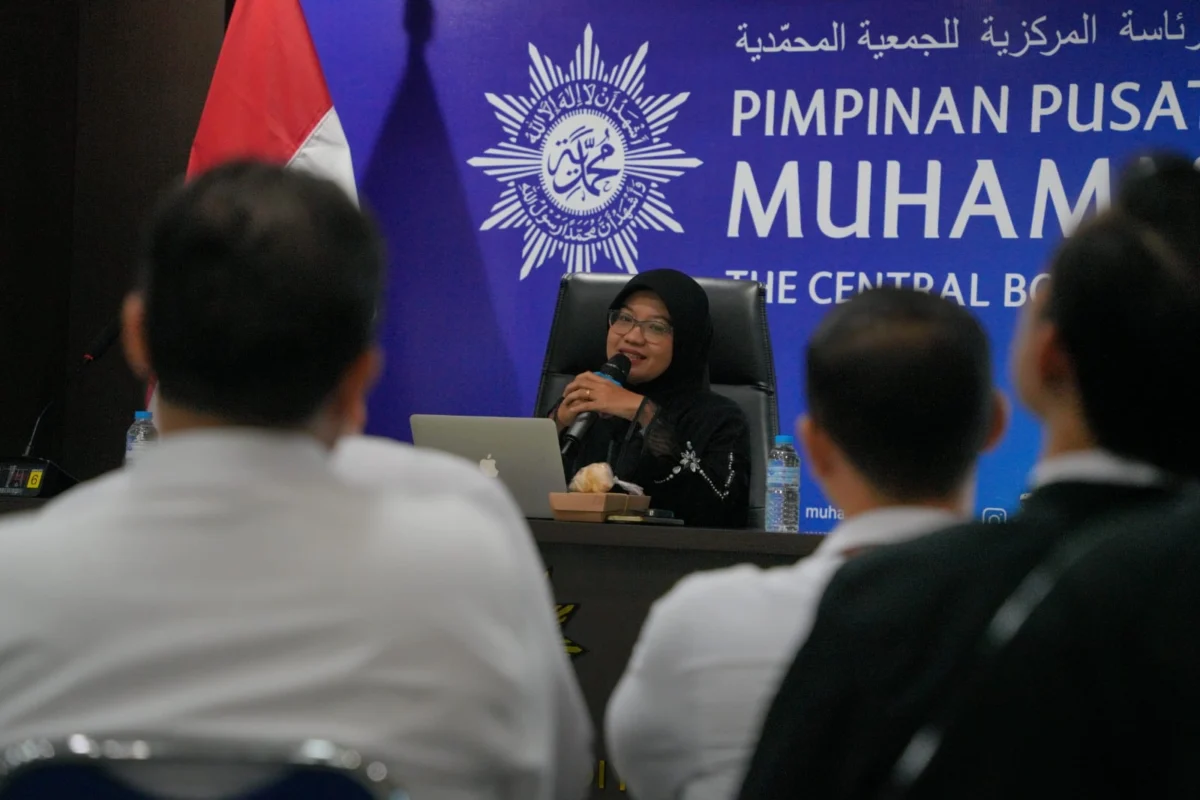
The discussion unfolded during the routine Monthly Staff Assembly organized for employees and officials of the PP Muhammadiyah. Held at the main auditorium of the PP Muhammadiyah Office in Yogyakarta on a Wednesday, the gathering drew a significant audience of administrative staff, organizational leaders, and community members. These monthly gatherings serve as an institutional cornerstone for spiritual enrichment, organizational alignment, and intellectual discourse within one of Indonesia’s largest Islamic reformist movements.
As part of its ongoing efforts to nurture human resources that align with the vision of Islam Berkemajuan (Progressive Islam), the leadership frequently invites prominent figures from autonomous bodies and affiliated organizations to share insights. For this specific session, the organizers invited Syahdara Anisa Makruf, the Chairperson of the Regional Leadership of Nasyiatul Aisyiyah (PWNA) for the Special Region of Yogyakarta (DIY). Speaking under the overarching theme "Quran Habit, Becoming a Progressive Muslim," Anisa delivered a comprehensive lecture that bridged personal spiritual habits with institutional effectiveness.
The Complex Psychology of Habit Formation
Opening her address, Anisa dissected the intricate psychology behind habit formation, noting that establishing routines rooted in Quranic values is far from a simple endeavor. Human behavior is rarely shaped in a vacuum; rather, it is a complex product of various intersecting influences, including early family upbringing, social environments, and the constant influx of sensory inputs encountered in daily life—what individuals routinely see, hear, and experience.
Because these external and internal factors often pull individuals in competing directions, Anisa emphasized that developing authentic Quranic habits requires deliberate and consistent effort. In this context, a "Quran habit" transcends the traditional view of mere rote reading or ritualistic recitation. Instead, it demands a holistic internalization where the ethical, moral, and practical injunctions of the holy text manifest visibly in daily actions, professional duties, and interpersonal relationships.
Time Discipline and the Wisdom of Surah Al-Asr
A primary focal point of the lecture was the cultivation of time discipline, which Anisa identified as an essential stepping stone toward personal and professional success. Drawing from her own upbringing, she highlighted how fundamental temporal discipline is to a structured life.
"The first habit instilled in our family was not about raising us to be exceptionally smart children, but rather establishing the primary foundation of performing the five daily prayers punctually," Anisa shared during the assembly.
In Islamic teachings, the five daily prayers serve not only as a spiritual obligation but also as a strict temporal framework that organizes the believer’s day. Punctuality in prayer trains the human psyche to respect time, a finite resource heavily emphasized in Surah Al-Asr. The Quranic injunction to value time serves as a divine reminder that human existence is fleeting, necessitating its investment in righteous deeds, constructive work, and mutual encouragement toward truth and patience.
When translated into a professional environment, this spiritual discipline morphs into punctuality, effective time management, and accountability. Employees who master time management through the lens of daily prayers are better equipped to navigate tight deadlines, balance competing priorities, and execute their duties with precision.
Emotional Regulation and Cognitive Clarity
Beyond temporal discipline, the integration of Quranic study into daily routines plays a vital role in emotional regulation and mental well-being. Anisa pointed out that reading the Quran while actively striving to understand its semantic and contextual meanings creates a sanctuary for mental peace.
In a fast-paced working environment fraught with deadlines, administrative challenges, and interpersonal friction, the ability to regulate one’s emotions is paramount. Emotional intelligence prevents impulsive reactions, enabling individuals to navigate crises with composure and make sound, objective decisions. By turning to the Quran for spiritual grounding, believers cultivate a sense of inner tranquility that buffers them against external stressors. This psychological resilience is particularly crucial for staff members working within large socio-religious organizations like Muhammadiyah, where public accountability and community service often demand high levels of emotional stamina.
Strengthening Institutional Integrity and Loyalty in Muhammadiyah
Shifting her focus from personal development to organizational dynamics, Anisa elaborated on how these spiritual and psychological habits directly apply to the institutional framework of Muhammadiyah. She stressed that integrity and loyalty are indispensable traits that must be continuously cultivated among members and personnel entrusted with the affairs of the movement.
Within the context of Muhammadiyah, institutional integrity is manifested through unwavering discipline, professional responsibility, absolute honesty, and emotional maturity when executing assigned roles. It requires staff and leaders to perform their duties not merely as a transactional employment arrangement, but as a moral trust (amanah) entrusted by the community and accountable before God.
Furthermore, organizational loyalty goes far beyond mere physical attendance at meetings or superficial participation in programmatic activities. True loyalty, according to Anisa, requires actively safeguarding the core values, philosophical foundations, and overarching mission of the reformist movement.
"Integrity and loyalty are among the habits that we must deepen for the sake of the Muhammadiyah organization, keeping in mind that loyalty to Muhammadiyah means protecting the values and the trust of the organization," Anisa asserted.
Effective Communication and Assertive Culture in the Workplace
Another critical dimension addressed during the assembly was the implementation of an assertive culture within the workplace, anchored in Islamic communication ethics. Assertiveness—defined as the capacity to express opinions, professional needs, and operational boundaries clearly and firmly without infringing upon or harming others—is vital for harmonious workplace collaboration.
Employees must possess the confidence to articulate their perspectives and manage task boundaries in accordance with their specific job descriptions. However, this assertiveness must be balanced with professional courtesy and mutual respect, particularly when handling disagreements or complex institutional challenges.
This communicative ethos finds direct support in Islamic jurisprudence and scripture, notably in Surah Al-Baqarah, verse 83, which commands believers to speak kindly and justly to all people. By combining assertiveness with benevolent communication, Muhammadiyah institutions can foster an organizational culture that values constructive feedback, transparent dialogue, and collaborative problem-solving while minimizing toxic workplace dynamics.
The Imperative of Self-Reflection and Continuous Improvement
Concluding her comprehensive presentation, Anisa highlighted the indispensable habit of self-reflection (muhasabah). A truly progressive Muslim, she argued, possesses the introspective capacity to evaluate not only the shortcomings of others but, more importantly, their own operational and spiritual failures.
Self-reflection provides a necessary pause in a busy schedule, allowing individuals to review past actions, recognize personal and professional deficiencies, and design actionable roadmaps for future improvement. This habit ensures that individuals do not stagnate after merely acquiring theoretical knowledge of right and wrong, but instead commit to a lifelong trajectory of moral and professional refinement.
Broader Implications for Progressive Muslim Communities
The insights shared during the PP Muhammadiyah Monthly Staff Assembly carry profound implications for contemporary Islamic organizations navigating the challenges of modernity. By framing "Quran habits" not as isolated acts of worship, but as an integrated lifestyle encompassing time management, emotional resilience, organizational integrity, assertive communication, and continuous self-reflection, the movement reinforces its foundational ethos of Islam Berkemajuan.
Ultimately, the transformation from a nominal follower to a progressive Muslim relies on the systemic translation of scriptural values into concrete behavioral patterns. When institutions systematically foster these habits among their workforce, they not only elevate individual performance but also secure the long-term sustainability, moral authority, and societal impact of their organizational mission.